Shari Creates

Books, languages, things I make and notes from everyday life.

Category: Life & Notes

Personal reflections, everyday life, opinions, and notes.

  • The Unsung Heroes Among Us

    I was watching videos of the aftermath of the flash floods in Nepal, and what stayed with me was not only the destruction itself, but the people working through it.

    Rescuers searching for survivors and for bodies. People going into dark tunnels, narrow crevices and dangerous places where I honestly do not think I could make myself go. Then there are those working in morgues, dealing with the dead, identifying bodies, cleaning up, and handling the parts of a disaster that most of us would rather not even imagine.

    It made me think about the different kinds of people among us.

    In ordinary life, the people who stand out are often the ones who disappoint us. The unreliable ones. The people who avoid responsibility, leave work for others, or somehow disappear when something difficult needs to be done. Those are the people we notice because they frustrate us.

    But then something terrible happens, and suddenly another kind of person becomes visible.

    People who will crawl into dangerous places looking for someone they have never met. People who will keep searching when they are exhausted. People who will handle bodies so that another family can have an answer. People who are willing to do work that many of us could not stomach, physically or emotionally.

    I do not think I could do it.

    There must be a certain kind of person who can tolerate those things. Fear, confined spaces, blood, death, terrible smells, exhaustion, grief. Not everyone can. I certainly do not think I could.

    And I am glad there are people who can.

    Perhaps that is what struck me most. We can become cynical about people because the worst behaviour is often the most noticeable in everyday life. But there are so many decent, dependable people among us whom we may never notice at all until something goes terribly wrong.

    We may never know their names. We may never meet them. On an ordinary day, we might pass these people in the street without giving them a second thought.

    But when they are needed, they are there.

    They go into the places most of us would be afraid to enter. They do the work most of us would struggle even to witness. They carry things the rest of us are fortunate not to have to carry.

    And I am deeply grateful that there are people like this among us — the unsung heroes who deserve a standing ovation for the incredible work they do.

  • Is Writing a Book Review Worth It If Nobody Reads It?

    Is Writing a Book Review Worth It If Nobody Reads It?

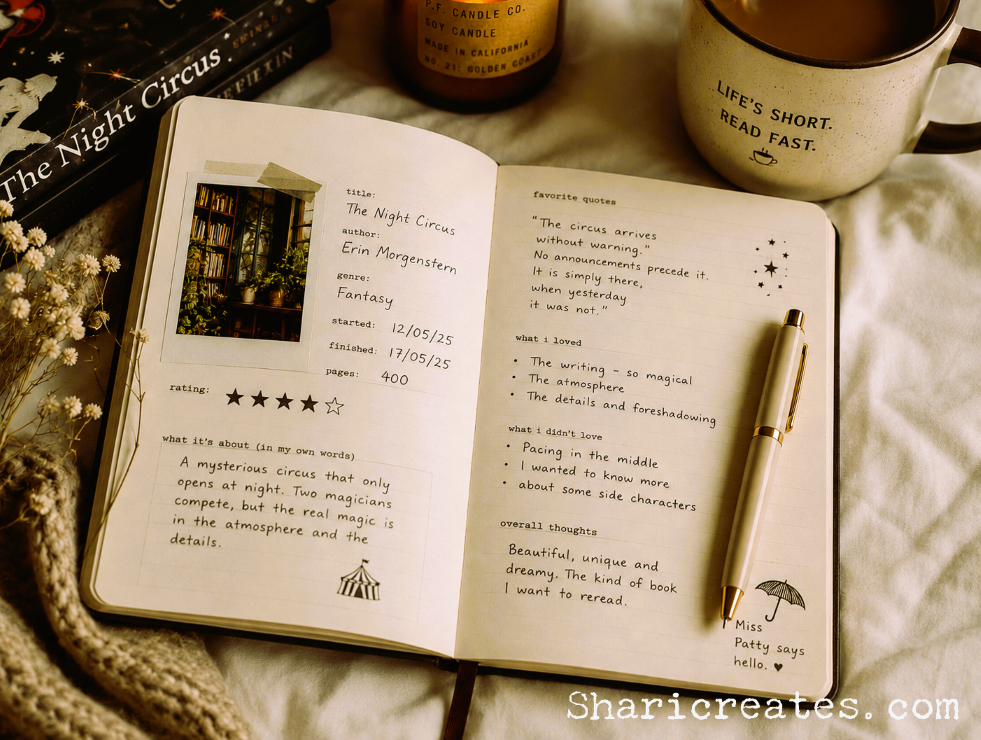
    If you enjoy reading but aren’t particularly interested in becoming a book blogger or building an audience, you might wonder whether there is any point in writing book reviews at all.

    After all, who are you writing them for?

    I’ve been writing more book reviews myself lately, and I’ve realised that the answer doesn’t necessarily have to be other people.

    Writing a review can be useful even if you are the only person who ever reads it.

    It makes you think about what you read

    It is very easy to finish a book, decide that it was good or bad, and immediately move on to the next one. Writing a review makes you stop for a moment.

    Why did you like it? What annoyed you? Did the characters behave consistently? Did the story make sense? Did the ending actually work?

    You don’t need to write an essay. Even a short review forces you to turn a vague reaction into an actual opinion.

    You start reading more actively

    This is something I have noticed in my own reading. Because I write about books afterwards, I tend to notice more while I am reading them. Small details stand out. I notice when a character behaves strangely, when something appears inconsistent, or when an author does something particularly well.

    Sometimes something bothers me halfway through a book and is explained perfectly later. Sometimes it never is. Either way, I am paying attention rather than simply consuming the story.

    It gives you practice expressing an opinion

    There is a difference between saying, I hated this book, and being able to explain why it didn’t work for you. Maybe the pacing was too slow. Perhaps a character’s actions made no sense. Maybe the story was perfectly well written but simply wasn’t to your taste.

    Working out that distinction is useful. Writing reviews gives you regular practice at organizing your thoughts and explaining an opinion clearly, even when that opinion is entirely subjective.

    You remember the books better

    If you read regularly, books can eventually start blending together. A review becomes a small record of what you thought at the time. Months or years later, you can look back and remember not only what the book was about, but how you reacted to it.

    And occasionally you might discover that your opinion has changed.

    Nobody has to read it

    You don’t need a blog. You don’t need followers. You don’t even need to publish the review. Write it in Goodreads, StoryGraph, a notebook, a private document or wherever you keep your reading records.

    The value isn’t necessarily in having an audience. Writing the review makes you stop, think about what you have read, decide what you actually think about it and put that thought into words.

    So, is writing a book review worth it when nobody is going to read it?

    I think so.

    Because you already got something out of writing it. You thought more carefully about the book, worked out what you really thought, and created a record you can return to later.

    And if someone else does read it and finds it useful, that is an added benefit — not the only reason to write it.

  • Does Listening to an Audiobook Count as Reading?

    Does Listening to an Audiobook Count as Reading?

    I have to admit something. Sometimes when I finish an audiobook and mark it as “Read” on Goodreads, there is a tiny part of me that feels as though I am cheating. Did I really read the book?

    Technically, my eyes did not move across the words on the page. Someone else read the words aloud while I listened. But I still finished the book. And this is where I started wondering whether we are perhaps getting too caught up in the word reading rather than what it actually means to finish a book.

    Why I Listen to Audiobooks

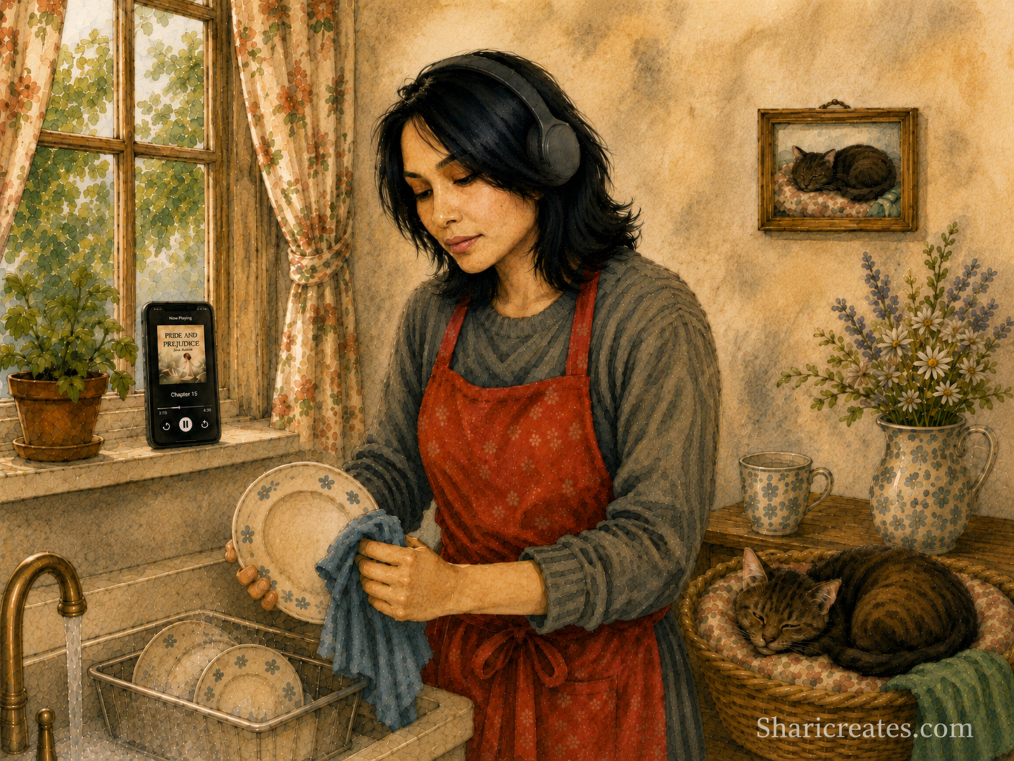
    I listen to audiobooks mostly because they allow me to do something else at the same time. Housework is probably the biggest one. I can listen while washing dishes, folding clothes or doing other boring things around the house. I also listen when I commute.

    Sometimes my eyes have simply had enough of staring at words for the day, especially if I have already spent hours looking at a screen. An audiobook lets me continue with a book without asking anything more from my eyes.

    When My Mind Wanders

    There is, however, one obvious problem with this wonderful ability to multitask. Sometimes my mind wanders. I will be washing dishes, thinking about something completely unrelated, and then suddenly realise that I have absolutely no idea what happened during the last thirty seconds.

    “Hey Google, rewind 30 seconds.” I have said that more times than I would like to admit. 😅

    At first, I thought this was perhaps another reason audiobooks did not quite count as “proper” reading. Surely if I had been sitting down with a book in front of me, I would have been paying more attention. Except that isn’t actually true. I have done exactly the same thing with printed books.

    Sometimes I reach the bottom of a page and realise that although my eyes have gone over every single word, my brain apparently decided not to participate. So I go back and read the paragraph again. With an audiobook, I rewind. With a physical book, I reread. The problem isn’t necessarily the format. Sometimes our attention simply wanders.

    The Other Audiobook Hazard: Falling Asleep

    There is another danger with audiobooks, of course: falling asleep. This happens to me particularly easily if I listen while lying down. One moment I am happily following the story and the next thing I know, I wake up and the narrator has somehow travelled three chapters into the future without me.

    I suppose this is precisely why Audible has a sleep timer. 😂 And again, this isn’t entirely unique to audiobooks. I have fallen asleep with an actual book in my hands before too.

    So, Does an Audiobook Count as Reading?

    So perhaps the question shouldn’t really be, “Did I read this book?” Perhaps it should be, “Did I experience and finish this book?”

    If I listened to the entire unabridged audiobook, I know the characters. I know what happened. I know the ending. I can discuss the book with someone who read the paperback. The story reached me through my ears instead of my eyes.

    That seems like a rather small distinction on which to decide whether a book “counts.” I can understand why people distinguish between reading and listening. They are technically different activities.

    But when Goodreads asks me whether I have finished a book? Yes. I finished it. And I think I am finally going to stop feeling as though I cheated.

  • What I Do Differently From How I Was Raised

    Daily writing prompt
    What’s something you do completely differently from how you were raised?

    I grew up in a family of nine children. I was number eight.

    There were a lot of us, and we grew up with very little. When I say little, I don’t mean that we simply went without luxuries. At times, we didn’t even have some of the basics, including the security of a stable roof over our heads.

    So when I saw the question, What’s something you do completely differently from how you were raised?, my answer came quite quickly: I chose to have one child.

    Part of that decision was very practical. In this economy, one child was what we realistically felt we could afford to care for properly. A Brookings Institution estimate from the United States put the cost of raising a child to age 17 at about US$310,000 for a middle-income family, before college. Broader calculations that include education can push the figure beyond US$400,000 per child. Of course, those numbers would look different elsewhere because wages, housing, childcare, education and living costs vary from country to country. But the larger point is the same: raising a child properly costs a great deal over many years.

    For us, one child was what we felt we could manage without constantly compromising on the basics. Not just food and clothes, but a stable home, education, attention, the things she needed and, if we could manage it, a little extra when she needed that too.

    Of course, one of the things people sometimes say about an only child is that she might be lonely. But having siblings does not automatically protect anyone from loneliness. I grew up with eight of them, and I know that very well. A large family can bring companionship, but it can also bring complicated relationships, toxic family dynamics and even arguments over things like inheritance.

    I would rather not treat siblings as a kind of insurance policy against loneliness. My daughter has friends, and I hope she will continue to build relationships with people who genuinely care about her. Family is something we are born into and cannot choose. Good friends, at least, are people we can choose — and who choose us back.

    My parents never owned a house. There was never that feeling that somewhere underneath everything else that might go wrong, there was at least something solid. My daughter will have that. The home we own will eventually be hers one day, and that matters to me more than I think I would have understood when I was younger.

    It is not really about property. It is about security.

    I know that owning a home does not guarantee an easy life. Neither does having parents who plan carefully. I cannot protect my child from every disappointment, every bad decision or every difficult period she may face, nor do I want to remove every struggle from her life. But I do not want her to have to begin adulthood already trying to repair the broken pieces of her childhood. I want her to be able to move forward.

    That is probably the biggest difference between the way I was raised and the way I have tried to raise my own child. When we made important decisions, she was part of the calculation. Can we afford this? What does this mean for her? Will she have what she needs? Are we leaving her something to stand on?

    I am sure we have made mistakes. Every parent does. And one day she may tell me about things from her childhood that I understood completely differently at the time. But I hope that beneath all of that, there is one thing she will always know: she was considered. Her future was considered. Her security was considered.

    Perhaps that is what I wanted most to give her — not a perfect childhood, and certainly not a life without problems, but the kind of foundation I never felt I had myself.

    For me, doing things differently meant having one child and trying to give her enough room, enough attention and enough security to build from there.

    Not everything. But enough.

  • 我的猫Panni | My Cat Panni

    以前,我有一只猫。它叫Panni。

    它的毛很长,颜色是深棕色,看起来差不多是黑色的。

    Panni只有一只耳朵,但是它还是很可爱。

    它很安静,也很喜欢跟我们在一起。

    我工作的时候,它常常在我旁边睡觉。

    Panni已经不在了,但是我常常想它。

    它不只是一只猫,也是我的家人。

    我不会忘记它。

    I used to have a cat named Panni.

    She had long, dark-brown fur that looked almost black.

    Panni had only one ear, but she was still very cute.

    She was quiet and liked being with us.

    When I worked, she often slept beside me.

    Panni is no longer here, but I often think about her.

    She was not merely a cat; she was also part of my family.

    I will not forget her.

  • A May Day in Várbalog: Grass Cutting and Cherries

    A May Day in Várbalog: Grass Cutting and Cherries

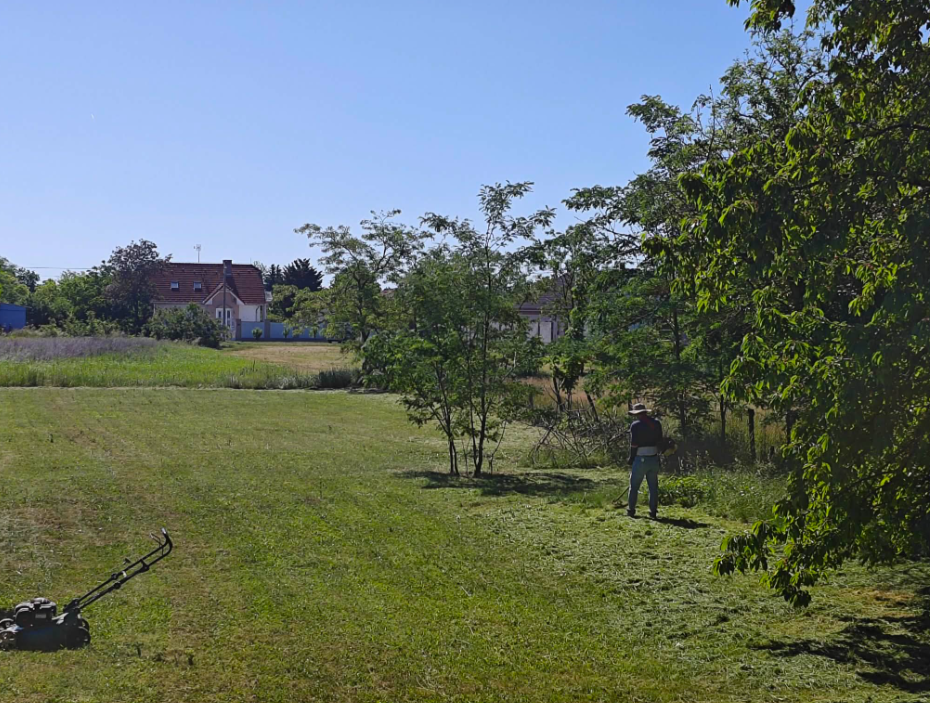
    In May, we drove out to Várbalog to take care of one of those jobs that comes with having a house in the countryside: cutting the grass. By then, the garden had become very green and rather overgrown, so there was plenty to do.

    We bought the house sometime in 2021. It was a period when Budapest property had become increasingly expensive and many buyers were looking beyond the capital for more space at a price they could still manage. The difference was considerable: the Hungarian National Bank reported that in the second quarter of 2020, the median transaction price was HUF 28 million in Budapest, compared with HUF 12 million in rural towns and HUF 5 million in smaller municipalities. Prices continued to rise in 2021, including outside Budapest, so country properties were hardly a secret bargain by then.

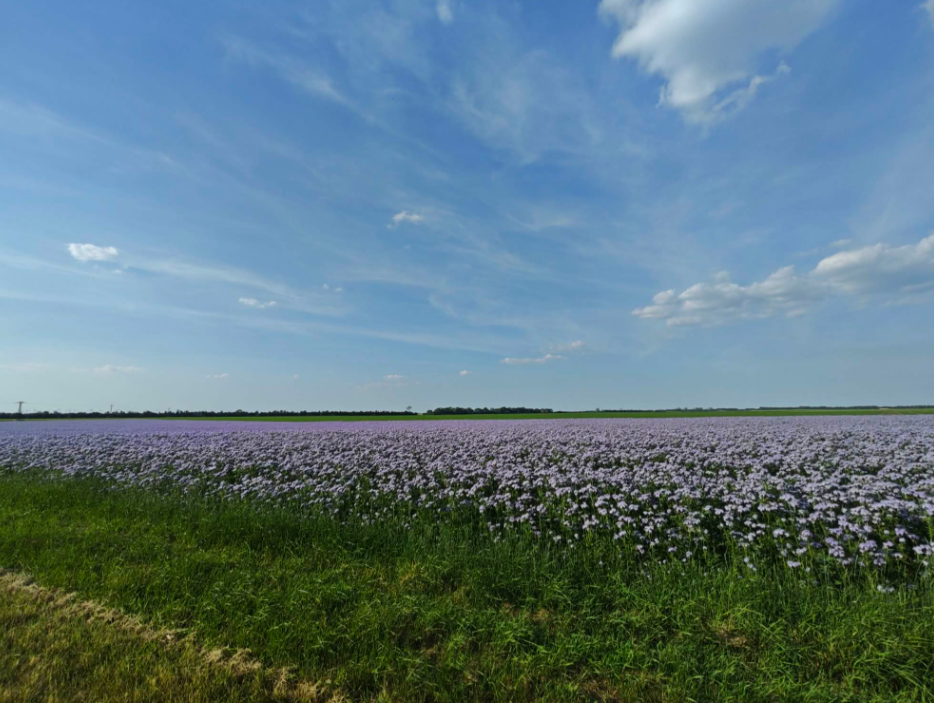
    Várbalog is a small village of only a few hundred residents in Győr-Moson-Sopron County, close to the Austrian border. It belongs to the Mosonmagyaróvár district and lies about nine kilometres northwest of Jánossomorja. The countryside around it is very flat and open, with fields stretching almost uninterrupted towards the horizon. In May, some were bright with flowers, while red poppies edged others. A small historical curiosity: early records referred to the settlement as Váras-Balog and also Csütörtökhely—two names used long before the modern Várbalog.

    The practical reason for this particular trip was the garden. The lawn needed mowing, and the taller grass around the trees and edges had to be cut back. A country house may sound peaceful and romantic, but the grass does not care how far away its owners live or how busy they have been. Leave it alone for long enough and it simply takes over.

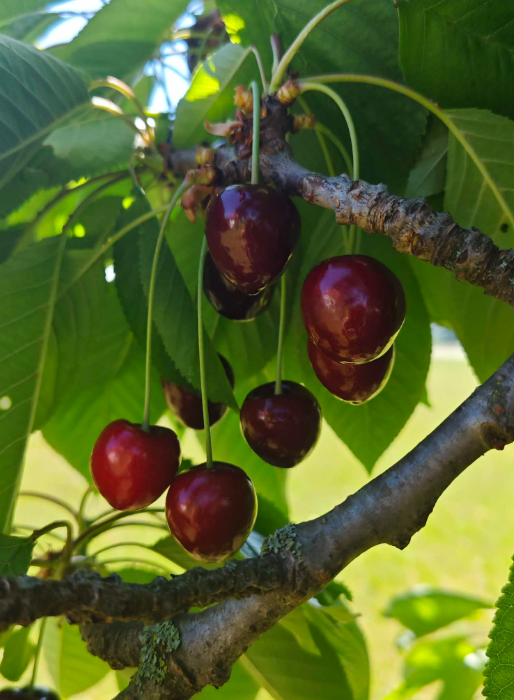
    Fortunately, the visit was not all work. The cherry tree was already carrying dark red fruit, and we were able to pick some while we were there. There is something particularly satisfying about eating cherries directly from a tree in your own garden. They may not have been perfectly uniform like supermarket fruit, but they did not need to be.

    Trips to Várbalog often contain this mixture: a long list of things that need attention, followed by a few quiet moments that remind us why we wanted the house in the first place. On this May day, it was the open fields, the newly cut grass and a handful of cherries.

  • A glimpse into Myheritage.

    A glimpse into Myheritage.

    A while ago – sometime in late 2022 or early 2023 – I decided to try a MyHeritage DNA test. It wasn’t something I did casually. Growing up, I always knew that my background was quite mixed, but I was curious to see what a DNA test might reveal.

    I was fortunate enough to meet three out of my four grandparents. On my mother’s side, the stories were quite clear. My maternal grandparents came from Javanese and Bugis backgrounds, both cultures rooted in the Indonesian archipelago. From my father’s side, my grandmother was Telugu Indian. These parts of my heritage were always known within the family.

    The person who remained something of an enigma was my Japanese grandfather.

    He was someone I never met, and for most of my life he existed more as a fragment of family history than as a real person I could ask questions about. Because of that, I was particularly curious to see whether the DNA test would show anything connected to that part of my background.

    Myheritage DNA

    When the results came back, I saw that about 28% of my DNA was identified as Japanese, with a specific reference to Japan (Okinawa).

    I have to admit that my first reaction was skepticism. DNA tests can estimate regions, but pinpointing something as specific as Okinawa seemed surprisingly precise. I wasn’t sure how much weight to give that detail. And how did my Telegu grandmother became a Bengali?

    But curiosity got the better of me.

    After doing some research – and with the help of a few kind people who were willing to assist me in looking into historical records – I eventually discovered something remarkable: my grandfather was indeed from one of the islands in Okinawa.

    That realization honestly blew my mind.

    It made me look back at the DNA result differently. What I initially dismissed as a vague or overly specific guess turned out to align with reality. Seeing that connection reflected both in historical information and in a genetic estimate was a strange and powerful feeling.

    Interestingly, it also made me wonder about the science behind these tests. The Okinawa reference appeared only under the Japanese ancestry portion of my results. It seems that in some populations—like Japan—genetic patterns are distinct enough that tests can sometimes identify more specific regional links.

    Of course, DNA percentages don’t tell the whole story of identity. Culture, language, and lived experiences shape us far more deeply than numbers on a chart ever could.

    But still, seeing that 28% Japanese – and learning that it likely traces back to Okinawa – felt like discovering a small piece of a puzzle I had been carrying for years. I wish my father is still around so I can tell him all the new information I found.

    For someone who grew up with a grandfather who felt almost mythical, it was a reminder that even the quietest parts of family history can leave very real traces behind.

  • When life was put on hold

    It has been quite a while since my last post. The past few months unfolded quickly — exams for an accountancy certification, long evenings of studying, workplace projects, a promotion, a new team. Life did not stop. It accelerated.

    Somewhere in that acceleration, I pressed pause on Mandarin lessons. What started as “just for a while” quietly stretched into months.

    Twice a week now, I am back on Preply.

    I was nervous before the first lesson. I hadn’t spoken Mandarin regularly in some time, and I wondered if the words would still come. Would my sentences fall apart halfway through? Would my tones betray me?

    They didn’t.

    Yes, I was a little rusty. But I was still comfortable speaking. The language hadn’t disappeared — it had simply been waiting. Reading aloud on DuChinese during the break turned out to be more important than I had realized. It kept my pronunciation alive. It kept the door slightly open.

    And now that I’ve stepped back in, I feel grateful.

    Grateful that progress is not always lost when we pause.
    Grateful that some things stay with us.
    Grateful that I can begin again.

  • Return from the abyss

    Life has a way of pulling us in unexpected directions, and before you know it, a whole year has flown by. But, here I am, back at the keyboard, ready to share my thoughts.

    My mental health had taken a toll. Anxiety and stress became daily companions, often leaving me feeling overwhelmed and unable to engage with the world, including my blog. I suffered from depression and anxiety for the last year. So much so that I had decided to talk to professionals to help me cope.

    Coming from a culture where mental health is the last thing anyone would talk about or ever. It’s all about sucking it up and continue with the daily grind. I wish I can just ‘suck it up’ and ignore every anxiety I feel and still function like normal human being. But the last year had proven it otherwise. I could only hide it so much, but at the end of the day I need to work on the past traumas and understand how it is effecting the way I handle life daily and how I see the future.

    One thing I learnt from talking to mental health professional is how liberating it is to talk to someone who aren’t family or closed ones about my past and they had been effecting the way I behave or how I feel. But sitting there, talking and bawling my eyes out, I also realized that no matter how much I talk about my burden it all boils down to me. No one else is going to rescue me and save me from my own thoughts.

    It’s a long journey I know. But as James Clear had written in his book, it just take a miniscule change in the trajectory I can end up else where hopefully way better than where I am at now. I’ve come to understand that healing is not linear; it’s a journey with ups and downs. It’s about making small, consistent changes and being kind to myself along the way.

    So “welcome back” to myself. 🙂 Thank you for reading, who ever you are.

  • What’s up in Hungary

    What’s up in Hungary

    It has been a while since the last time I blogged. I have been working from home close to 2 months now since the start of the 3rd wave of CoVid here in Hungary. About 40% of the population is vaccinated, although I hadn’t had mine yet. But I did register to get it this coming Thursday. I opted for the AstraZeneca.

    Well, on a lighter note, Spring has been upon us for sometime now. Things are starting to cheer up and people are expecting more warm days ahead.

    For 2 weekends we had spent a bit of time away from the city and headed out to the countryside. Not only to enjoy the sunny weather but also to do some garden work.

    We were in a little village called Domoszló, which is about 45 minutes drive from Budapest. Located North-East of the country. We have a little house there that we go to when the weather is warmer and when we need to do some maintenance work. The small field we have there is usually full of “pitypang” or “Kutyatej” (dog’s milk) which are Hungarian for Dandelions, around this time of the year.