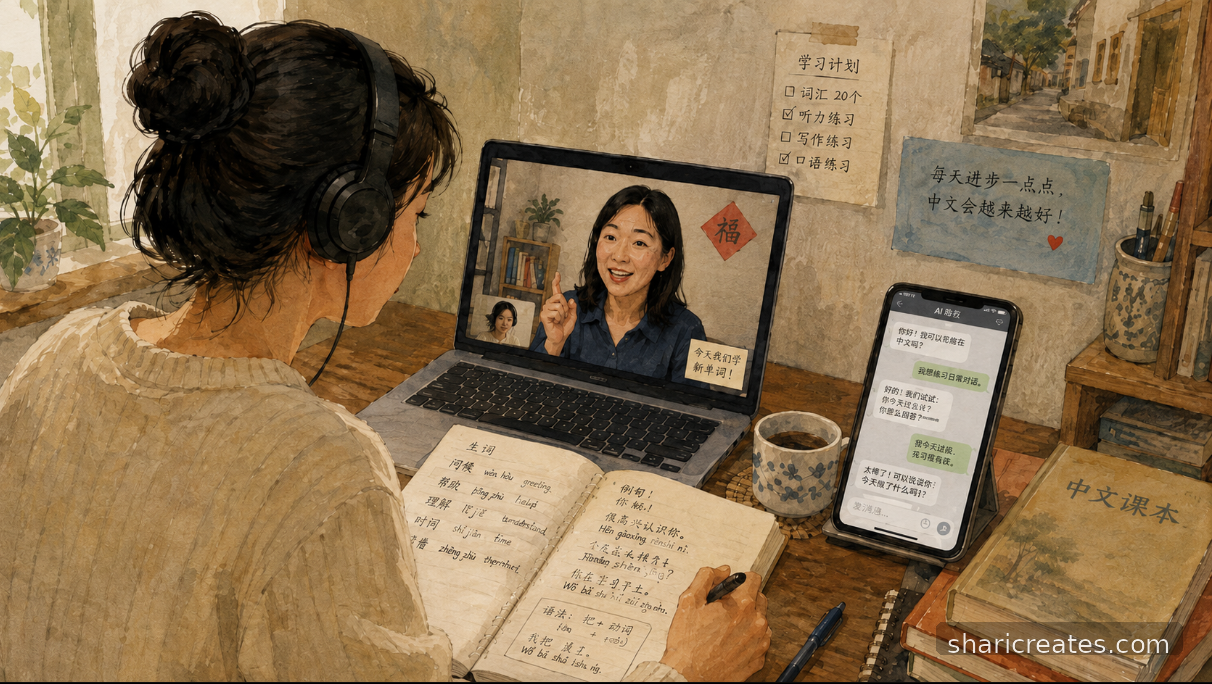
I have been learning Mandarin on and off for years, and in 2022 I finally decided that self-study alone was not enough. That was when I started using Preply. Until then, I could study vocabulary, learn grammar, listen to recordings, work through textbooks and use online resources. What I could not easily do by myself was have an actual conversation, so I started taking lessons with a native Mandarin speaker.
A few years ago, I would probably have said quite confidently that this was one thing technology could not replace. Now I am not so sure. AI has changed very quickly, and I can ask it to explain the difference between two Chinese words, tell me whether a sentence I have written sounds natural, create exercises around vocabulary I am learning, or give me examples at approximately my level. I can even speak Mandarin to it and have it answer me.
At that point, the obvious question is: if AI can already do all of this, do I still need to pay for a human tutor? After several years of using Preply, stopping for a while, and then returning to it, I think the answer is more complicated than simply yes or no.

For Some Things, AI Can Probably Replace a Tutor
There are parts of language learning for which I no longer think I need to pay someone by the hour. Grammar is an obvious example. If I do not understand why 又 belongs in one sentence and 再 belongs in another, I can ask AI. If the explanation does not make sense, I can ask it to explain it differently, then ask for ten examples, a quiz, or five sentences where I have to choose the correct word. There is no clock ticking while I do this.
The same applies to vocabulary. I can compare similar words, ask for example sentences, practise sentence construction or ask why something I wrote sounds unnatural. Unlike a weekly lesson, AI is available whenever I happen to want it. Sometimes a question occurs to me late at night, and I do not have to write it down and remember to ask my tutor several days later.
For this kind of study, AI is extremely useful. In fact, I would rather do much of this outside my paid lesson and use tutor time for something I cannot reproduce quite so easily.
AI Can Even Talk to Me
This is where things become more interesting. One of the main reasons I started using Preply was speaking practice, because understanding Mandarin and actually producing Mandarin are two very different things. You can recognise hundreds of words while reading or listening and then suddenly discover that your brain has misplaced every single one of them when somebody asks you a question.
AI can now help with this too. I can tell it to speak to me in Mandarin at roughly HSK 3 or HSK 4 level, ask it to correct what I say, slow down, repeat itself or explain something I did not understand. In some ways, this is easier than speaking to a person. If I say something ridiculous, I do not have to be embarrassed. 😂 I can stop halfway through, try the same sentence several times, switch to English, or abandon the conversation entirely and come back later.
And that last point is also part of the problem.
I Stopped Preply — and Eventually Came Back
I stopped taking regular Preply lessons in 2024. It was not because I had decided that tutoring was no longer useful; ACCA and work were taking up more of my time, and Mandarin simply moved further down the priority list. For quite a while, my learning became much less consistent.
By the time I returned to Preply in mid-2026, AI language tools were considerably better than they had been when I first started taking lessons. Technically, I had more ways to study independently than ever before. But I realised that what I had been missing was not access to explanations, exercises or vocabulary lists. I missed having an actual lesson coming up.
That sounds like a small thing, but for someone like me who is not naturally the most disciplined self-learner, it matters.
A Human Tutor Gives Me Another Layer of Accountability
If an AI conversation is available whenever I want it, it is also very easy to decide that I will do it tomorrow, and tomorrow can become next week. A booked lesson is different. There is another person who will be there at a particular time, and I know I am going to have to talk. That gives me a reason to prepare.
I am more likely to review vocabulary because I might actually need to retrieve it during the lesson. I am more likely to think about what I want to say, and I pay more attention to things I have recently learned because I know there is a possibility that they will come up in conversation. The lesson itself also creates a kind of pressure that AI does not — not unpleasant pressure, just enough.
If I cannot remember how to say something to AI, I can close the conversation. If I cannot remember how to say something to my tutor, there is another person waiting for me to finish the thought, so I have to try. I might hesitate, use the wrong word or have to explain the idea in a simpler way, but that is much closer to what happens in a real conversation.
AI can remind me to study and it can even simulate accountability, but knowing that I will have to communicate with a real person affects my behaviour differently. For me, that is one of the biggest reasons a human tutor still has value.
Real Conversation Is Messy
There is another difference: AI conversations tend to be very accommodating, while real people are not always so predictable. They misunderstand you, use words you were not expecting, change the subject, speak faster than you would like, tell stories and interrupt. Sometimes the conversation wanders somewhere completely different from the lesson material, and that is useful.
Language does not normally happen in carefully controlled exercises. It happens between people who have their own personalities, habits, experiences and ways of expressing themselves. That unpredictability forces me to listen differently and to respond rather than simply complete an exercise.
A Tutor Gets to Know How You Speak
There is another advantage that becomes more noticeable when you stay with the same tutor: they start knowing you. Not just who you are, but how you use the language. A tutor who has heard me speak repeatedly can recognise the mistakes I tend to make, notice that we covered something before, and tell when I probably know a word but simply cannot retrieve it quickly enough.
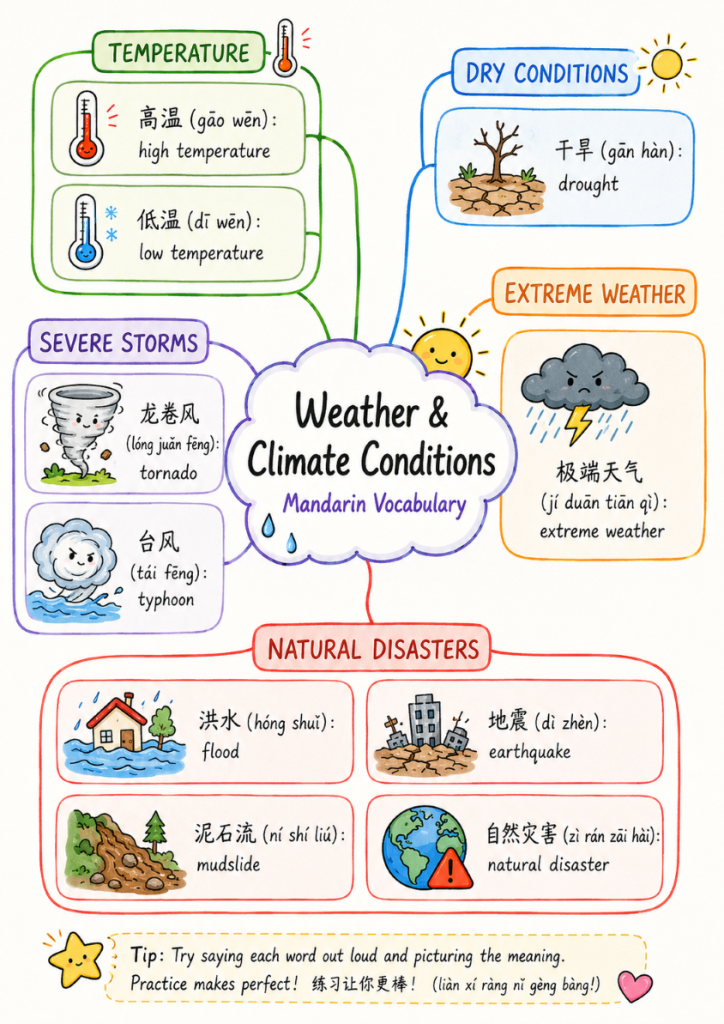
They also bring their own experiences into the conversation. A discussion about weather can suddenly become a conversation about daily life. A vocabulary word can lead to a cultural explanation. Something I say can remind my tutor of something completely unrelated, and suddenly we are discussing a topic I never prepared for. Those are often the moments when speaking practice becomes most useful.
AI can provide information about Chinese culture, but information about a culture and having a conversation with someone who actually lives within it are not quite the same thing.
So Can AI Replace a Human Tutor?
For some learners, perhaps it can. If someone is extremely disciplined, comfortable speaking to AI and mainly wants structured practice, the amount that can now be done without a human tutor is remarkable. For me, however, I do not think I would replace a human tutor completely. I would use one differently.
I no longer think I need to spend much of a paid lesson listening to basic grammar explanations. AI, textbooks, courses and other resources can handle a lot of that. I would rather study those things independently and use my tutor for the parts that are harder to reproduce alone: speaking, pronunciation, real-time vocabulary retrieval, unpredictable conversation, and the accountability of knowing that another person will actually be waiting for me.
AI has therefore not made human tutoring useless for me. If anything, it has made me more selective about what I want from a tutor. AI can be the infinitely patient study partner that is available whenever I need it, while a human tutor gives me something else: another human being I actually have to communicate with.
And for someone who is learning a language because she ultimately wants to speak to real people, I still think that matters.