I seem to have acquired another project. This is probably one of the reasons why I will never be bored, because there is always something else I suddenly decide would be interesting to make. No, I am not abandoning BacaMalay. I have every intention of continuing with it. If anything, what I really need to do is organise the many things I already have going on in my life so that one project does not swallow all the others. But apparently that did not stop me from acquiring another one.
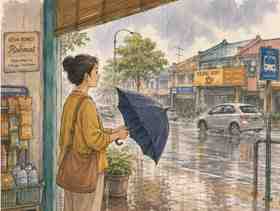
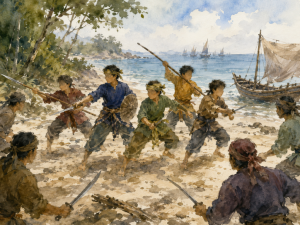
This time, I am trying to build an interactive romance novel. I started this mostly because I wanted to see whether I could create the kind of interactive story I would actually enjoy playing myself. I like historical romance, but I also like having some control over the heroine. I wanted choices that were more interesting than simply picking the obviously romantic answer every time, and I wanted the heroine to have a life outside the romance. She works, has to become better at what she does, maintains friendships, thinks about money and makes decisions about what kind of future she actually wants.
And, naturally, there are men. 😂 You know how, when you are reading a novel, you sometimes find yourself rooting for the other man instead? You start the story convinced that one character is obviously the right choice, and then another one appears. Maybe he has better chemistry with the heroine. Maybe he understands her more. Maybe you simply like him more than you expected to. Suddenly, you are no longer waiting for the story to follow the route you assumed it would. You are hoping the heroine makes a completely different choice.
That is part of what I want to explore with this project. There are several possible romantic routes, although I am deliberately trying to keep the main story fairly neutral. Otherwise, the heroine might appear to be madly in love with several men simultaneously, which is probably not the effect I am going for. It turns out that this is one of the many things that becomes surprisingly complicated when writing branching fiction.
The project is inspired by visual novels, where the reader makes choices that lead to different relationships and endings, except mine is not really visual. There are no character sprites, animated scenes or elaborate backgrounds. It is more of a text-based interactive story, with the choices and branching routes doing most of the work.
Writing an ordinary story means deciding what happens next. Writing an interactive story means constantly asking what happens if the reader does something else, and whether something she chose three chapters ago should change how a character behaves now. Somehow, you end up with spreadsheets, relationship variables, story trees and several alternative endings when originally you just wanted to write a nice romance.
It is still very much a work in progress. Characters are set, storylines are beefed up and entire systems have refurbed after a few trial and errors. I have no idea yet what the finished version will look like, and it may not even see the light of day.
For now, I am trying to be sensible about it. BacaMalay is still there, this blog is still here, and I also have work, language learning, books I want to read and an assortment of other things competing for my time. What I probably need more than another project is a better system for organising all of them.
Still, I suppose this is the answer to why I am rarely bored. There is almost always something I want to learn, make, fix or figure out, and apparently finishing one idea is not a prerequisite for becoming curious about another. Whether this interactive novel eventually becomes something other people can play or remains one of my many experiments, for now I am enjoying finding out where it goes.