Overall rating: 4 out of 5 stars
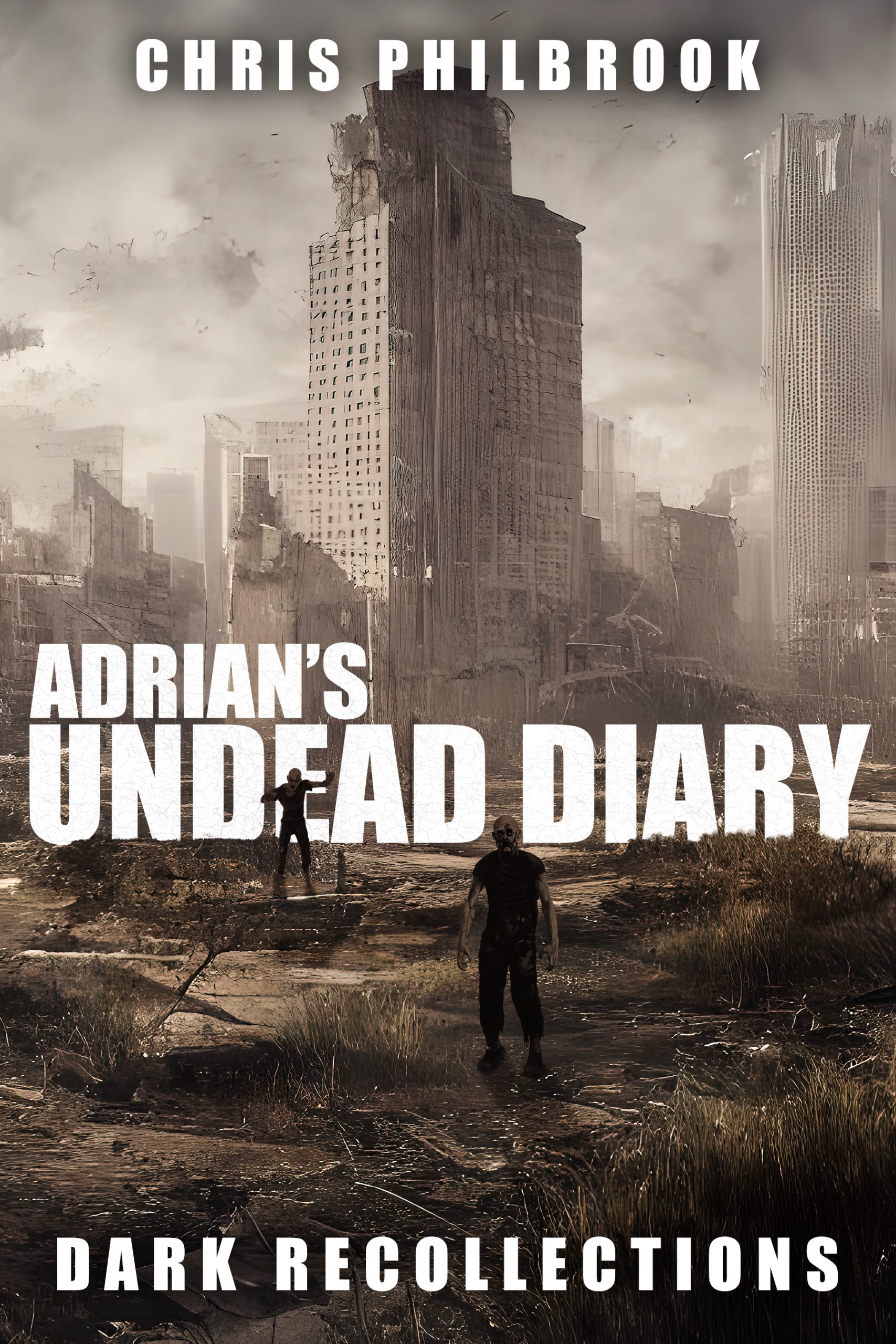
This review covers the original eight-book Adrian’s Undead Diary arc, beginning with Dark Recollections and ending with Cassie.
I first listened to the series through Audible. There was a deal on the first four books—or at least the first part of the series—and the audiobook format suited the story particularly well. Because Adrian records what happens to him in diary entries, listening to the books felt almost as though he were personally recounting his experiences. It made the story immersive from the beginning.
The series follows Adrian Ring as he tries to survive a zombie apocalypse. It begins on a relatively small scale: finding somewhere defensible, gathering food and weapons, clearing buildings and working out whom to trust. These practical survival details were one of the main reasons I kept reading. The books spend time on the everyday problems of surviving after society has collapsed, rather than treating supplies and security as matters that simply resolve themselves between action scenes.
What held my interest even more was the community that gradually developed around Adrian. He begins in isolation, but the story slowly becomes about more than one man surviving. New people arrive, relationships form and the group has to make decisions about how to protect what they are building. I became interested not only in whether Adrian would live, but in what kind of society these survivors could create.
Humour is another major part of the series. Adrian is crude, sarcastic and often very funny. In the earlier books, his humour softens the horror and makes the violence easier to tolerate. A straightforward account of zombies, death and constant danger could have become oppressive, but Adrian’s voice gives the story energy and personality.
However, the same humour became increasingly irritating to me towards the end. There are moments when the characters are facing serious danger or emotionally significant events, yet someone still makes a joke. I understand that people sometimes use humour to cope with fear, and the diary format means Adrian is recounting events after they happened. Even so, not every tense moment needs to be defused. Sometimes a scene needs to remain frightening or painful long enough for its emotional weight to settle. When the jokes became too constant, they weakened moments that should have felt more serious.
My reaction to the wider storyline also changed as the series progressed. The early books concentrate heavily on survival, zombies and human threats. Later, the explanation behind the apocalypse expands into a much more overtly supernatural conflict involving good, evil and humanity’s fate. This is not exactly magic in the fantasy sense, but it moves the series away from grounded survival horror and towards a cosmic struggle.
That development will probably appeal to readers who want an explanation for why the dead rose and who enjoy a larger mythology behind a zombie story. For me, it was less satisfying than the earlier focus on survival and community-building. By the final book, the series had moved quite far from what originally drew me into it, and I was not entirely happy with the conclusion.
My ratings reflect that progression. I gave the first two books five stars, Books 3 through 7 four stars, and the eighth book three stars. So although my overall rating is four stars, it was not a consistently four-star experience. I loved the beginning considerably more than the ending.
Despite my reservations, I read all eight books in less than two weeks. That says something about how absorbing the series could be. The diary structure, detailed survival elements, developing community and audiobook experience kept me involved even when the humour and supernatural storyline began to work against it.
I would recommend the original Adrian’s Undead Diary arc to readers who enjoy character-driven zombie fiction, detailed survival planning and a protagonist whose humour makes a brutal world more manageable. Just be aware that the story eventually becomes much more supernatural than its opening books initially suggest.