I seem to have acquired another project. This is probably one of the reasons why I will never be bored, because there is always something else I suddenly decide would be interesting to make. No, I am not abandoning BacaMalay. I have every intention of continuing with it. If anything, what I really need to do is organise the many things I already have going on in my life so that one project does not swallow all the others. But apparently that did not stop me from acquiring another one.
This time, I am trying to build an interactive romance novel. I started this mostly because I wanted to see whether I could create the kind of interactive story I would actually enjoy playing myself. I like historical romance, but I also like having some control over the heroine. I wanted choices that were more interesting than simply picking the obviously romantic answer every time, and I wanted the heroine to have a life outside the romance. She works, has to become better at what she does, maintains friendships, thinks about money and makes decisions about what kind of future she actually wants.
And, naturally, there are men. 😂 You know how, when you are reading a novel, you sometimes find yourself rooting for the other man instead? You start the story convinced that one character is obviously the right choice, and then another one appears. Maybe he has better chemistry with the heroine. Maybe he understands her more. Maybe you simply like him more than you expected to. Suddenly, you are no longer waiting for the story to follow the route you assumed it would. You are hoping the heroine makes a completely different choice.
That is part of what I want to explore with this project. There are several possible romantic routes, although I am deliberately trying to keep the main story fairly neutral. Otherwise, the heroine might appear to be madly in love with several men simultaneously, which is probably not the effect I am going for. It turns out that this is one of the many things that becomes surprisingly complicated when writing branching fiction.
The project is inspired by visual novels, where the reader makes choices that lead to different relationships and endings, except mine is not really visual. There are no character sprites, animated scenes or elaborate backgrounds. It is more of a text-based interactive story, with the choices and branching routes doing most of the work.
Writing an ordinary story means deciding what happens next. Writing an interactive story means constantly asking what happens if the reader does something else, and whether something she chose three chapters ago should change how a character behaves now. Somehow, you end up with spreadsheets, relationship variables, story trees and several alternative endings when originally you just wanted to write a nice romance.
It is still very much a work in progress. Characters are set, storylines are beefed up and entire systems have refurbed after a few trial and errors. I have no idea yet what the finished version will look like, and it may not even see the light of day.
For now, I am trying to be sensible about it. BacaMalay is still there, this blog is still here, and I also have work, language learning, books I want to read and an assortment of other things competing for my time. What I probably need more than another project is a better system for organising all of them.
Still, I suppose this is the answer to why I am rarely bored. There is almost always something I want to learn, make, fix or figure out, and apparently finishing one idea is not a prerequisite for becoming curious about another. Whether this interactive novel eventually becomes something other people can play or remains one of my many experiments, for now I am enjoying finding out where it goes.
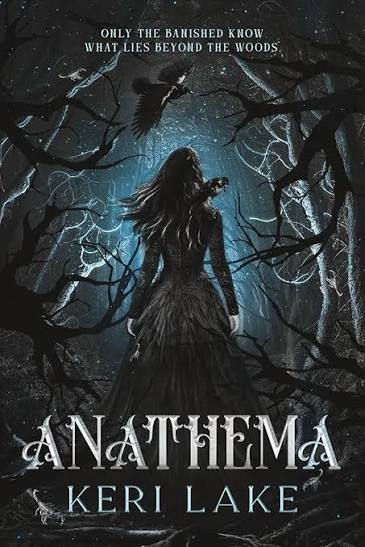
Maevyth Bronwick enters the forbidden Eating Woods in search of her banished sister and crosses into Aethyria, a dark world of magic, curses, and dangerous creatures. There she meets Zevander Rydainn, a centuries-old assassin whose curse may be tied to Maevyth’s blood, binding their fates together in ways neither of them expected.
I picked up Anathema because I was in the mood for dark fantasy romance, and Zevander sounded exactly like the sort of hero I usually like — cold, dangerous and not particularly friendly.
The story follows Maevyth Bronwick, who lives in Foxglove Parish, where everyone knows not to go near Witch Knell, otherwise known as the Eating Woods. People who are banished there don’t come back. Then Maevyth’s sister, Aleysia, is banished into the woods, and Maevyth goes after her. That takes her somewhere she definitely wasn’t expecting to end up: beyond the mortal world and into Aethyria, where she meets Zevander Rydainn, known as the Scorpion. He is a centuries-old assassin carrying a curse, and Maevyth’s blood may be the key to breaking it.
So naturally, he can’t simply get rid of her. Not to mention that he was totally into her. 😂 Apparently mortals smell rather deliciously like oranges to the immortals of Aethyria. The problem is that mortals are also associated with disease, which is one of the reasons crossing between their worlds is rather complicated.
This was actually a very interesting setup for me because their relationship doesn’t begin with romance. Zevander has a practical reason to keep Maevyth alive, while Maevyth has her own reason for wanting to get back to the mortal world. And this is where Maevyth and I eventually began to have problems.
Initially, I really liked her. She seemed level-headed, sensible, observant and surprisingly capable considering the horrible environment she had grown up in. Then Aleysia was involved and suddenly, to me, all reason went out the window. I understand loving your sister. I understand wanting to know what happened to her. But Maevyth had just entered a forest where she had literally watched a monster tear the flesh off Uncle Riftyn. She barely escaped with her own life, somehow managed to cross into an entirely magical world, and Aleysia was trapped on the other side with that creature approaching her.
At that point, what would a sane and reasonable person realistically think had happened to Aleysia? Because my assumption would not be, “She’s probably fine. I just need to get back there.” To me, there was practically nothing that would make me believe Aleysia should still be alive. Maevyth’s single-minded certainty about it started bothering me because it didn’t fit the level-headed girl I thought I had met at the beginning of the book.
The romance, though, worked much better for me. The attraction was pretty much there from the beginning, especially on Zevander’s side. For someone who wouldn’t even blink when killing someone, the fact that he couldn’t bring himself to kill Maevyth while she was lying in her bed did it for me. 😂 His attraction to her was hardcore from day one, even if he couldn’t bring himself to admit it. For Maevyth, it was much slower. There were practical reasons for them to remain together before there were romantic ones, and their relationship developed gradually rather than having her immediately fall all over him. That part worked for me.
The world itself is much darker than a lot of romantasy I’ve read. This isn’t just a pretty magical forest with a few dangerous creatures wandering around for decoration. The Eating Woods are genuinely horrible, some of the creatures are grotesque, and there is an underlying horror element throughout the story. There is also a LOT of worldbuilding: curses, blood magic, mages, different realms, creatures, old gods, prophecy, Zevander’s history… A LOT.
But surprisingly, I was completely immersed in it. I didn’t actually just listen to Anathema. I read the book while listening to the audiobook at the same time, and that combination was chef’s kiss. 🤌 Having the text in front of me while Melissa Barr and James Cassidy brought the characters to life made it much easier for me to sink into such a complicated world. Instead of struggling to keep up with unfamiliar names, places and all the lore through audio alone, I could actually see everything on the page while hearing it performed. I tore through this enormous book in about a day, so whatever complaints I have about it, boredom certainly wasn’t one of them.
And then there was James Cassidy. I think we need to acknowledge that his voice may have had some influence on my continued interest in Zevander. 😂 His performance suited Zevander extremely well: deep, controlled, slightly threatening — basically exactly what I wanted this character to sound like. That deep baritone voice certainly helped the imagination.
Unfortunately, the ending did the book some harm for me because then we get the trapdoor. After everything Maevyth has gone through trying to find Aleysia, she discovers her sister beneath the floorboards of the Crone Witch’s cottage. Alive.
And my brain immediately went: No. No, no, no.
How long had she been down there? How did she survive everything that happened after Maevyth crossed into Aethyria? How did she get from the Eating Woods into that crawl space? What exactly had been happening to her all this time?
I know it is a cliffhanger and obviously the next book can provide explanations. But as the ending of Anathema, it asked me to accept one thing too many without giving me enough information to make it believable. And this is one of my problems when I read: once something doesn’t make logical sense to me, my brain starts pulling at the thread.
I can overlook a lot in fantasy. Magic? Fine. Immortals? Fine. Giant murderous creatures roaming around a cursed forest? Absolutely. But the internal logic still has to convince me. Between Maevyth repeatedly throwing reason aside whenever Aleysia was involved and then discovering Aleysia alive under that trapdoor, I reached the point where I couldn’t keep making excuses for the story.
Then there is another cliché I keep noticing in these kinds of books: why do they all have masquerade parties? 😂 At some point, the mysterious masked ball has to stop being mysterious.
Anyway, other than those jarring things, there was so much about Anathema that I genuinely enjoyed. I liked Zevander. I loved the dark gothic atmosphere. The Eating Woods were wonderfully horrible. The world was interesting enough that I became completely immersed in it, and reading the book together with the audiobook was probably one of my favourite reading experiences in a while. And apparently I liked James Cassidy’s voice enough that I subsequently went looking through the other audiobooks he had narrated. So there is that. 😂
Would I continue with The Eating Woods? No. I was curious about what happens next, but not curious enough to read another enormous book hoping that the things which bothered me would eventually be explained.
Sometimes a book can keep me completely absorbed while I’m reading it and still lose me once I start thinking about what actually happened. Anathema was one of those books.
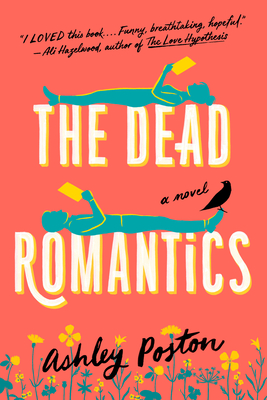
Florence Day is a ghostwriter who has stopped believing in romance. After returning home following her father’s death, she begins seeing the ghost of her new editor, Benji Andor. As Florence navigates grief, family, and the strange connection growing between them, she is forced to confront what she believes about love, loss, and second chances.
Florence Day is a ghostwriter for a famous romance novelist, which is rather unfortunate because she has stopped believing in romance herself. After a bad breakup, she is struggling to finish the final book in her contract, and her new editor, Benji Andor, refuses to give her the extension she desperately wants. Then Florence’s father dies, sending her back to the small town she left behind and to the family funeral home where she grew up. There is one other complication: Florence can see ghosts. And not long after she gets home, Ben turns up at the funeral home — apparently dead.
That premise was actually what attracted me to the book. I had already thought of The Ghost and Mrs Muir when I read the description: a living woman developing a relationship with a dead man who cannot really be part of her ordinary life. The circumstances are different, of course, but the idea itself did not feel particularly new to me. Still, The Dead Romantics tells its story well enough that I enjoyed reading it, especially once Florence and Ben began spending more time together.
The part that worked best for me was the yearning. There is a scene where Florence and Ben talk about how different things might have been if they had met earlier, before he “died,” and that was probably the part that got to me most. They clearly like each other, but as far as they know, they have met too late. That sense of “if only” worked much better for me than the actual mystery of whether Ben was really dead.
Unfortunately, I guessed fairly early that Ben was not actually dead. He kept disappearing without properly explaining where he went, and there were little things that made me wonder whether he was actually lying somewhere unconscious and hearing people around him. Once that possibility occurred to me, I could not really unsee it. So when the reveal eventually came, my reaction was less “Oh!” and more “Yep.” I also noticed things about the ghost rules that did not always seem completely consistent, which made me pay even more attention to how the supernatural side of the story worked.
Another thing that increasingly pulled me out of the book was how deliberate the diversity began to feel. Florence’s brother is gay, her sister Alice eventually gets together with her female best friend Rose, and there is also a nonbinary character using they/them pronouns. Any one of those characters on their own would not have bothered me. But when they kept appearing within the same relatively small cast, I became conscious of the author assembling a very specifically representative group of characters rather than simply meeting people in a story. By the time Alice and Rose were heading in that direction, I had already guessed that too. I was half-expecting a disabled Black lesbian trans woman to appear next just to make sure there was no diversity box left unticked. It may sound harsh, but that was genuinely the point at which the representation stopped feeling organic to me and started feeling constructed.
And that is probably my main problem with The Dead Romantics: I could see too much of the machinery behind it. I could see where the central twist was going, I could predict at least one of the relationships, and some of the contemporary-romance ingredients felt as though they had been deliberately put into place because this is what a modern romance novel is expected to contain. At the same time, I cannot call it a bad book. The premise is good, the storytelling is engaging, Florence’s grief over her father gives the story more emotional weight than just the romance, and I genuinely enjoyed the relationship between Florence and Ben while they believed their situation was impossible.
So three stars feels right to me. There was enough here that I enjoyed, and I certainly do not regret reading it. But it was also predictable enough — and occasionally calculated enough — that I could never completely disappear into the story.
I was watching videos of the aftermath of the flash floods in Nepal, and what stayed with me was not only the destruction itself, but the people working through it.
Rescuers searching for survivors and for bodies. People going into dark tunnels, narrow crevices and dangerous places where I honestly do not think I could make myself go. Then there are those working in morgues, dealing with the dead, identifying bodies, cleaning up, and handling the parts of a disaster that most of us would rather not even imagine.
It made me think about the different kinds of people among us.
In ordinary life, the people who stand out are often the ones who disappoint us. The unreliable ones. The people who avoid responsibility, leave work for others, or somehow disappear when something difficult needs to be done. Those are the people we notice because they frustrate us.
But then something terrible happens, and suddenly another kind of person becomes visible.
People who will crawl into dangerous places looking for someone they have never met. People who will keep searching when they are exhausted. People who will handle bodies so that another family can have an answer. People who are willing to do work that many of us could not stomach, physically or emotionally.
I do not think I could do it.
There must be a certain kind of person who can tolerate those things. Fear, confined spaces, blood, death, terrible smells, exhaustion, grief. Not everyone can. I certainly do not think I could.
And I am glad there are people who can.
Perhaps that is what struck me most. We can become cynical about people because the worst behaviour is often the most noticeable in everyday life. But there are so many decent, dependable people among us whom we may never notice at all until something goes terribly wrong.
We may never know their names. We may never meet them. On an ordinary day, we might pass these people in the street without giving them a second thought.
But when they are needed, they are there.
They go into the places most of us would be afraid to enter. They do the work most of us would struggle even to witness. They carry things the rest of us are fortunate not to have to carry.
And I am deeply grateful that there are people like this among us — the unsung heroes who deserve a standing ovation for the incredible work they do.
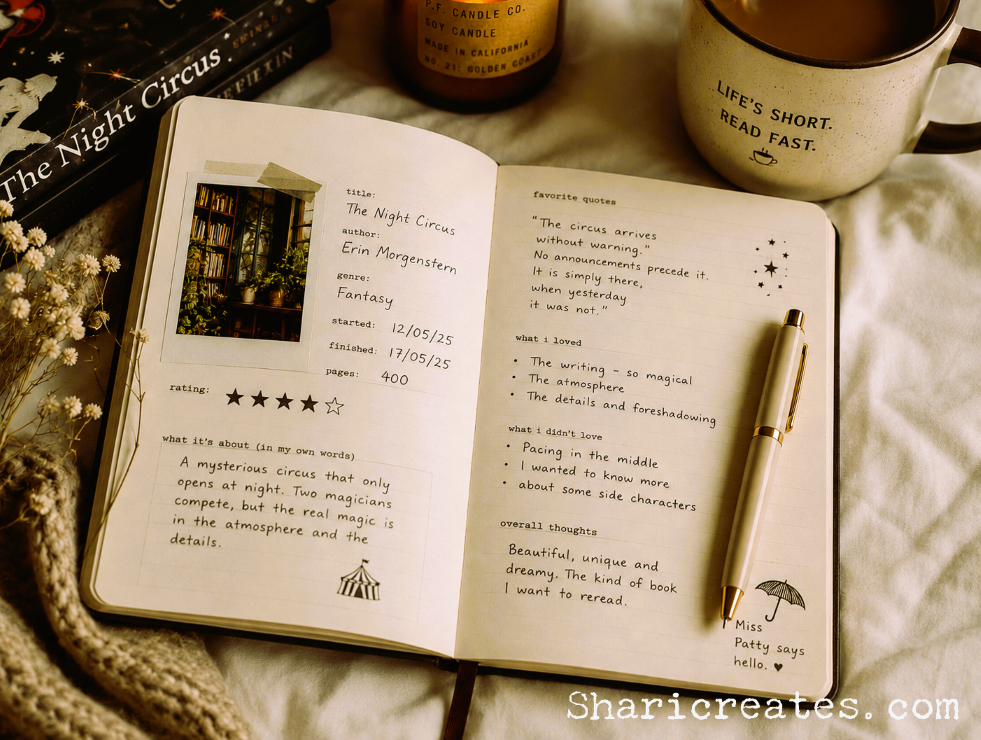
If you enjoy reading but aren’t particularly interested in becoming a book blogger or building an audience, you might wonder whether there is any point in writing book reviews at all.
After all, who are you writing them for?
I’ve been writing more book reviews myself lately, and I’ve realised that the answer doesn’t necessarily have to be other people.
Writing a review can be useful even if you are the only person who ever reads it.
It makes you think about what you read
It is very easy to finish a book, decide that it was good or bad, and immediately move on to the next one. Writing a review makes you stop for a moment.
Why did you like it? What annoyed you? Did the characters behave consistently? Did the story make sense? Did the ending actually work?
You don’t need to write an essay. Even a short review forces you to turn a vague reaction into an actual opinion.
You start reading more actively
This is something I have noticed in my own reading. Because I write about books afterwards, I tend to notice more while I am reading them. Small details stand out. I notice when a character behaves strangely, when something appears inconsistent, or when an author does something particularly well.
Sometimes something bothers me halfway through a book and is explained perfectly later. Sometimes it never is. Either way, I am paying attention rather than simply consuming the story.
It gives you practice expressing an opinion
There is a difference between saying, I hated this book, and being able to explain why it didn’t work for you. Maybe the pacing was too slow. Perhaps a character’s actions made no sense. Maybe the story was perfectly well written but simply wasn’t to your taste.
Working out that distinction is useful. Writing reviews gives you regular practice at organizing your thoughts and explaining an opinion clearly, even when that opinion is entirely subjective.
You remember the books better
If you read regularly, books can eventually start blending together. A review becomes a small record of what you thought at the time. Months or years later, you can look back and remember not only what the book was about, but how you reacted to it.
And occasionally you might discover that your opinion has changed.
Nobody has to read it
You don’t need a blog. You don’t need followers. You don’t even need to publish the review. Write it in Goodreads, StoryGraph, a notebook, a private document or wherever you keep your reading records.
The value isn’t necessarily in having an audience. Writing the review makes you stop, think about what you have read, decide what you actually think about it and put that thought into words.
So, is writing a book review worth it when nobody is going to read it?
I think so.
Because you already got something out of writing it. You thought more carefully about the book, worked out what you really thought, and created a record you can return to later.
And if someone else does read it and finds it useful, that is an added benefit — not the only reason to write it.
I have to admit something. Sometimes when I finish an audiobook and mark it as “Read” on Goodreads, there is a tiny part of me that feels as though I am cheating. Did I really read the book?
Technically, my eyes did not move across the words on the page. Someone else read the words aloud while I listened. But I still finished the book. And this is where I started wondering whether we are perhaps getting too caught up in the word reading rather than what it actually means to finish a book.
Why I Listen to Audiobooks
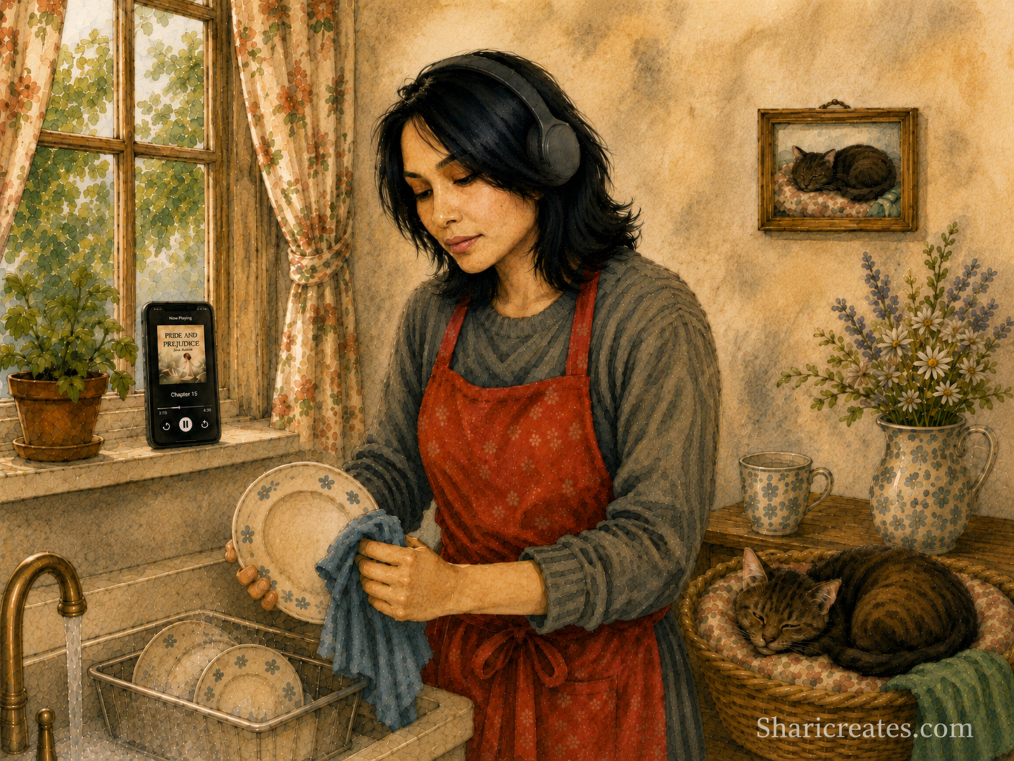
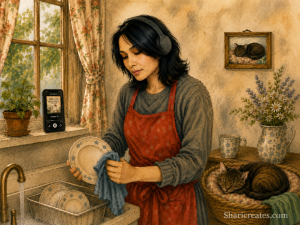
I listen to audiobooks mostly because they allow me to do something else at the same time. Housework is probably the biggest one. I can listen while washing dishes, folding clothes or doing other boring things around the house. I also listen when I commute.
Sometimes my eyes have simply had enough of staring at words for the day, especially if I have already spent hours looking at a screen. An audiobook lets me continue with a book without asking anything more from my eyes.
When My Mind Wanders
There is, however, one obvious problem with this wonderful ability to multitask. Sometimes my mind wanders. I will be washing dishes, thinking about something completely unrelated, and then suddenly realise that I have absolutely no idea what happened during the last thirty seconds.
“Hey Google, rewind 30 seconds.” I have said that more times than I would like to admit. 😅
At first, I thought this was perhaps another reason audiobooks did not quite count as “proper” reading. Surely if I had been sitting down with a book in front of me, I would have been paying more attention. Except that isn’t actually true. I have done exactly the same thing with printed books.
Sometimes I reach the bottom of a page and realise that although my eyes have gone over every single word, my brain apparently decided not to participate. So I go back and read the paragraph again. With an audiobook, I rewind. With a physical book, I reread. The problem isn’t necessarily the format. Sometimes our attention simply wanders.
The Other Audiobook Hazard: Falling Asleep
There is another danger with audiobooks, of course: falling asleep. This happens to me particularly easily if I listen while lying down. One moment I am happily following the story and the next thing I know, I wake up and the narrator has somehow travelled three chapters into the future without me.
I suppose this is precisely why Audible has a sleep timer. 😂 And again, this isn’t entirely unique to audiobooks. I have fallen asleep with an actual book in my hands before too.
So, Does an Audiobook Count as Reading?
So perhaps the question shouldn’t really be, “Did I read this book?” Perhaps it should be, “Did I experience and finish this book?”
If I listened to the entire unabridged audiobook, I know the characters. I know what happened. I know the ending. I can discuss the book with someone who read the paperback. The story reached me through my ears instead of my eyes.
That seems like a rather small distinction on which to decide whether a book “counts.” I can understand why people distinguish between reading and listening. They are technically different activities.
But when Goodreads asks me whether I have finished a book? Yes. I finished it. And I think I am finally going to stop feeling as though I cheated.
I grew up in a family of nine children. I was number eight.
There were a lot of us, and we grew up with very little. When I say little, I don’t mean that we simply went without luxuries. At times, we didn’t even have some of the basics, including the security of a stable roof over our heads.
So when I saw the question, What’s something you do completely differently from how you were raised?, my answer came quite quickly: I chose to have one child.
Part of that decision was very practical. In this economy, one child was what we realistically felt we could afford to care for properly. A Brookings Institution estimate from the United States put the cost of raising a child to age 17 at about US$310,000 for a middle-income family, before college. Broader calculations that include education can push the figure beyond US$400,000 per child. Of course, those numbers would look different elsewhere because wages, housing, childcare, education and living costs vary from country to country. But the larger point is the same: raising a child properly costs a great deal over many years.
For us, one child was what we felt we could manage without constantly compromising on the basics. Not just food and clothes, but a stable home, education, attention, the things she needed and, if we could manage it, a little extra when she needed that too.
Of course, one of the things people sometimes say about an only child is that she might be lonely. But having siblings does not automatically protect anyone from loneliness. I grew up with eight of them, and I know that very well. A large family can bring companionship, but it can also bring complicated relationships, toxic family dynamics and even arguments over things like inheritance.
I would rather not treat siblings as a kind of insurance policy against loneliness. My daughter has friends, and I hope she will continue to build relationships with people who genuinely care about her. Family is something we are born into and cannot choose. Good friends, at least, are people we can choose — and who choose us back.
My parents never owned a house. There was never that feeling that somewhere underneath everything else that might go wrong, there was at least something solid. My daughter will have that. The home we own will eventually be hers one day, and that matters to me more than I think I would have understood when I was younger.
It is not really about property. It is about security.
I know that owning a home does not guarantee an easy life. Neither does having parents who plan carefully. I cannot protect my child from every disappointment, every bad decision or every difficult period she may face, nor do I want to remove every struggle from her life. But I do not want her to have to begin adulthood already trying to repair the broken pieces of her childhood. I want her to be able to move forward.
That is probably the biggest difference between the way I was raised and the way I have tried to raise my own child. When we made important decisions, she was part of the calculation. Can we afford this? What does this mean for her? Will she have what she needs? Are we leaving her something to stand on?
I am sure we have made mistakes. Every parent does. And one day she may tell me about things from her childhood that I understood completely differently at the time. But I hope that beneath all of that, there is one thing she will always know: she was considered. Her future was considered. Her security was considered.
Perhaps that is what I wanted most to give her — not a perfect childhood, and certainly not a life without problems, but the kind of foundation I never felt I had myself.
For me, doing things differently meant having one child and trying to give her enough room, enough attention and enough security to build from there.
Serena Staverley is left in a precarious position after her father gambles away the family estate and her future to Lord Harry Wrotham. Lord Justin Vulcan, a formidable and famously successful gambler, wins Staverley Court and Serena’s fate from Wrotham. Serena initially fears the reserved and intimidating Vulcan, but as family intrigue, danger and secrets unfold around them, she gradually discovers that his reputation does not tell the whole story.
This is going to be slightly unfair as a book review, because I cannot talk about A Hazard of Hearts without talking about the 1987 adaptation too. For me, the two have become almost inseparable. I watched the movie first, and this is one of those very rare cases where I can honestly say that the adaptation is as good as the book.
The story follows Serena Staverley, whose father has gambled away the family fortune. In one final disastrous wager against Lord Harry Wrotham, he loses Staverley Court and effectively Serena’s future as well. Yup, the bugger wagered his own daughter thinking he could overturn his bad luck and win back everything. Lord Justin Vulcan then challenges Wrotham and wins everything from him. It is an outrageous setup even by old-fashioned historical-romance standards, but it also means that Vulcan, in a very strange way, has actually helped Serena. He has taken her out of Wrotham’s hands rather than being the man who engineered her father’s ruin.
Serena naturally has every reason to be wary of Vulcan. He has a formidable reputation: serious, reserved, not particularly talkative, and apparently blessed with the luck of the devil at the gaming table. He seems like the sort of man who simply does not lose. Looking back, he has rather strong Mr Darcy vibes. The interesting part, though, is that his behaviour keeps contradicting the frightening reputation. He does not treat Serena as though she is part of his winnings, he does not take advantage of the situation, and little by little he proves himself respectable, dependable and trustworthy.
That is what makes the romance work for me. Serena does not suddenly fall for him simply because he is handsome (though Marcus Gilbert was handsome in the movie 😍) , mysterious or powerful. He earns her trust first. So while the story definitely has enemies-to-lovers vibes, I would probably describe it more accurately as distrust-to-love: wariness, observation, trust and then attraction.
And then, of course, there is the movie. Because I watched it before reading the book, Helena Bonham Carter became Serena in my imagination and Marcus Gilbert became Lord Vulcan. Their chemistry was the bomb. There really is no more sophisticated way for me to put it. 😂 Helena Bonham Carter gave Serena exactly the right combination of youthfulness, pride and innocence, while Marcus Gilbert had the serious, controlled presence Vulcan needed. Together, they just worked.
And when Vulcan says, “Shall I make you fall in love with me, Serena?” I said: YESS!!!
The supporting characters were excellent too. Diana Rigg was wonderfully memorable as Vulcan’s mother, Lady Harriet, who is a real character in her own right: dramatic, controlling and very much a force to be reckoned with. Edward Fox was also excellent as Lord Wrotham. The whole production felt much richer than a simple television romance, and one of the reasons it works so well for me is that, as I remember it, the adaptation stayed quite true to the book. The characters, atmosphere and even memorable lines carried across to the screen.
I finally found a copy of the novel in 2008 through eBay, from a secondhand bookseller in the US. I had already been looking for it for quite a while, so actually getting hold of it felt like finding something I had been chasing for years. And thankfully, the book lived up to the movie.
In fact, watching the adaptation first helped my reading experience. I already had Serena and Vulcan clearly formed in my imagination, and instead of finding that limiting, I enjoyed having Helena Bonham Carter and Marcus Gilbert accompanying me through the story. The novel itself is wonderfully dramatic: gambling, family intrigue, danger, secrets, villains and plenty of romantic tension. It is exactly the sort of unapologetically old-fashioned romantic adventure that Barbara Cartland did so well.
For once, I do not feel the need to choose between the book and the adaptation. I love both. The movie made me want to find the novel, and the novel gave me more of a story I had already fallen for.
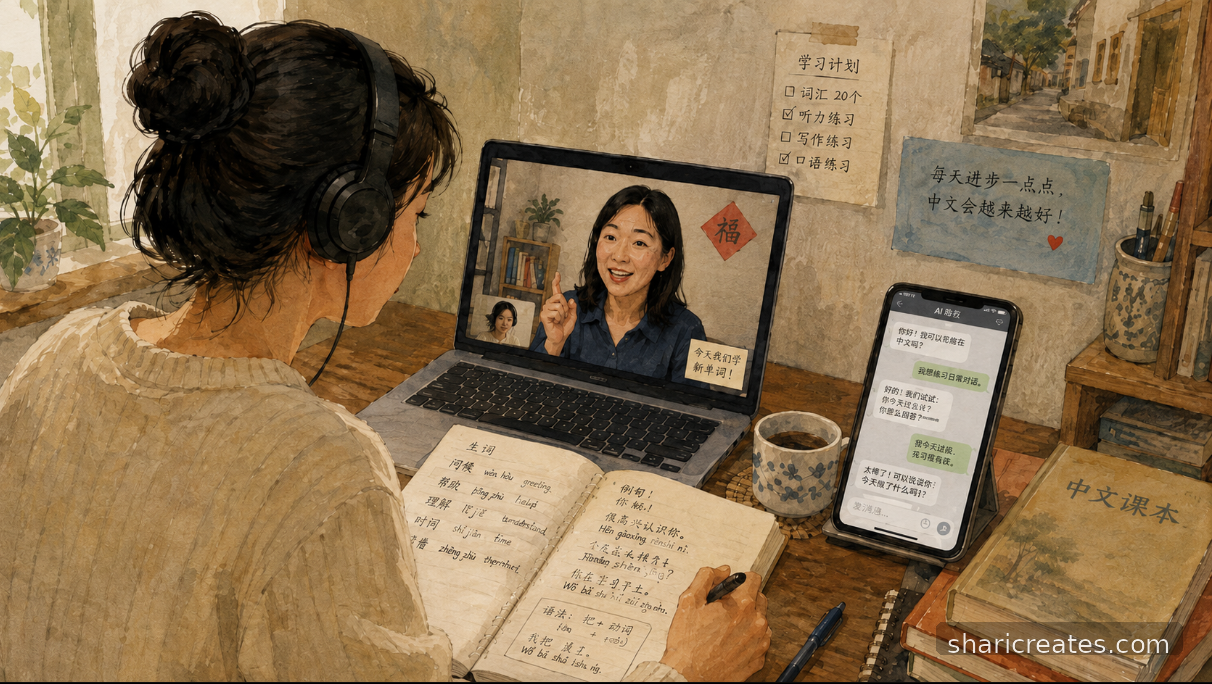
I have been learning Mandarin on and off for years, and in 2022 I finally decided that self-study alone was not enough. That was when I started using Preply. Until then, I could study vocabulary, learn grammar, listen to recordings, work through textbooks and use online resources. What I could not easily do by myself was have an actual conversation, so I started taking lessons with a native Mandarin speaker.
A few years ago, I would probably have said quite confidently that this was one thing technology could not replace. Now I am not so sure. AI has changed very quickly, and I can ask it to explain the difference between two Chinese words, tell me whether a sentence I have written sounds natural, create exercises around vocabulary I am learning, or give me examples at approximately my level. I can even speak Mandarin to it and have it answer me.
At that point, the obvious question is: if AI can already do all of this, do I still need to pay for a human tutor? After several years of using Preply, stopping for a while, and then returning to it, I think the answer is more complicated than simply yes or no.
Learning Mandarin with both a human tutor and AI language practice.
For Some Things, AI Can Probably Replace a Tutor
There are parts of language learning for which I no longer think I need to pay someone by the hour. Grammar is an obvious example. If I do not understand why 又 belongs in one sentence and 再 belongs in another, I can ask AI. If the explanation does not make sense, I can ask it to explain it differently, then ask for ten examples, a quiz, or five sentences where I have to choose the correct word. There is no clock ticking while I do this.
The same applies to vocabulary. I can compare similar words, ask for example sentences, practise sentence construction or ask why something I wrote sounds unnatural. Unlike a weekly lesson, AI is available whenever I happen to want it. Sometimes a question occurs to me late at night, and I do not have to write it down and remember to ask my tutor several days later.
For this kind of study, AI is extremely useful. In fact, I would rather do much of this outside my paid lesson and use tutor time for something I cannot reproduce quite so easily.
AI Can Even Talk to Me
This is where things become more interesting. One of the main reasons I started using Preply was speaking practice, because understanding Mandarin and actually producing Mandarin are two very different things. You can recognise hundreds of words while reading or listening and then suddenly discover that your brain has misplaced every single one of them when somebody asks you a question.
AI can now help with this too. I can tell it to speak to me in Mandarin at roughly HSK 3 or HSK 4 level, ask it to correct what I say, slow down, repeat itself or explain something I did not understand. In some ways, this is easier than speaking to a person. If I say something ridiculous, I do not have to be embarrassed. 😂 I can stop halfway through, try the same sentence several times, switch to English, or abandon the conversation entirely and come back later.
And that last point is also part of the problem.
I Stopped Preply — and Eventually Came Back
I stopped taking regular Preply lessons in 2024. It was not because I had decided that tutoring was no longer useful; ACCA and work were taking up more of my time, and Mandarin simply moved further down the priority list. For quite a while, my learning became much less consistent.
By the time I returned to Preply in mid-2026, AI language tools were considerably better than they had been when I first started taking lessons. Technically, I had more ways to study independently than ever before. But I realised that what I had been missing was not access to explanations, exercises or vocabulary lists. I missed having an actual lesson coming up.
That sounds like a small thing, but for someone like me who is not naturally the most disciplined self-learner, it matters.
A Human Tutor Gives Me Another Layer of Accountability
If an AI conversation is available whenever I want it, it is also very easy to decide that I will do it tomorrow, and tomorrow can become next week. A booked lesson is different. There is another person who will be there at a particular time, and I know I am going to have to talk. That gives me a reason to prepare.
I am more likely to review vocabulary because I might actually need to retrieve it during the lesson. I am more likely to think about what I want to say, and I pay more attention to things I have recently learned because I know there is a possibility that they will come up in conversation. The lesson itself also creates a kind of pressure that AI does not — not unpleasant pressure, just enough.
If I cannot remember how to say something to AI, I can close the conversation. If I cannot remember how to say something to my tutor, there is another person waiting for me to finish the thought, so I have to try. I might hesitate, use the wrong word or have to explain the idea in a simpler way, but that is much closer to what happens in a real conversation.
AI can remind me to study and it can even simulate accountability, but knowing that I will have to communicate with a real person affects my behaviour differently. For me, that is one of the biggest reasons a human tutor still has value.
Real Conversation Is Messy
There is another difference: AI conversations tend to be very accommodating, while real people are not always so predictable. They misunderstand you, use words you were not expecting, change the subject, speak faster than you would like, tell stories and interrupt. Sometimes the conversation wanders somewhere completely different from the lesson material, and that is useful.
Language does not normally happen in carefully controlled exercises. It happens between people who have their own personalities, habits, experiences and ways of expressing themselves. That unpredictability forces me to listen differently and to respond rather than simply complete an exercise.
A Tutor Gets to Know How You Speak
There is another advantage that becomes more noticeable when you stay with the same tutor: they start knowing you. Not just who you are, but how you use the language. A tutor who has heard me speak repeatedly can recognise the mistakes I tend to make, notice that we covered something before, and tell when I probably know a word but simply cannot retrieve it quickly enough.
They also bring their own experiences into the conversation. A discussion about weather can suddenly become a conversation about daily life. A vocabulary word can lead to a cultural explanation. Something I say can remind my tutor of something completely unrelated, and suddenly we are discussing a topic I never prepared for. Those are often the moments when speaking practice becomes most useful.
AI can provide information about Chinese culture, but information about a culture and having a conversation with someone who actually lives within it are not quite the same thing.
So Can AI Replace a Human Tutor?
For some learners, perhaps it can. If someone is extremely disciplined, comfortable speaking to AI and mainly wants structured practice, the amount that can now be done without a human tutor is remarkable. For me, however, I do not think I would replace a human tutor completely. I would use one differently.
I no longer think I need to spend much of a paid lesson listening to basic grammar explanations. AI, textbooks, courses and other resources can handle a lot of that. I would rather study those things independently and use my tutor for the parts that are harder to reproduce alone: speaking, pronunciation, real-time vocabulary retrieval, unpredictable conversation, and the accountability of knowing that another person will actually be waiting for me.
AI has therefore not made human tutoring useless for me. If anything, it has made me more selective about what I want from a tutor. AI can be the infinitely patient study partner that is available whenever I need it, while a human tutor gives me something else: another human being I actually have to communicate with.
And for someone who is learning a language because she ultimately wants to speak to real people, I still think that matters.
I don’t think I consciously decided to pick up a new hobby. It just happened.
A few weeks ago, I started working on a small website called BacaMalay. The name is meant quite literally: baca means “read” in Malay, and BacaMalay is pronounced roughly BA-cha ma-LAY — the c in Malay sounds like ch. The idea was fairly simple: create a Malay learning resource for people who want reading material that feels more interesting than textbook dialogues.
At first, I thought I would simply put together some graded readings. Then I found myself writing stories.
I started thinking about which words a beginner would realistically know, how much new vocabulary is too much, whether a sentence sounds genuinely Malay rather than something translated from English, and how to explain little cultural things that Malaysians would normally never think to explain.
Then came the folklore.
Sang Kancil — the mouse deer — led to more Sang Kancil. Then Hang Tuah and Hang Jebat appeared. Suddenly I was planning chapters, choosing illustrations and thinking about how an old story could be made accessible without turning it into a children’s story.
It has become strangely absorbing.
What I enjoy most is probably the combination of things involved. There is writing, language, research, design and a little bit of problem-solving. One moment I’m working out whether a word belongs at Beginner or Elementary level; the next I’m trying to decide how much cultural explanation a reader actually needs.
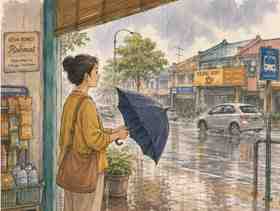
Even the illustrations have become part of the process. I wanted the site to feel recognisably Malaysian, so ordinary things — a rainy street, a kedai runcit (neighbourhood grocery shop), a bus stop, a burger stall — matter just as much as the stories themselves.
What began as an attempt to build a useful Malay learning resource has quietly turned into something I genuinely enjoy working on.
I’m still not entirely sure whether I should call BacaMalay a hobby, a project, or an experiment.