Shari Creates

Books, languages, things I make and notes from everyday life.

Author: Shari

  • 我的猫Panni | My Cat Panni

    以前,我有一只猫。它叫Panni。

    它的毛很长,颜色是深棕色,看起来差不多是黑色的。

    Panni只有一只耳朵,但是它还是很可爱。

    它很安静,也很喜欢跟我们在一起。

    我工作的时候,它常常在我旁边睡觉。

    Panni已经不在了,但是我常常想它。

    它不只是一只猫,也是我的家人。

    我不会忘记它。

    I used to have a cat named Panni.

    She had long, dark-brown fur that looked almost black.

    Panni had only one ear, but she was still very cute.

    She was quiet and liked being with us.

    When I worked, she often slept beside me.

    Panni is no longer here, but I often think about her.

    She was not merely a cat; she was also part of my family.

    I will not forget her.

  • Until the End of the World by Sarah Lyons Fleming — Book Review

    Until the End of the World by Sarah Lyons Fleming — Book Review

    Until the End of the World by Sarah Lyons Fleming book cover

    When a zombie outbreak reaches Brooklyn, Cassie Forrest and her friends flee for the relative safety of her late survivalist parents’ cabin. Escaping the city is only the beginning as the group faces the infected, dangerous survivors and unresolved personal relationships.

    My rating: ★★★☆☆

    There is something especially unsettling about a zombie story that begins in a familiar, ordinary place. In Until the End of the World, Cassie and her friends must escape Brooklyn after an outbreak turns everyday life into a fight for survival. With the dead walking and society rapidly collapsing, it has all the ingredients for a tense apocalypse story.

    I enjoy character-driven survival stories. The relationships between survivors matter because they give us a reason to care whether anyone makes it through. Reminiscing about the old world can also make the losses feel real. Here, though, those elements occupied so much of the story that they began to weaken the danger surrounding the characters.

    There were long stretches devoted to memories, romantic feelings and unresolved relationships when I wanted more urgency. The characters are supposedly living through the end of civilisation, with dead people walking around and trying to take bites out of the living, yet they frequently seem more concerned with romantic navel-gazing.

    Hellooo? Zombie apocalypse?

    The final straw for me was Cassie becoming involved in pairing her recent ex with her best friend’s younger sister. Perhaps Cassie had never truly loved him, and some readers may see nothing uncomfortable about the situation. I did. It felt strange and far too entangled for me—especially when the characters had rather more immediate problems involving the collapse of civilisation and the walking dead.

    The survival preparations and journey away from Brooklyn gave the story a promising foundation. Cassie’s family background also makes her more prepared than the average person suddenly thrown into an outbreak. Those details helped keep me interested, and the book was readable enough that I never disliked it completely.

    My frustration came from the contrast between the scale of the catastrophe and the emotional tone. The stakes should have felt enormous, but the repeated focus on relationship drama made them seem strangely distant. I wanted the zombies and the collapse of society to drive the story, with the personal relationships developing naturally under that pressure—not competing with it for attention.

    I gave Until the End of the World three stars. The survival premise had potential, but the emphasis on romantic discussion and complicated personal relationships was not what I wanted from the story. Although this is the first book in a series, I could not bring myself to continue beyond it.

    Readers who enjoy relationship-focused apocalypse stories may connect with it much more than I did. Personally, I needed more survival horror, more urgency and considerably less time spent contemplating who still has feelings for whom while the dead are walking.

    Recommended for: Readers who enjoy character-focused post-apocalyptic fiction, found-family dynamics and romance alongside their zombies.

    Perhaps not for you if: You want a tense, horror-heavy zombie story in which survival takes precedence over relationship drama.

  • A May Day in Várbalog: Grass Cutting and Cherries

    A May Day in Várbalog: Grass Cutting and Cherries

    In May, we drove out to Várbalog to take care of one of those jobs that comes with having a house in the countryside: cutting the grass. By then, the garden had become very green and rather overgrown, so there was plenty to do.

    We bought the house sometime in 2021. It was a period when Budapest property had become increasingly expensive and many buyers were looking beyond the capital for more space at a price they could still manage. The difference was considerable: the Hungarian National Bank reported that in the second quarter of 2020, the median transaction price was HUF 28 million in Budapest, compared with HUF 12 million in rural towns and HUF 5 million in smaller municipalities. Prices continued to rise in 2021, including outside Budapest, so country properties were hardly a secret bargain by then.

    Várbalog is a small village of only a few hundred residents in Győr-Moson-Sopron County, close to the Austrian border. It belongs to the Mosonmagyaróvár district and lies about nine kilometres northwest of Jánossomorja. The countryside around it is very flat and open, with fields stretching almost uninterrupted towards the horizon. In May, some were bright with flowers, while red poppies edged others. A small historical curiosity: early records referred to the settlement as Váras-Balog and also Csütörtökhely—two names used long before the modern Várbalog.

    The practical reason for this particular trip was the garden. The lawn needed mowing, and the taller grass around the trees and edges had to be cut back. A country house may sound peaceful and romantic, but the grass does not care how far away its owners live or how busy they have been. Leave it alone for long enough and it simply takes over.

    Fortunately, the visit was not all work. The cherry tree was already carrying dark red fruit, and we were able to pick some while we were there. There is something particularly satisfying about eating cherries directly from a tree in your own garden. They may not have been perfectly uniform like supermarket fruit, but they did not need to be.

    Trips to Várbalog often contain this mixture: a long list of things that need attention, followed by a few quiet moments that remind us why we wanted the house in the first place. On this May day, it was the open fields, the newly cut grass and a handful of cherries.

  • HSKCourse.com Review: A Self-Learner’s Honest Take.

    HSK course

    I was given the opportunity to try out HSKCourse.com and after a little over two weeks, here’s my honest take. I’m just excited about it.

    Timing was good on my end. I’d been on a Mandarin hiatus for a while and needed to do some revision before getting back to my weekly speaking practice with a tutor on Preply earlier this month. So this came at the right moment.

    The site covers video courses from HSK 1 through 3. HSK 1 and 2 are fully complete. HSK 3 is still being added to, with 10 out of 20 lessons up so far and more on the way.

    What I liked

    Honestly, the best way I can describe it is: it feels like having a tutor sit with you and walk you through the material. The teacher has a calm, clear voice and explains things in a way that actually makes sense rather than just throwing information at you. For new lessons I’d sit down properly and pay attention. But for lessons I’d already covered? I’d put my headset on and let it play while doing housework, folding laundry, washing dishes. It held up as revision even without watching the screen, which says a lot.

    For HSK 3, each video lesson has four parts, each roughly 19 to 20 minutes. A full lesson is about 70 to 80 minutes if you do it all in one go, but you don’t have to. One part a day works just as well.

    The structure for HSK 1 and 2 is slightly different. HSK 1 starts with Pinyin and Hanzi sections before moving into the lesson content, while HSK 2 opens with a quiz. By HSK 3 the format shifts to four full lesson segments. It makes sense as a progression. Since I’m already at HSK 3 level, I only had a quick look through the earlier levels, but it’s good to know the structure adapts as you go.

    One thing I appreciated: he doesn’t just teach the language, he drops in bits of Chinese culture and daily life along the way. He’ll often explain something in Mandarin first, then repeat in English. After a while you stop waiting for the English part. That’s good training for the ears, and there are also plenty of HSK listening exercises throughout.

    The vocabulary section has a word list with audio for tones, plus a test at the end. The grammar section covers things clearly with quizzes built in after each topic, not as an afterthought but right there in the flow.

    A few extras worth mentioning: there’s a New HSK Vocabulary section organised by band level up to level 7-9 and the lists are downloadable. I went through the ones for my level and found it really convenient. The grammar section actually goes up to HSK level 5-6, so there’s more there than just what the video courses cover. And there are writing exercise sheets in PDF format, meant to be printed out for practice. I downloaded mine and used them on my iPad. Simple but useful.

    What could be better

    I’d love to see graded reader texts, short articles or dialogues with comprehension questions to go alongside the lessons. And for subscribers, some kind of progress tracker would be a nice perk. Right now there’s no way to see how much you’ve done or what’s left. You can track it manually, but some sort of indicator showing that a video has been watched would go a long way.

    Free access is limited. You get the first video segment per lesson and a partial look at the grammar section. Enough to get a feel for it, but you’ll need a subscription for the full thing.

    Is it worth it?

    I’ll be honest, it’s not meant to replace a tutor entirely, especially for speaking. But for self-learners who are already doing one lesson a week on Preply or iTalki or any platform for that matter, and studying the rest on their own? This is exactly the kind of resource that fills that gap. Not everyone can afford more tutor hours. Not everyone has the time. This lets you go at your own pace and actually understand the material, then use your tutor time for what it’s really for: speaking, not sitting through grammar explanations.

    Pricing: one year is $69, about $5.75 a month. Lifetime access is $119. At $5.75 a month, easy yes. For lifetime, it makes most sense if you’re starting from HSK 1 or 2. If they keep building out the higher levels, it’ll be worth it at any starting point.

    My final take? If I were starting over, I’d use HSKcourse.com to build my foundation: grammar, vocabulary, structure, and keep my tutor for speaking. That combination would have served me really well. I’m genuinely looking forward to the rest of HSK 3 and hopefully all the way up to HSK 6.

  • HSK 1-3 Character progress sheet

    I needed to do a bit of review on the Hanzi from HSK 1-3 and used Claude to help me create a list that I could track my own practice.

    Feel free to try it out.

  • Getting into Claude

    I’ve been experimenting with a bunch of AI tools lately – ChatGPT, Grok, Copilot, Gemini, and most recently Claude – and I have to say, I’m genuinely impressed.

    What I enjoy most is that even without being a coder, you can still create surprisingly polished “artifacts” like this one. I’ve been generating a few comprehension texts for myself, and while I can’t fully guarantee the accuracy of the grammar, the results look great to me.

    What do you think?

  • A glimpse into Myheritage.

    A glimpse into Myheritage.

    A while ago – sometime in late 2022 or early 2023 – I decided to try a MyHeritage DNA test. It wasn’t something I did casually. Growing up, I always knew that my background was quite mixed, but I was curious to see what a DNA test might reveal.

    I was fortunate enough to meet three out of my four grandparents. On my mother’s side, the stories were quite clear. My maternal grandparents came from Javanese and Bugis backgrounds, both cultures rooted in the Indonesian archipelago. From my father’s side, my grandmother was Telugu Indian. These parts of my heritage were always known within the family.

    The person who remained something of an enigma was my Japanese grandfather.

    He was someone I never met, and for most of my life he existed more as a fragment of family history than as a real person I could ask questions about. Because of that, I was particularly curious to see whether the DNA test would show anything connected to that part of my background.

    Myheritage DNA

    When the results came back, I saw that about 28% of my DNA was identified as Japanese, with a specific reference to Japan (Okinawa).

    I have to admit that my first reaction was skepticism. DNA tests can estimate regions, but pinpointing something as specific as Okinawa seemed surprisingly precise. I wasn’t sure how much weight to give that detail. And how did my Telegu grandmother became a Bengali?

    But curiosity got the better of me.

    After doing some research – and with the help of a few kind people who were willing to assist me in looking into historical records – I eventually discovered something remarkable: my grandfather was indeed from one of the islands in Okinawa.

    That realization honestly blew my mind.

    It made me look back at the DNA result differently. What I initially dismissed as a vague or overly specific guess turned out to align with reality. Seeing that connection reflected both in historical information and in a genetic estimate was a strange and powerful feeling.

    Interestingly, it also made me wonder about the science behind these tests. The Okinawa reference appeared only under the Japanese ancestry portion of my results. It seems that in some populations—like Japan—genetic patterns are distinct enough that tests can sometimes identify more specific regional links.

    Of course, DNA percentages don’t tell the whole story of identity. Culture, language, and lived experiences shape us far more deeply than numbers on a chart ever could.

    But still, seeing that 28% Japanese – and learning that it likely traces back to Okinawa – felt like discovering a small piece of a puzzle I had been carrying for years. I wish my father is still around so I can tell him all the new information I found.

    For someone who grew up with a grandfather who felt almost mythical, it was a reminder that even the quietest parts of family history can leave very real traces behind.

  • When life was put on hold

    It has been quite a while since my last post. The past few months unfolded quickly — exams for an accountancy certification, long evenings of studying, workplace projects, a promotion, a new team. Life did not stop. It accelerated.

    Somewhere in that acceleration, I pressed pause on Mandarin lessons. What started as “just for a while” quietly stretched into months.

    Twice a week now, I am back on Preply.

    I was nervous before the first lesson. I hadn’t spoken Mandarin regularly in some time, and I wondered if the words would still come. Would my sentences fall apart halfway through? Would my tones betray me?

    They didn’t.

    Yes, I was a little rusty. But I was still comfortable speaking. The language hadn’t disappeared — it had simply been waiting. Reading aloud on DuChinese during the break turned out to be more important than I had realized. It kept my pronunciation alive. It kept the door slightly open.

    And now that I’ve stepped back in, I feel grateful.

    Grateful that progress is not always lost when we pause.
    Grateful that some things stay with us.
    Grateful that I can begin again.

  • Adrian’s Undead Diary by Chris Philbrook — Series Review

    Adrian’s Undead Diary by Chris Philbrook — Series Review

    Adrian’s Undead Diary — Original Eight-Book Arc

    Adrian Ring records his survival through a zombie apocalypse as he gathers supplies, builds a community and confronts threats from both the living and the dead.

    Overall rating: 4 out of 5 stars

    This review covers the original eight-book Adrian’s Undead Diary arc, beginning with Dark Recollections and ending with Cassie.

    I first listened to the series through Audible. There was a deal on the first four books—or at least the first part of the series—and the audiobook format suited the story particularly well. Because Adrian records what happens to him in diary entries, listening to the books felt almost as though he were personally recounting his experiences. It made the story immersive from the beginning.

    The series follows Adrian Ring as he tries to survive a zombie apocalypse. It begins on a relatively small scale: finding somewhere defensible, gathering food and weapons, clearing buildings and working out whom to trust. These practical survival details were one of the main reasons I kept reading. The books spend time on the everyday problems of surviving after society has collapsed, rather than treating supplies and security as matters that simply resolve themselves between action scenes.

    What held my interest even more was the community that gradually developed around Adrian. He begins in isolation, but the story slowly becomes about more than one man surviving. New people arrive, relationships form and the group has to make decisions about how to protect what they are building. I became interested not only in whether Adrian would live, but in what kind of society these survivors could create.

    Humour is another major part of the series. Adrian is crude, sarcastic and often very funny. In the earlier books, his humour softens the horror and makes the violence easier to tolerate. A straightforward account of zombies, death and constant danger could have become oppressive, but Adrian’s voice gives the story energy and personality.

    However, the same humour became increasingly irritating to me towards the end. There are moments when the characters are facing serious danger or emotionally significant events, yet someone still makes a joke. I understand that people sometimes use humour to cope with fear, and the diary format means Adrian is recounting events after they happened. Even so, not every tense moment needs to be defused. Sometimes a scene needs to remain frightening or painful long enough for its emotional weight to settle. When the jokes became too constant, they weakened moments that should have felt more serious.

    My reaction to the wider storyline also changed as the series progressed. The early books concentrate heavily on survival, zombies and human threats. Later, the explanation behind the apocalypse expands into a much more overtly supernatural conflict involving good, evil and humanity’s fate. This is not exactly magic in the fantasy sense, but it moves the series away from grounded survival horror and towards a cosmic struggle.

    That development will probably appeal to readers who want an explanation for why the dead rose and who enjoy a larger mythology behind a zombie story. For me, it was less satisfying than the earlier focus on survival and community-building. By the final book, the series had moved quite far from what originally drew me into it, and I was not entirely happy with the conclusion.

    My ratings reflect that progression. I gave the first two books five stars, Books 3 through 7 four stars, and the eighth book three stars. So although my overall rating is four stars, it was not a consistently four-star experience. I loved the beginning considerably more than the ending.

    Despite my reservations, I read all eight books in less than two weeks. That says something about how absorbing the series could be. The diary structure, detailed survival elements, developing community and audiobook experience kept me involved even when the humour and supernatural storyline began to work against it.

    I would recommend the original Adrian’s Undead Diary arc to readers who enjoy character-driven zombie fiction, detailed survival planning and a protagonist whose humour makes a brutal world more manageable. Just be aware that the story eventually becomes much more supernatural than its opening books initially suggest.

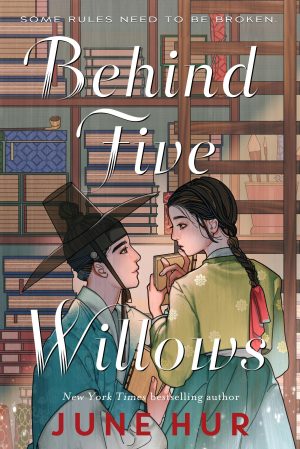
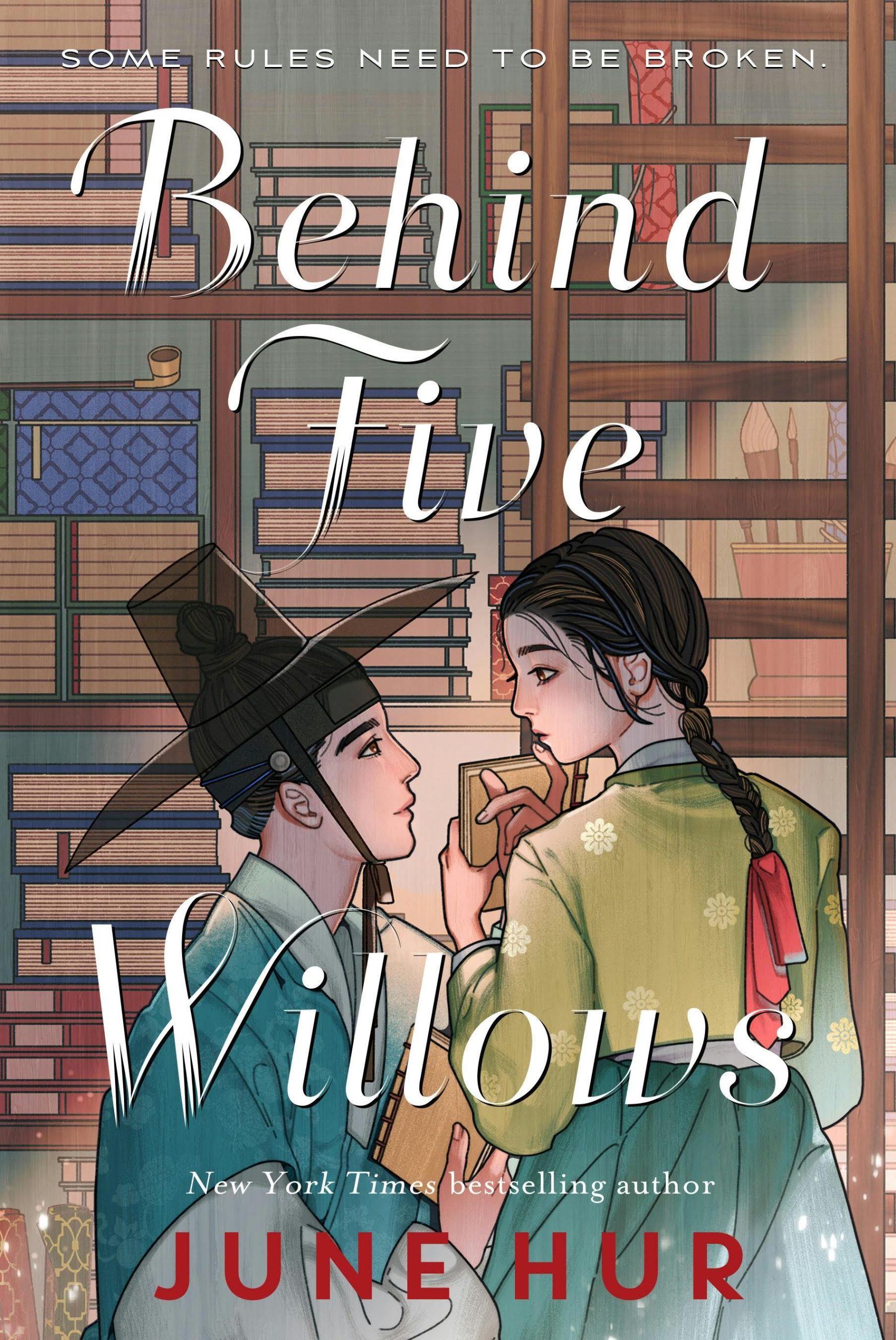
  • The Red Palace by June Hur – Murder, Palace Intrigue and a Romance I Actually Liked

    The Red Palace by June Hur – Murder, Palace Intrigue and a Romance I Actually Liked

    After reading A Crane Among Wolves, I wanted more June Hur.

    One of the reasons I started reading her books in the first place was that I wanted historical fiction and romance outside the usual Regency and Victorian settings. I have read enough about drawing rooms, dukes and English society for a while. Give me somewhere else.

    Joseon Korea works particularly well for me because I have watched so many Korean historical dramas that I already have the whole visual world sitting inside my head.

    And The Red Palace gave me plenty to work with.

    Hyeon is a young palace nurse whose mentor becomes a suspect after four women are murdered in a single night. She begins investigating with Eojin, a young police inspector, and before long their investigation starts getting dangerously close to the royal family.

    The palace-nurse setting immediately gave me Dae Jang Geum vibes.

    The stories aren’t the same, obviously, but there was something very familiar about following a woman working within the palace, surrounded by court officials, strict hierarchies, medicine, rules and powerful people who could ruin your life without much effort.

    I could see everything.

    The palace corridors. The courtyards. The clothes. The officials. The nurses moving around the palace.

    At times it felt less like reading a book and more like watching another Joseon-era drama in my head.

    And then there was Eojin.

    I really liked Eojin.

    He and Hyeon work together on the investigation, so they have perfectly legitimate reasons to keep meeting, but gradually their relationship becomes something more. I liked the quiet courtship of it – those little meetings and gestures where it becomes increasingly obvious that this isn’t purely about solving murders anymore.

    The romance doesn’t overwhelm the mystery either, which is probably why it worked so well for me. I got the investigation and palace intrigue I wanted, but I also got enough romantic development to become invested in Hyeon and Eojin as a couple.

    And importantly, it actually goes somewhere.

    They choose each other, and the ending gave me the romantic payoff I wanted.

    Thank you. 😂

    I think that may be why The Red Palace left me more satisfied than A Crane Among Wolves. I enjoyed that book too, but this one felt more complete to me.

    The murder mystery kept things moving, the Joseon palace setting was exactly my kind of thing, Hyeon was easy to root for, and Eojin was the sort of romantic hero I actually enjoy.

    Historical murder mystery.

    Joseon palace intrigue.

    A competent inspector.

    Slow-burn courtship.

    And an ending that didn’t leave me asking, “That’s it?”

    Apparently that is how you get five stars from me.

    5/5