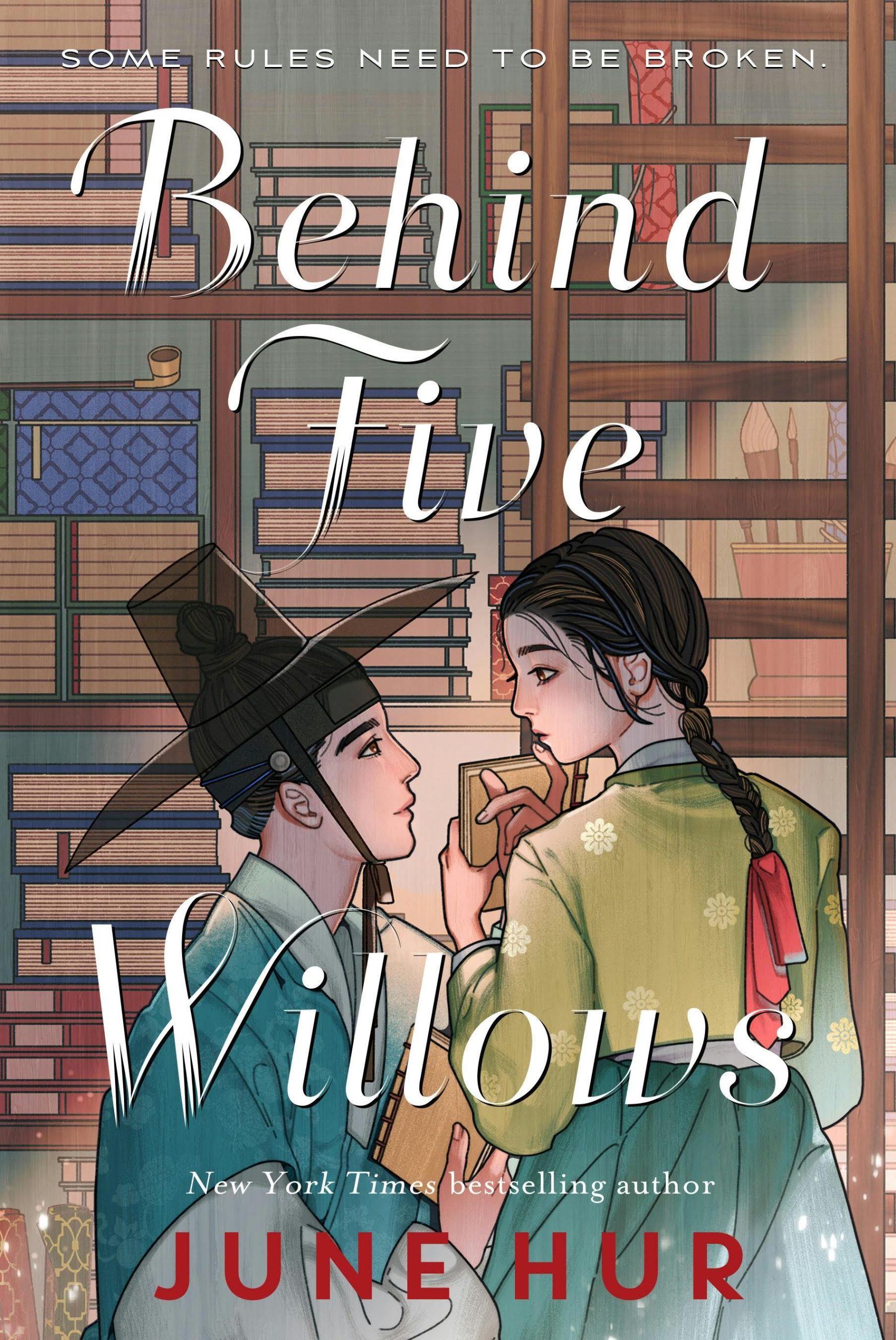
My rating: 5 out of 5 stars
Behind Five Willows is a historical young-adult romance set in Korea during the Joseon era. At its centre are Haewon, an illegal book transcriber, and Seojun, a nobleman who secretly writes fiction at a time when the government is banning books. Their lives become entangled when Haewon’s older sister falls in love with Seojun’s best friend, forcing Haewon and Seojun to accompany the couple during their courtship.
Their first impressions of each other are not favourable. Haewon finds Seojun arrogant and irritating, while he is equally quick to judge her. What neither of them initially realises is that they already know another side of each other through the letters they have exchanged anonymously.
That part immediately reminded me of You’ve Got Mail, one of my favourite films. In the film, the two main characters enjoy writing to each other without knowing that they are rivals—and that they dislike each other—in real life. I have always liked that contrast: two people can understand each other intimately through their words while completely misreading one another face to face.
Of course, You’ve Got Mail is itself a variation on a much older romantic structure, and Behind Five Willows openly draws from Pride and Prejudice, another of my all-time favourites. Haewon and Seojun have their own version of Elizabeth Bennet and Mr Darcy’s problem: both are intelligent and observant, but neither is as accurate a judge of the other as they believe. Their relationship changes gradually as they see beyond social position, pride and their original assumptions.
The Joseon setting prevents the novel from feeling like a simple retelling. Reading and writing are not merely shared interests for Haewon and Seojun. Because of government censorship, books can place their livelihoods and reputations at risk. Haewon’s work as a transcriber also gives us a glimpse of how stories were copied and circulated when access to them was restricted. The historical setting therefore shapes both the romance and the choices available to the characters.
I also enjoyed the characters beyond the central couple. Their family obligations and differences in social status are not decorative complications; they influence what each person is permitted to do and how easily a mistake can affect an entire family. At the same time, the book does not become weighed down by its historical and political themes.
One of its strongest qualities is that it is an easy read. The story moves smoothly, the romance develops naturally, and the historical details are incorporated without making the book feel like a lesson. It has enough substance to make the setting meaningful, but it remains warm and accessible.
For me, Behind Five Willows combined several things I already love: the misunderstandings of Pride and Prejudice, the anonymous correspondence of You’ve Got Mail, and a historical setting that was much less familiar to me. The result felt recognisable without being repetitive.
I gave it five stars because it was simply a pleasure to read.