Shari Creates

Books, languages, things I make and notes from everyday life.

Genre: Horror

  • Until the End of the World by Sarah Lyons Fleming — Book Review

    Until the End of the World by Sarah Lyons Fleming — Book Review

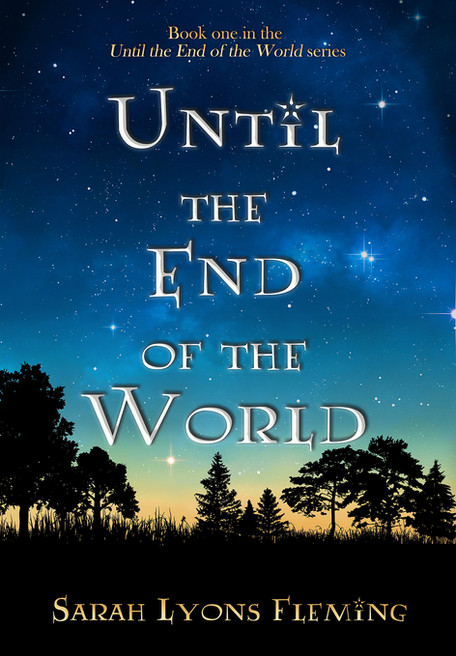
    Until the End of the World by Sarah Lyons Fleming book cover
    When a zombie outbreak reaches Brooklyn, Cassie Forrest and her friends flee for the relative safety of her late survivalist parents’ cabin. Escaping the city is only the beginning as the group faces the infected, dangerous survivors and unresolved personal relationships.

    My rating: ★★★☆☆

    There is something especially unsettling about a zombie story that begins in a familiar, ordinary place. In Until the End of the World, Cassie and her friends must escape Brooklyn after an outbreak turns everyday life into a fight for survival. With the dead walking and society rapidly collapsing, it has all the ingredients for a tense apocalypse story.

    I enjoy character-driven survival stories. The relationships between survivors matter because they give us a reason to care whether anyone makes it through. Reminiscing about the old world can also make the losses feel real. Here, though, those elements occupied so much of the story that they began to weaken the danger surrounding the characters.

    There were long stretches devoted to memories, romantic feelings and unresolved relationships when I wanted more urgency. The characters are supposedly living through the end of civilisation, with dead people walking around and trying to take bites out of the living, yet they frequently seem more concerned with romantic navel-gazing.

    Hellooo? Zombie apocalypse?

    The final straw for me was Cassie becoming involved in pairing her recent ex with her best friend’s younger sister. Perhaps Cassie had never truly loved him, and some readers may see nothing uncomfortable about the situation. I did. It felt strange and far too entangled for me—especially when the characters had rather more immediate problems involving the collapse of civilisation and the walking dead.

    The survival preparations and journey away from Brooklyn gave the story a promising foundation. Cassie’s family background also makes her more prepared than the average person suddenly thrown into an outbreak. Those details helped keep me interested, and the book was readable enough that I never disliked it completely.

    My frustration came from the contrast between the scale of the catastrophe and the emotional tone. The stakes should have felt enormous, but the repeated focus on relationship drama made them seem strangely distant. I wanted the zombies and the collapse of society to drive the story, with the personal relationships developing naturally under that pressure—not competing with it for attention.

    I gave Until the End of the World three stars. The survival premise had potential, but the emphasis on romantic discussion and complicated personal relationships was not what I wanted from the story. Although this is the first book in a series, I could not bring myself to continue beyond it.

    Readers who enjoy relationship-focused apocalypse stories may connect with it much more than I did. Personally, I needed more survival horror, more urgency and considerably less time spent contemplating who still has feelings for whom while the dead are walking.

    Recommended for: Readers who enjoy character-focused post-apocalyptic fiction, found-family dynamics and romance alongside their zombies.

    Perhaps not for you if: You want a tense, horror-heavy zombie story in which survival takes precedence over relationship drama.
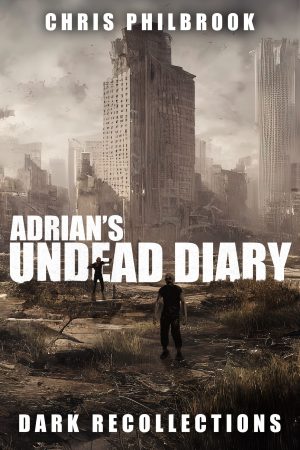
  • Adrian’s Undead Diary by Chris Philbrook — Series Review

    Adrian’s Undead Diary by Chris Philbrook — Series Review

    Adrian’s Undead Diary — Original Eight-Book Arc
    Adrian Ring records his survival through a zombie apocalypse as he gathers supplies, builds a community and confronts threats from both the living and the dead.

    Overall rating: 4 out of 5 stars

    This review covers the original eight-book Adrian’s Undead Diary arc, beginning with Dark Recollections and ending with Cassie.

    I first listened to the series through Audible. There was a deal on the first four books—or at least the first part of the series—and the audiobook format suited the story particularly well. Because Adrian records what happens to him in diary entries, listening to the books felt almost as though he were personally recounting his experiences. It made the story immersive from the beginning.

    The series follows Adrian Ring as he tries to survive a zombie apocalypse. It begins on a relatively small scale: finding somewhere defensible, gathering food and weapons, clearing buildings and working out whom to trust. These practical survival details were one of the main reasons I kept reading. The books spend time on the everyday problems of surviving after society has collapsed, rather than treating supplies and security as matters that simply resolve themselves between action scenes.

    What held my interest even more was the community that gradually developed around Adrian. He begins in isolation, but the story slowly becomes about more than one man surviving. New people arrive, relationships form and the group has to make decisions about how to protect what they are building. I became interested not only in whether Adrian would live, but in what kind of society these survivors could create.

    Humour is another major part of the series. Adrian is crude, sarcastic and often very funny. In the earlier books, his humour softens the horror and makes the violence easier to tolerate. A straightforward account of zombies, death and constant danger could have become oppressive, but Adrian’s voice gives the story energy and personality.

    However, the same humour became increasingly irritating to me towards the end. There are moments when the characters are facing serious danger or emotionally significant events, yet someone still makes a joke. I understand that people sometimes use humour to cope with fear, and the diary format means Adrian is recounting events after they happened. Even so, not every tense moment needs to be defused. Sometimes a scene needs to remain frightening or painful long enough for its emotional weight to settle. When the jokes became too constant, they weakened moments that should have felt more serious.

    My reaction to the wider storyline also changed as the series progressed. The early books concentrate heavily on survival, zombies and human threats. Later, the explanation behind the apocalypse expands into a much more overtly supernatural conflict involving good, evil and humanity’s fate. This is not exactly magic in the fantasy sense, but it moves the series away from grounded survival horror and towards a cosmic struggle.

    That development will probably appeal to readers who want an explanation for why the dead rose and who enjoy a larger mythology behind a zombie story. For me, it was less satisfying than the earlier focus on survival and community-building. By the final book, the series had moved quite far from what originally drew me into it, and I was not entirely happy with the conclusion.

    My ratings reflect that progression. I gave the first two books five stars, Books 3 through 7 four stars, and the eighth book three stars. So although my overall rating is four stars, it was not a consistently four-star experience. I loved the beginning considerably more than the ending.

    Despite my reservations, I read all eight books in less than two weeks. That says something about how absorbing the series could be. The diary structure, detailed survival elements, developing community and audiobook experience kept me involved even when the humour and supernatural storyline began to work against it.

    I would recommend the original Adrian’s Undead Diary arc to readers who enjoy character-driven zombie fiction, detailed survival planning and a protagonist whose humour makes a brutal world more manageable. Just be aware that the story eventually becomes much more supernatural than its opening books initially suggest.

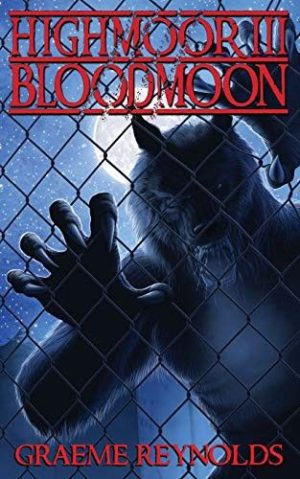
  • Blood Moon by Graeme Reynolds – No One Gets Out Clean

    Blood Moon by Graeme Reynolds – No One Gets Out Clean

    By the time I reached Blood Moon, I had pretty much moved into High Moor.

    I finished Moonstruck on the 12th of August and Blood Moon on the 13th. Considering this audiobook is not exactly short, I think it’s fair to say I was invested.

    The third book takes everything that had been building in the first two and removes what little restraint was left. The existence of werewolves is becoming increasingly difficult to contain, humans are preparing to deal with the threat in the way humans generally deal with things they are frightened of – with weapons – and the werewolves are hardly presenting a united front themselves.

    So, naturally, everything goes extremely well.

    It doesn’t.

    What started in High Moor as a relatively contained horror story about a small town and a terrible secret has become something much larger by this point. There are factions, old grudges, competing loyalties and the very real possibility of a conflict that neither side can control.

    And there is a lot of blood.

    A LOT.

    This is where I think the trilogy fully commits to what it has always been. Graeme Reynolds never suddenly decides that his werewolves need to become softer or more appealing because we’ve spent three books with them. They remain dangerous creatures capable of doing horrific things, including to people they care about.

    I appreciated that.

    There is also something satisfying about reaching the third book of a horror series and feeling that the stakes genuinely have increased. Blood Moon doesn’t feel like Reynolds simply found another excuse to send a few werewolves running around the countryside. The consequences from the previous books have accumulated, and now everyone has to live – or perhaps more accurately, try to survive – with them.

    Chris Barnes narrates again, and by this stage I couldn’t imagine the series without him. His Scottish accent had already become part of the atmosphere for me in the first two books. Three audiobooks later, his voice simply was High Moor.

    And considering I apparently listened to this one almost immediately after finishing Moonstruck, there really wasn’t much opportunity for that atmosphere to wear off.

    Was it perfect? No. I still landed at four stars. The story gets quite big compared with where the trilogy began, and there were parts that worked better for me than others.

    But it gave me what I wanted from the conclusion.

    Violent werewolves. Actual consequences. Characters I had become invested in being placed in increasingly horrible situations. And an ending that felt like the culmination of the story rather than an excuse to keep the series going forever.

    Three books.

    Three four-star ratings.

    And not one supernatural boyfriend in sight.

    I’d call that a successful werewolf trilogy.

    4/5

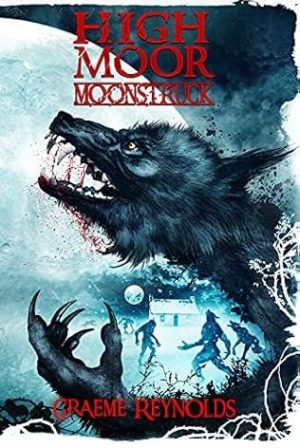
  • Moonstruck by Graeme Reynolds – High Moor Gets Even Nastier

    Moonstruck by Graeme Reynolds – High Moor Gets Even Nastier

    I didn’t leave much breathing room between High Moor and Moonstruck. Five days after finishing the first book, I had already finished the second.

    That probably tells you most of what you need to know.

    Moonstruck picks up almost immediately after the events of High Moor. John Simpson is in police custody, the town is trying to make sense of what has happened, and the authorities are faced with the rather inconvenient possibility that the man claiming to be a werewolf might actually be telling the truth.

    I liked that Reynolds didn’t use the sequel as an excuse to reset everything. The consequences of the first book are still very much there, but the world around High Moor starts to become bigger. It isn’t simply a case of another full moon and another monster turning up. We begin to discover that there are other people who know werewolves exist – and they have their own reasons for making sure the rest of the world doesn’t find out.

    That gave the story a different feel while keeping everything I enjoyed about the first one.

    And yes, the werewolves are still horrible.

    If anything, Reynolds seems even less interested this time around in protecting his characters. The violence is brutal and occasionally excessive, but this is exactly the sort of werewolf fiction I was looking for when I started the series. Becoming a werewolf isn’t sexy or desirable. Nobody is standing around admiring anyone’s supernatural abs. These creatures rip people apart.

    Thank you.

    I listened to the audiobook again, with Chris Barnes returning as narrator. By this point his Scottish accent had become part of the High Moor experience for me. There is something about the combination of that voice, the British setting and the sheer nastiness of the story that works extremely well in audio. It gave me the same sense of immersion that I enjoyed in the first book.

    What I appreciated most about Moonstruck, though, was that it actually felt like a continuation rather than simply “High Moor again.” The mythology expands, the situation becomes more complicated, and the story starts suggesting that what happened in this little town is part of something much larger.

    I still gave it four stars rather than five. There were moments where the story dragged a little and I don’t think every part worked equally well. But when it moved, it moved – and I was invested enough that I finished the whole thing in a day.

    Then, naturally, I started Blood Moon.

    If High Moor convinced me this was the kind of werewolf series I’d been looking for, Moonstruck convinced me to finish it.

    4/5

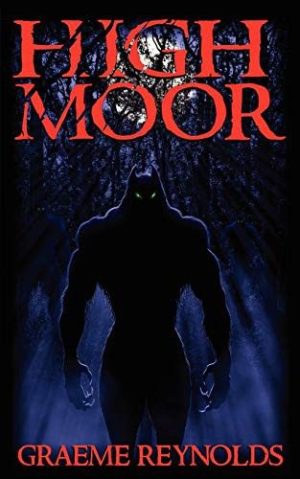
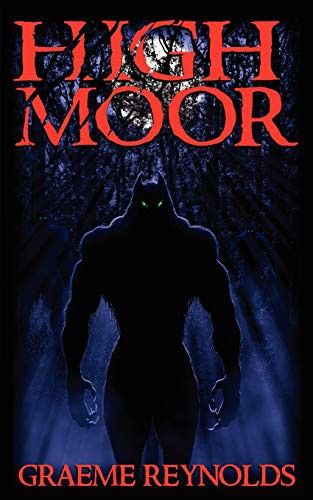
  • High Moor by Graeme Reynolds – Werewolves That Are Actually Scary

    High Moor by Graeme Reynolds – Werewolves That Are Actually Scary

    I have a fairly simple requirement when I pick up a werewolf book: I want the werewolves to actually be monsters.

    Not brooding supernatural boyfriends. Not an excuse for a romance involving mates, destiny and somebody growling possessively every three pages. I want claws, teeth, bad decisions and people having a genuinely terrible time when the moon comes out.

    High Moor delivered that.

    This is proper werewolf horror. It is violent, sometimes gruesome, and doesn’t try to make its creatures attractive. There is something much more unsettling about a werewolf story when becoming one feels like a curse rather than an upgrade.

    What I particularly liked was the atmosphere. There is a roughness to the story that suited it. It isn’t elegant gothic horror with beautiful monsters wandering around dramatically in the moonlight. These things are dangerous, and when the violence starts, Reynolds doesn’t make it pretty.

    I listened to the audiobook, narrated by Chris Barnes, and his Scottish accent added enormously to the experience for me. It gave the narration the kind of rough, distinctly British character that the story needed and provided the immersion I was looking for. This was one of those cases where the narrator didn’t simply read the book – his voice became part of how I remember it.

    I tore through it remarkably quickly. There were a few places where I thought the story could have been tighter, which is probably what kept it at four stars rather than five for me, but I was never bored.

    And perhaps the clearest indication that it worked: almost immediately afterwards I started Moonstruck, the second book.

    For anyone looking for a werewolf novel that belongs firmly on the horror shelf rather than the paranormal-romance shelf, High Moor is very much worth a look.

    4/5