Shari Creates

Books, languages, things I make and notes from everyday life.

Author: Rebecca Ross

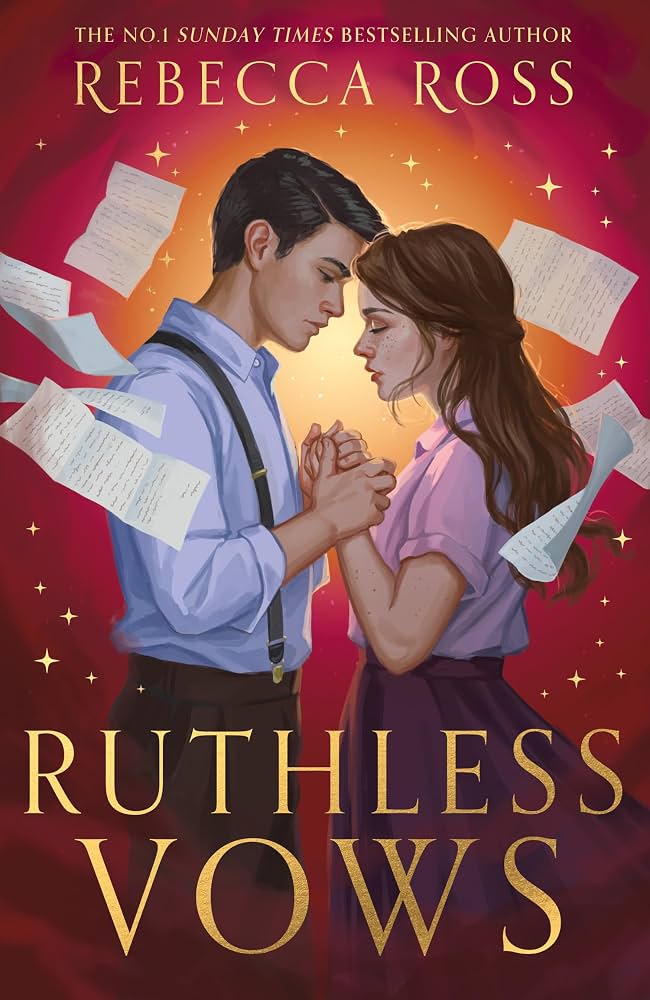
  • Ruthless Vows by Rebecca Ross — A Happy Ending, But Not Without a Cost

    Ruthless Vows by Rebecca Ross — A Happy Ending, But Not Without a Cost

    Spoiler warning: This review discusses major plot points, character deaths and the ending.

    I went into Ruthless Vows almost immediately after Divine Rivals, so by this point I had accepted that yes, this was a world where ancient gods were at war and everybody else had been unfortunate enough to get caught in the middle of it.

    And strangely, once I stopped resisting that part of the story, I enjoyed it much more.

    The gods themselves still weren’t really what I was there for. I was there for Iris and Roman.

    Especially after the way Divine Rivals ended.

    They had finally found each other, fallen in love and even married — only for the war to separate them almost immediately. So Ruthless Vows begins with exactly the sort of situation designed to make me miserable: Iris doesn’t know what has happened to Roman, Roman is alive but no longer quite himself, and the two of them have to somehow find their way back to each other.

    Naturally, I was invested.

    What I liked about this book was that Rebecca Ross didn’t save every bit of happiness for the last five pages.

    Iris and Roman had already chosen each other. They were already married. Their relationship wasn’t being dangled in front of me as some reward I might get if I survived another four hundred pages.

    Instead, the question became whether they would actually get the chance to have the life they had chosen.

    That worked much better for me.

    And when they finally found their way back to each other, it had that bittersweet feeling I tend to like in stories about war. You want the people you care about to survive. You want them to get home. You want the happy ending.

    But if everyone walks away perfectly fine, then what was the point of putting them through a war in the first place?

    Rebecca Ross didn’t do that.

    Iris had already lost her mother in the first book. In this one, she loses Forest.

    And Sarah.

    That hurt.

    Especially because Sarah and Forest had found something with each other before they died. There was something particularly cruel about that — two people finding a little bit of happiness in the middle of all this destruction, only for the war to take them anyway.

    But I also think the story needed losses like that.

    I love happy endings. I really do.

    I am not asking authors to destroy everybody I care about just to prove that their story is serious.

    But I also don’t want a war story where every important character miraculously survives because the author doesn’t want to upset anyone.

    Then it stops feeling like war.

    Someone doesn’t come home.

    Someone who was loved is missing from the ending.

    Someone else has to keep living with that.

    That sadness sitting beside Iris and Roman’s happiness is probably one of the reasons the ending worked so well for me.

    They get each other back.

    They survive.

    They have a future.

    But it costs them something.

    By the end, I had also become much more comfortable with the universe itself. The mixture of old-fashioned technology, newspapers, typewriters and magic that I liked in Divine Rivals was still there, and now that I had accepted the whole gods-at-war business, I could simply enjoy the story instead of wondering why I wasn’t more interested in the mythology.

    Maybe I just needed one entire book to get used to it. 😂

    Whatever happened, Ruthless Vows worked for me in a way Divine Rivals didn’t quite manage.

    The romance had more weight because Iris and Roman had something real to lose.

    The war finally felt personal rather than just mythological.

    And the ending gave me what I wanted without making everything conveniently perfect.

    Happy.

    Sad.

    A little unfair.

    But hopeful.

    That’s probably exactly how a story like this should end.

    5/5
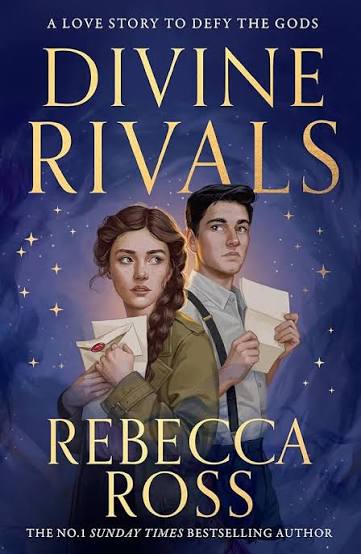
  • Divine Rivals by Rebecca Ross — It Had Everything I Usually Like

    Divine Rivals by Rebecca Ross — It Had Everything I Usually Like

    Spoiler warning: This review discusses major plot points and the ending.

    I picked up Divine Rivals for several very predictable reasons.

    First: enemies to lovers.

    Second: letters. Not just ordinary letters — anonymous ones, where Iris doesn’t realise the person answering her is someone she already knows. Give me even a hint of that You’ve Got Mail situation and I’m interested.

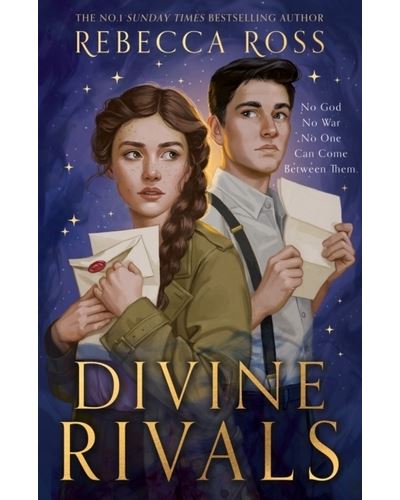
    Then there was the cover. Yes, I am one of those people who occasionally judges a book by its cover. I know. I know. I just can’t help it, and this one had exactly the pull that makes me pick a book up before I know anything about the story.

    So going in, this really should have been my kind of book.

    Iris Winnow and Roman Kitt are rival journalists competing for the same position. They don’t particularly like each other — while, at the same time, Iris has been writing letters that somehow find their way to a mysterious correspondent. She doesn’t know who’s answering her. Roman does.

    Naturally, I loved that setup. There’s something about two people getting to know each other through writing, while one of them doesn’t realise who’s on the other end, that works ridiculously well on me. Apparently Daddy-Long-Legs and You’ve Got Mail have permanently wired my brain this way.

    What worked less well was the enemies-to-lovers part. Mostly because there wasn’t enough enemy. 😂 I expected more friction — more of that I cannot stand this person, so why am I thinking about them all the time? stage. Instead, Iris and Roman felt more like competitive colleagues, and the hostility disappeared fairly quickly. Not necessarily bad — but when “enemies to lovers” is one of the reasons I picked up the book, I wanted it to make me wait a little longer before getting to the lovers.

    The world, though, I really liked. Rebecca Ross mixes old-fashioned technology and magic — newspapers, typewriters, trains, letters travelling magically between people — in a way that reminded me a little of Howl’s Moving Castle. Not because the stories are similar, but because of that same feeling: machinery and magic existing comfortably side by side, and nobody finding it strange.

    What interested me much less was the mythology behind the war — gods waking up, gods and demigods fighting, humans dragged into it. For whatever reason, none of that grabbed me. I cared about Iris and Roman, the letters, the newspaper rivalry, the atmosphere — not which god was fighting whom.

    And yet the war got to me anyway. Not because I suddenly cared about the gods, but because it became personal. Iris and Roman finally get together — they even get married — and almost immediately the war tears them apart again. There’s something particularly dreadful about stories set during war: even when nothing terrible is happening at that exact moment, you know it can. Someone leaves. Someone waits. Someone is trying to get back to somebody they love, and hanging over all of it is the possibility that they simply won’t. So when Iris was dragged away from Roman and forced to leave him behind, it genuinely tugged at me. I stopped thinking about whether I cared about the mythology and just wanted them to find each other again.

    Divine Rivals didn’t give me the enemies-to-lovers story I expected, and I still wasn’t interested in the gods. But I loved the anonymous letters, I liked Iris and Roman, I liked the slightly steampunk, slightly magical world — and by the end, I cared enough about the two of them for their separation to actually hurt.

    The book deserves a 4/5.