Spoiler warning: This review discusses major plot points and the ending.
I picked up Divine Rivals for several very predictable reasons.
First: enemies to lovers.
Second: letters. Not just ordinary letters — anonymous ones, where Iris doesn’t realise the person answering her is someone she already knows. Give me even a hint of that You’ve Got Mail situation and I’m interested.
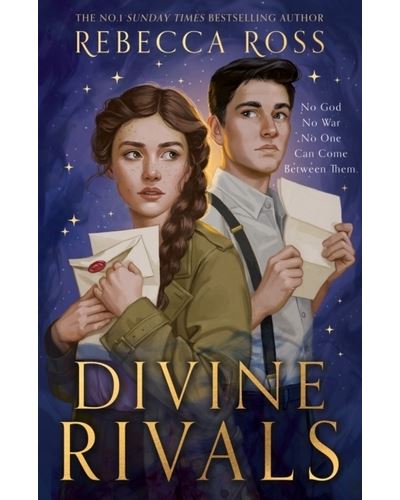
Then there was the cover. Yes, I am one of those people who occasionally judges a book by its cover. I know. I know. I just can’t help it, and this one had exactly the pull that makes me pick a book up before I know anything about the story.
So going in, this really should have been my kind of book.
Iris Winnow and Roman Kitt are rival journalists competing for the same position. They don’t particularly like each other — while, at the same time, Iris has been writing letters that somehow find their way to a mysterious correspondent. She doesn’t know who’s answering her. Roman does.
Naturally, I loved that setup. There’s something about two people getting to know each other through writing, while one of them doesn’t realise who’s on the other end, that works ridiculously well on me. Apparently Daddy-Long-Legs and You’ve Got Mail have permanently wired my brain this way.
What worked less well was the enemies-to-lovers part. Mostly because there wasn’t enough enemy. 😂 I expected more friction — more of that I cannot stand this person, so why am I thinking about them all the time? stage. Instead, Iris and Roman felt more like competitive colleagues, and the hostility disappeared fairly quickly. Not necessarily bad — but when “enemies to lovers” is one of the reasons I picked up the book, I wanted it to make me wait a little longer before getting to the lovers.
The world, though, I really liked. Rebecca Ross mixes old-fashioned technology and magic — newspapers, typewriters, trains, letters travelling magically between people — in a way that reminded me a little of Howl’s Moving Castle. Not because the stories are similar, but because of that same feeling: machinery and magic existing comfortably side by side, and nobody finding it strange.
What interested me much less was the mythology behind the war — gods waking up, gods and demigods fighting, humans dragged into it. For whatever reason, none of that grabbed me. I cared about Iris and Roman, the letters, the newspaper rivalry, the atmosphere — not which god was fighting whom.
And yet the war got to me anyway. Not because I suddenly cared about the gods, but because it became personal. Iris and Roman finally get together — they even get married — and almost immediately the war tears them apart again. There’s something particularly dreadful about stories set during war: even when nothing terrible is happening at that exact moment, you know it can. Someone leaves. Someone waits. Someone is trying to get back to somebody they love, and hanging over all of it is the possibility that they simply won’t. So when Iris was dragged away from Roman and forced to leave him behind, it genuinely tugged at me. I stopped thinking about whether I cared about the mythology and just wanted them to find each other again.
Divine Rivals didn’t give me the enemies-to-lovers story I expected, and I still wasn’t interested in the gods. But I loved the anonymous letters, I liked Iris and Roman, I liked the slightly steampunk, slightly magical world — and by the end, I cared enough about the two of them for their separation to actually hurt.
The book deserves a 4/5.