Shari Creates

Books, languages, things I make and notes from everyday life.

Archives: Reviews

  • Oktober — Khor Ewe Pin

    Oktober — Khor Ewe Pin

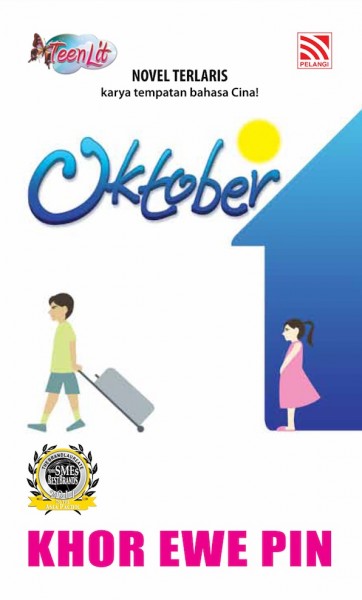
    Cover of Oktober by Khor Ewe Pin
    Categories: ,
    Author:
    After his mother dies, fourteen-year-old Oktober goes to live with his aunt, uncle and cousins. His mother has left him a series of letters containing tasks he must complete one by one, and following them gradually reveals the truth about his past, his adoption and his biological family.

    I picked up Oktober after not having read a book in Malay for a very long time — probably close to two decades. That made the experience slightly strange from the beginning.

    The Malay sometimes felt unnatural to me, almost as if I were reading a translation rather than something originally written in the language. But I honestly can’t say how much of that was the book and how much was me. After so many years of barely reading Malay fiction, my own sense of what sounds natural on the page may simply have become rusty.

    What I do remember clearly is that the story itself hooked me very quickly.

    Oktober loses his mother before he turns fifteen and is sent to live with his aunt, uncle and cousins. Before her death, his mother leaves behind a series of letters for him. He cannot simply read them all at once. Each one gives him something he has to do before he can move on to the next, and gradually those tasks begin revealing things about his own past and family.

    That structure worked extremely well for me because the book never seemed to sit still. There was always another task, another clue or another piece of information waiting to be uncovered. I kept wanting to know what the next letter would reveal.

    There is quite a lot going on around Oktober as well, particularly within the family he has been sent to live with, so the mystery surrounding the letters never feels like the only thing carrying the story. The different problems keep overlapping and pushing it forward.

    Looking back, that is probably why I gave it five stars despite my reservations about the Malay. I may have occasionally questioned the language, but I was never bored.

    For a book that also happened to be my return to reading Malay fiction after many years, Oktober turned out to be a very entertaining choice.

    Rating: ★★★★★

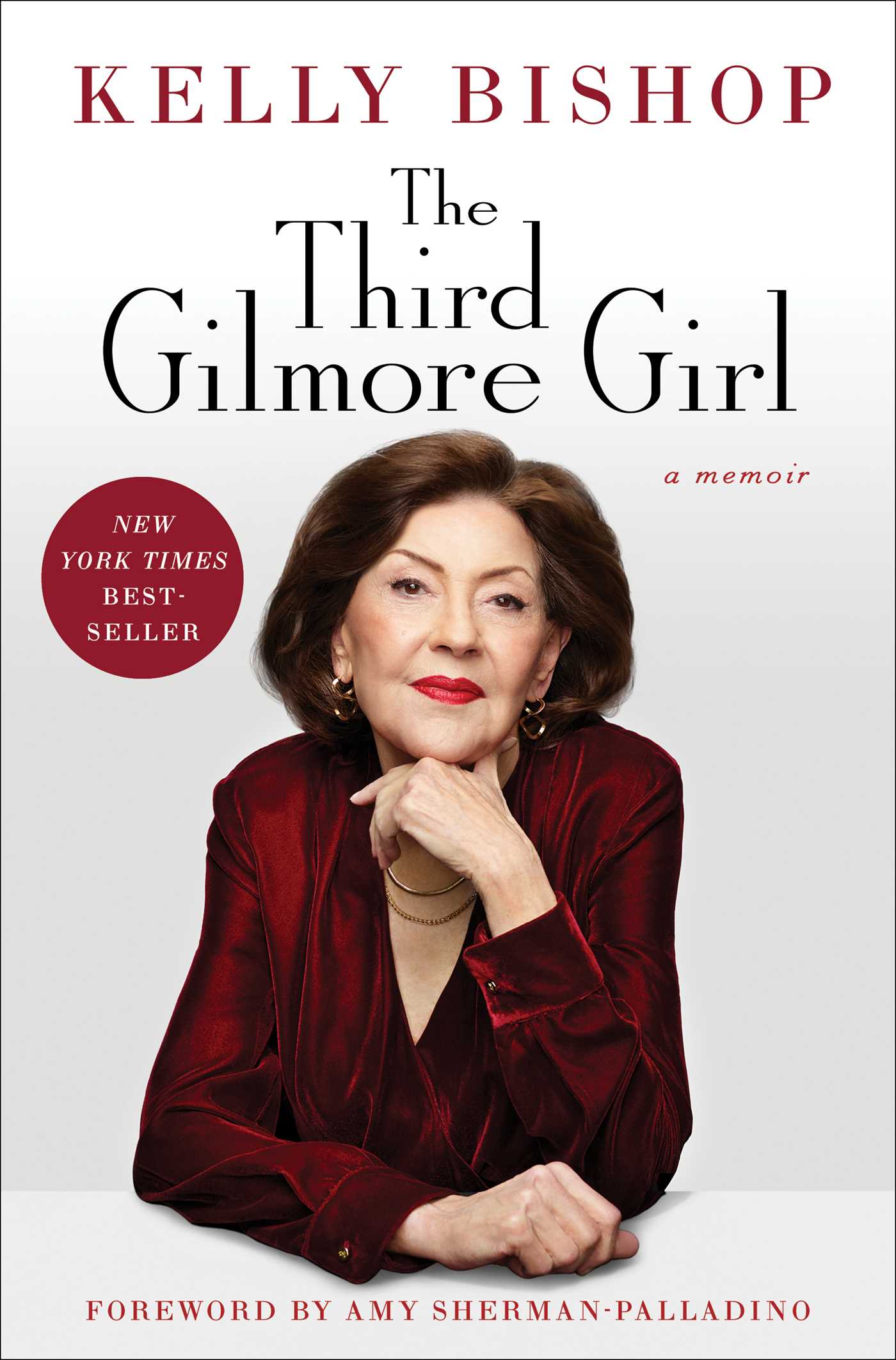
  • The Third Gilmore Girl — Kelly Bishop

    The Third Gilmore Girl — Kelly Bishop

    Official The Third Gilmore Girl hardcover cover by Kelly Bishop
    Categories: ,
    Author:

    The Third Gilmore Girl is one of the very few memoirs I have read — or, more accurately, listened to.

    Kelly Bishop narrates the audiobook herself, apart from the foreword by Amy Sherman-Palladino, and perhaps because I know her voice so well as Emily Gilmore, there were moments when it almost felt as though Emily Gilmore were sitting there telling me her life story.

    Except, of course, this is not Emily’s life. It is Kelly Bishop’s.

    Gilmore Girls has long been one of my go-to cosy dramas, although strangely enough, I don’t particularly like the two main Gilmore girls. Lorelai can be far too over-the-top for me, while Rory’s romantic choices — particularly the way she moves from one relationship to another — made her increasingly difficult for me to like.

    But I digress. This isn’t a review of Gilmore Girls. 😅

    Despite my feelings about its two main characters, there are plenty of other characters I like, and Emily Gilmore has always been one of them.

    She can certainly be a stick in the mud, but I always felt that much of that came from the way she had been raised and the very particular world she lived in. Old money, expectations, appearances and rules shaped her. She was disappointed in Lorelai, but she clearly loved Rory very much.

    I sometimes found myself thinking that I would have liked to have had a grandmother who cared about me even half as much as Emily cared about Rory.

    So when I came across Kelly Bishop’s memoir, I was intrigued.

    I wanted to know about the woman behind Emily Gilmore. Where had she started? What had her life as a performer been like before Gilmore Girls? How did she eventually end up playing Emily, and what was it like to inhabit that character for so many years?

    What I particularly enjoyed was how much of a glimpse the memoir gives into the world of professional performers.

    Kelly Bishop’s career began long before Emily Gilmore. She moved to New York as a young woman to pursue dance, performed at Radio City and on Broadway, and eventually won a Tony Award for her role in A Chorus Line. Her career later moved through film and television before Gilmore Girls became such a major part of it.

    Listening to her talk about those different stages of her life gave the book an almost old-school show-business feeling to me.

    It also made me think about how often people who become very good at something seem to have known surprisingly early what they wanted to do. They choose a direction, keep working at it, hone their skills for years and gradually build a life around it.

    Lucky.

    There were also parts of Kelly Bishop’s political outlook that I didn’t necessarily agree with, particularly when she talked about some of her activism. But that never stopped me from liking her or enjoying the book.

    And I did like her.

    Kelly Bishop has a genuine flair for storytelling.

    The audiobook never felt as though it dragged. She tells her own stories with enough personality that simply listening to her became part of the pleasure of the book. There is something particularly fitting about hearing a memoir like this in the author’s own voice rather than reading it silently on the page.

    I originally picked up The Third Gilmore Girl because I wanted to know more about Emily Gilmore.

    By the end, I was much more interested in Kelly Bishop.

    ★★★★★

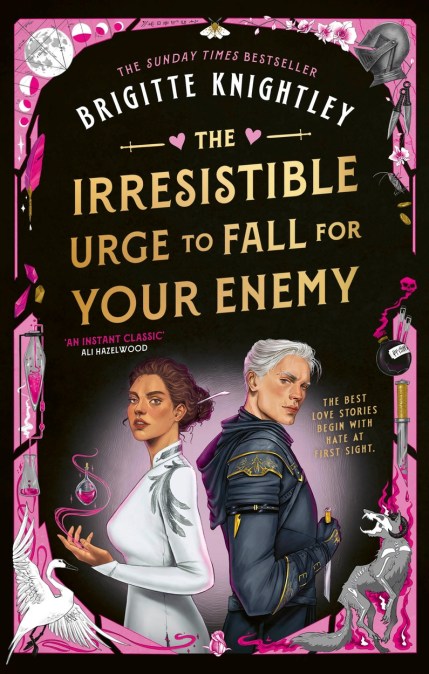
  • The Irresistible Urge to Fall For Your Enemy — Brigitte Knightley

    The Irresistible Urge to Fall For Your Enemy — Brigitte Knightley

    Official cover of The Irresistible Urge to Fall For Your Enemy by Brigitte Knightley
    Categories: ,
    Assassin Osric Mordaunt needs the help of brilliant healer Aurienne Fairhrim, despite their rival Orders and mutual dislike. Forced into an uneasy partnership by his mysterious illness and a spreading Pox, the two discover that working together may be far more dangerous than either expected.

    I picked this up because I was specifically in the mood for enemies-to-lovers with an antihero.

    And Osric Mordaunt certainly fit the requirement.

    He is an assassin from the Fyren Order who becomes seriously ill and discovers that the person most capable of helping him is Aurienne Fairhrim, a healer from the rival Haelan Order. Aurienne has problems of her own. Her Order is trying to deal with an outbreak of a long-forgotten disease and desperately needs money, which is how she ends up reluctantly agreeing to work with a man she thoroughly dislikes.

    So we have an assassin and a healer who belong to opposing Orders, forced to work together.

    Obviously I was interested.

    I liked both of the main characters, which is not always a given for me in a romance.

    Aurienne is exactly the kind of heroine I enjoy. She is extremely capable and intelligent, but she isn’t constantly trying to prove that she is capable and intelligent. She simply is.

    And Osric?

    Well. Cold, broody, dangerous, morally questionable.

    In this case I was actually looking for an antihero, so he was very much what I wanted.

    But what really made the book work for me was the slow burn.

    I don’t want enemies-to-lovers where they are supposedly enemies for five minutes and then immediately start falling over each other. Give me the resistance. Give me the denial. Give me two people who genuinely have reasons not to like each other and then make them spend enough time together that things begin to change despite themselves.

    This book gave me that.

    And I especially loved that Osric got there first.

    There is something enormously satisfying about watching the cold, broody one slowly realise that he is in trouble. By the time he begins recognising what he actually feels for Aurienne, she still isn’t quite there yet.

    Perfect.

    It meant I got to enjoy him having to sit with those feelings instead of the romance becoming immediately mutual the moment one of them realised what was happening.

    The rest of the story moved at a good pace too. The mystery surrounding Osric’s illness and the reappearance of the Pox gave them something substantial to do besides simply circle around one another, and I kept wanting to know what would happen next.

    But really, I came for the enemies-to-lovers antihero romance.

    And on that front, I got exactly what I wanted.

    Rating: ★★★★★

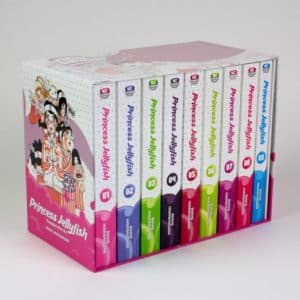
  • Princess Jellyfish (Kuragehime) — Akiko Higashimura

    Princess Jellyfish (Kuragehime) — Akiko Higashimura

    Official Princess Jellyfish Complete Manga Box Set cover by Akiko Higashimura
    Categories: ,
    Jellyfish-obsessed Tsukimi lives among a houseful of female otaku until fashion-loving cross-dresser Kuranosuke crashes into their sheltered world. Their unlikely friendship turns Tsukimi’s jellyfish obsession into fashion inspiration, pulling the whole group into a strange, funny transformation.

    I found Kuragehime through the anime first. Waiting for new episodes was taking far too long, so naturally I went online looking for the manga it was based on.

    That turned out to be a very good decision.

    The manga didn’t disappoint at all. In fact, it gave me much more of what I liked about the anime. The story is longer and much more detailed, and I loved the artwork. It was very much to my taste.

    What makes Kuragehime so much fun, though, is that it is really a story about otakus — people who are completely obsessed with their own particular thing.

    Tsukimi is a jellyfish otaku, living in a house full of women who are equally obsessive in their own ways. There is a train otaku, someone obsessed with the Three Kingdoms, and another whose world revolves around traditional Japanese dolls and kimono. Then there is the mysterious person who apparently lives in one of the rooms but whom we almost never see — and yes, eventually we finally find out who that is. 😂

    They are a wonderful collection of people who have very little interest in fitting into conventional society.

    Then Kuranosuke crashes into their world.

    He loves fashion, Tsukimi loves jellyfish, and somehow those two completely unrelated obsessions become the basis of one of the strangest and most entertaining partnerships in the story. Their talents come together through fashion, and eventually this whole den of NEETs and otakus ends up being dragged into something they could never have imagined — including becoming models themselves.

    I loved that.

    There is also an ugly-duckling element to the story, but I don’t think that fully describes it. Tsukimi isn’t interesting because someone discovers that she can be made pretty. She already has this huge inner world built around jellyfish, and that very obsession becomes part of what makes her talented.

    And then, somehow, this jellyfish nerd ends up being loved by two half-brothers.

    One is Kuranosuke, the beautiful cross-dresser who loves fashion and barges into her sheltered life. The other is his older brother, a thirty-something politician who is painfully inexperienced with women.

    It is such an unlikely love triangle. 😂

    But that is exactly the kind of thing that made Kuragehime feel different from other manga I had read. The romance is important, but the story is also about these strange, obsessive people finding something useful and even wonderful in the things everyone else thinks make them odd.

    I loved the whole series enough that I would happily reread it.

    My only real complaint is the ending.

    I wanted more. 😅

    For me, the ultimate romantic happy ending is still marriage and children. After following these characters through the entire series, I wanted that completely satisfying, unmistakable ending.

    Instead, we at least get Kuranosuke finally coming to terms with the fact that he has fallen in love with Tsukimi.

    I’ll take what I can get. 😂

    Would I reread it? Absolutely.

    Rating: ★★★★★

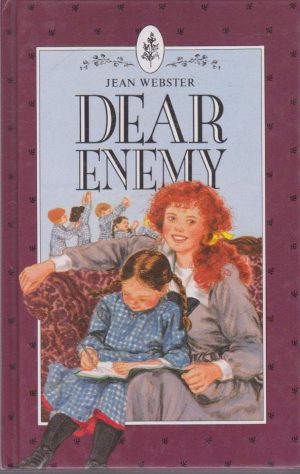
  • Dear Enemy by Jean Webster — I Think Sandy May Have Been the Beginning of a Type

    Dear Enemy by Jean Webster — I Think Sandy May Have Been the Beginning of a Type

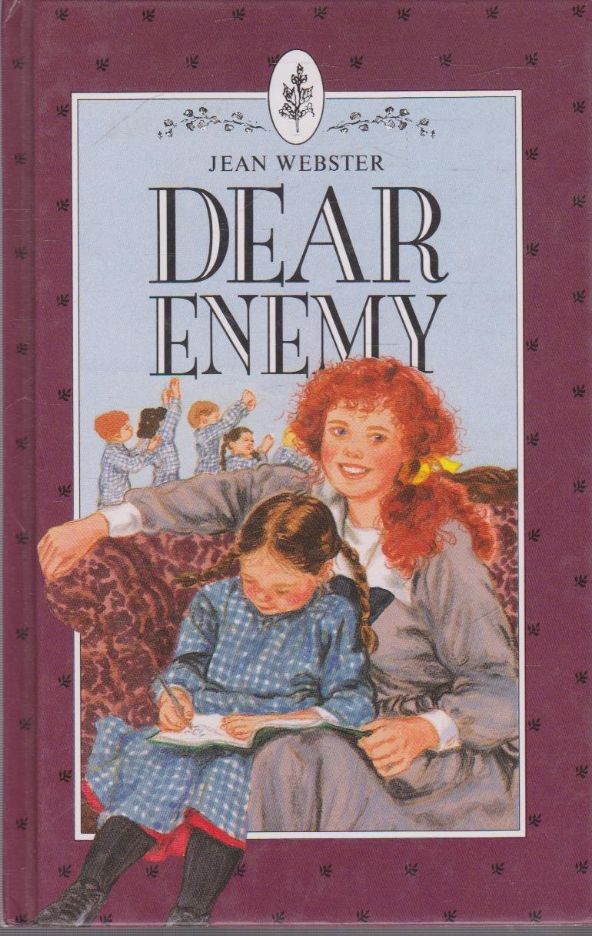
    Dear Enemy by Jean Webster book cover
    Sallie McBride takes charge of the John Grier Home and finds herself constantly at odds with the institution’s reserved Scottish doctor, Robin MacRae.

    I loved Daddy-Long-Legs, so naturally I read Dear Enemy too.

    And somehow I ended up loving this one just as much.

    It is the sequel, but instead of Judy, the letters are written mainly by her friend Sallie McBride, who has been put in charge of the John Grier Home.

    Sallie is probably one of the reasons I enjoyed it so much.

    She is funny, stubborn, quite dramatic at times, and not remotely the sort of person you would immediately imagine running an orphanage.

    Also, she has red hair.

    I have a weakness for red-haired heroines. I don’t know why. I just do. 😂

    But the real problem here is Dr MacRae.

    Sandy.

    Cold, serious, difficult Sandy.

    I remember liking him enormously.

    At the beginning, he and Sallie do not get along at all. He thinks she is frivolous and inexperienced. She finds him infuriating.

    Which, of course, made me very happy.

    I love enemies-to-lovers.

    Not necessarily people genuinely trying to destroy each other. I mean that particular kind where two people keep clashing because they completely misunderstand one another, and then somewhere along the way the irritation starts turning into something else.

    And Sandy has that Mr Darcy sort of appeal to me.

    Not that he is Mr Darcy.

    Just that same difficult, reserved man who initially seems cold and judgmental, and then you slowly realise there is considerably more going on underneath.

    And naturally he has a tragic history as well.

    Because apparently being cold and difficult wasn’t enough. 🤣

    I won’t go into it because I don’t want to spoil the book, but learning more about him changes the way you see him.

    That worked very well on me.

    I also loved that Dear Enemy kept the letter format from Daddy-Long-Legs. There is something about reading a character’s letters that makes everything feel more intimate.

    You see Sallie getting annoyed with Sandy.

    Then mentioning Sandy again.

    And again.

    And being very annoyed with him.

    Very, very annoyed.

    At some point you start thinking, Sallie, you are writing about this man quite a lot for somebody you supposedly cannot stand.

    😂

    That is exactly the sort of romance I enjoy.

    The book isn’t only about the romance, though. A lot of it is Sallie trying to improve the orphanage and slowly becoming attached to the children and the work.

    I liked watching her grow into the job.

    She doesn’t suddenly become some perfect, self-sacrificing heroine. She remains Sallie. She complains, gets frustrated and has opinions about absolutely everything.

    But she cares.

    And gradually you realise how seriously she has begun taking the responsibility she was originally quite reluctant to accept.

    Maybe that is part of what I love about Jean Webster’s books.

    There is romance, yes, but the heroine also gets a life.

    Judy gets education and independence.

    Sallie finds work that actually means something to her.

    And then there is the romance on top of that.

    In Sallie’s case, with a grumpy Scottish doctor.

    A tragic one.

    Who she initially dislikes.

    Honestly, what more did I want?

    5/5

  • Daddy-Long-Legs by Jean Webster — An Old Favourite That Still Feels Like Hope

    Daddy-Long-Legs by Jean Webster — An Old Favourite That Still Feels Like Hope

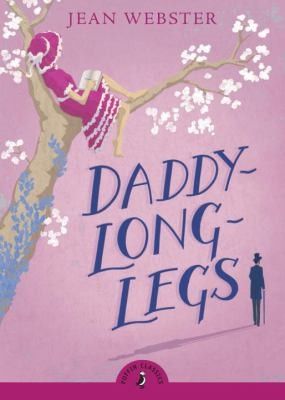
    Daddy-Long-Legs by Jean Webster book cover
    Orphaned Jerusha Abbott is given the chance to attend college by an anonymous benefactor, on the condition that she writes him regular letters about her life and studies.

    Reread: February 2026

    Some books become favourites because you discover them at exactly the right time.

    I think Daddy-Long-Legs became one of mine before I had even read it.

    When I was a child, I knew Judy Abbott through the Japanese anime My Daddy Long Legs. I remember coming home from school wanting to catch it on television. I loved that world — Judy going away to school, making friends, discovering a completely different life and writing all those letters to the mysterious man paying for her education.

    Years later, when I was old enough to properly explore the internet, I discovered that the original Jean Webster novel was available free through Project Gutenberg.

    Naturally, I read it.

    And loved it.

    So this reread came with a ridiculous amount of nostalgia attached.

    Daddy-Long-Legs is told mostly through Judy’s letters to the anonymous benefactor who sends her to college after she grows up in an orphanage. She has never properly met him. She knows almost nothing about him. She has only caught a glimpse of his long shadow, which is how he ends up becoming Daddy-Long-Legs.

    The letter format is probably one of the things I love most about the book.

    You don’t simply get told that Judy changes. You watch it happen through the way she writes.

    She arrives at college having spent her entire life in an institution, suddenly surrounded by girls who grew up with families, books, travel, beautiful homes and all sorts of ordinary experiences she has never had. Then, letter by letter, her world gets bigger.

    She learns.

    She reads.

    She makes friends.

    She develops opinions.

    She gets annoyed.

    She becomes ambitious.

    And she becomes increasingly herself.

    There is something enormously comforting about that.

    I have always loved the period as well. The college life, the clothes, the letters, the expectations placed on young women, even the small descriptions of everyday life give the book a cosy atmosphere that works particularly well for me.

    And then, of course, there is the romance.

    Let’s not pretend the appeal is entirely about education and personal development. 🤣

    There is definitely a bit of Cinderella wish fulfilment here.

    An orphan girl is given an extraordinary opportunity. She gets an education. She discovers that she can write. Her entire life opens up before her.

    And then she falls in love with a rich man.

    I mean.

    I’m not complaining.

    I also realised while rereading it that part of the romantic appeal is very similar to what I love about You’ve Got Mail.

    There is something ridiculously satisfying about two people becoming important to each other while one of them doesn’t fully understand who the other person really is.

    That gap in knowledge creates a particular kind of tension that I apparently enjoy very much.

    And no, I’m not explaining that any further.

    Some things are better discovered while reading. 😄

    What makes the story work for me, though, is Judy herself. She isn’t waiting around hoping somebody wealthy will rescue her. By the time the romance reaches its conclusion, she has already spent the book becoming independent, educated and determined to make something of herself.

    The romantic ending is the cherry on top.

    Perhaps that is why Daddy-Long-Legs has always felt like such a hopeful book to me.

    It is about what can happen when somebody who has been given very little is finally given an opportunity.

    A door opens.

    Then another one.

    And suddenly a life that once seemed completely predetermined becomes full of possibilities.

    Reading it again still gave me that same fuzzy, warm feeling I associate with the story from childhood.

    Part of that is certainly nostalgia. I can’t separate Jean Webster’s Judy completely from the Judy who used to appear on my television after school.

    But I’m not sure I want to.

    Some stories become part of your life that way.

    And after all these years, Daddy-Long-Legs is still one of mine.

  • Behind Five Willows by June Hur — Book Review

    Behind Five Willows by June Hur — Book Review

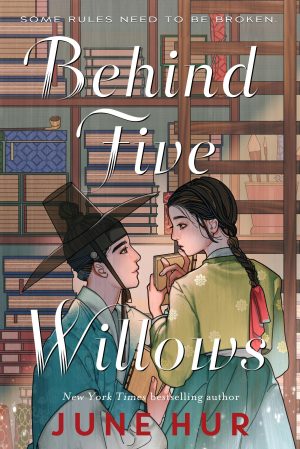
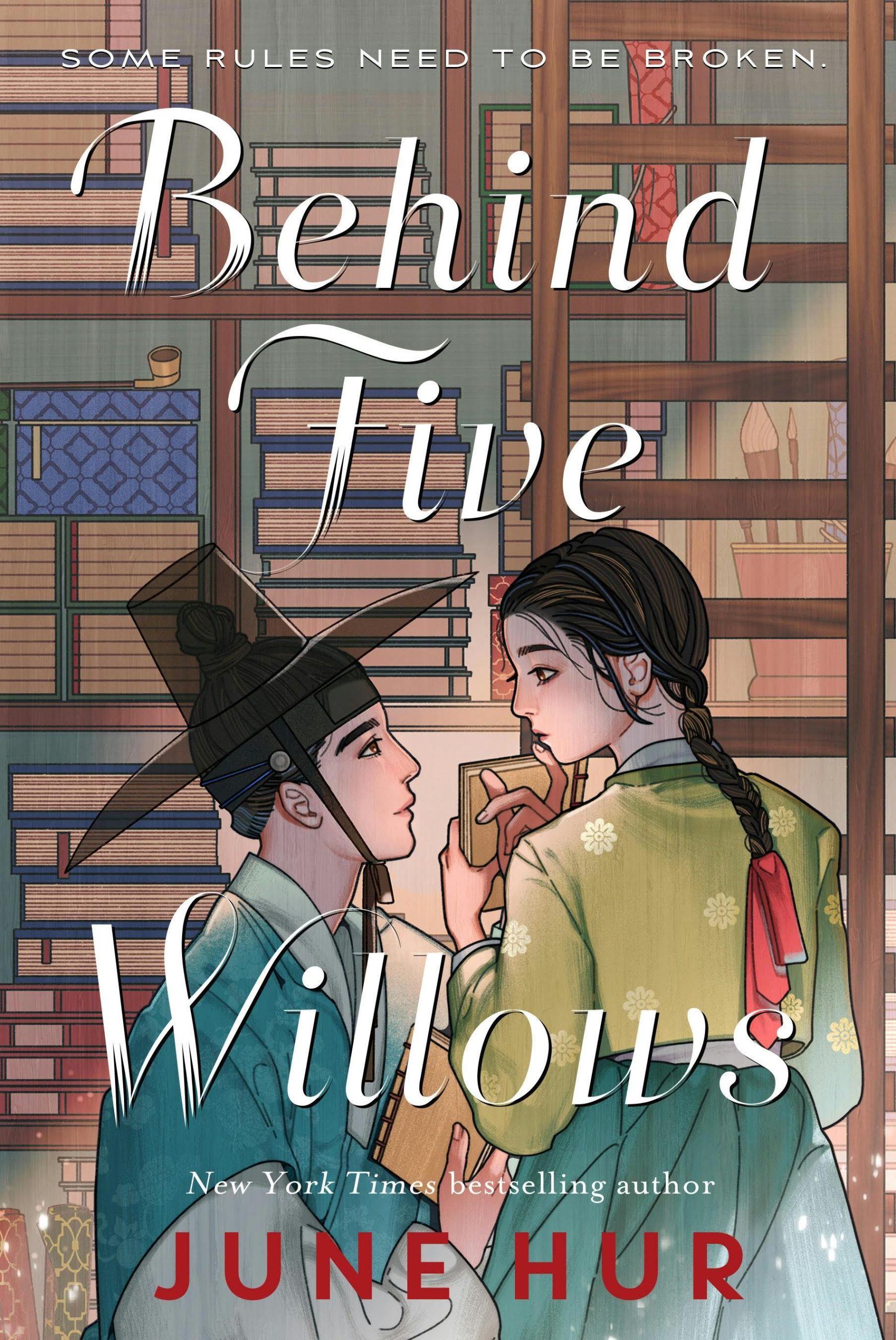
    Behind Five Willows
    In Joseon-era Korea, an illegal book transcriber and a secret novelist exchange letters without knowing they dislike each other in real life.

    My rating: 5 out of 5 stars

    Behind Five Willows is a historical young-adult romance set in Korea during the Joseon era. At its centre are Haewon, an illegal book transcriber, and Seojun, a nobleman who secretly writes fiction at a time when the government is banning books. Their lives become entangled when Haewon’s older sister falls in love with Seojun’s best friend, forcing Haewon and Seojun to accompany the couple during their courtship.

    Their first impressions of each other are not favourable. Haewon finds Seojun arrogant and irritating, while he is equally quick to judge her. What neither of them initially realises is that they already know another side of each other through the letters they have exchanged anonymously.

    That part immediately reminded me of You’ve Got Mail, one of my favourite films. In the film, the two main characters enjoy writing to each other without knowing that they are rivals—and that they dislike each other—in real life. I have always liked that contrast: two people can understand each other intimately through their words while completely misreading one another face to face.

    Of course, You’ve Got Mail is itself a variation on a much older romantic structure, and Behind Five Willows openly draws from Pride and Prejudice, another of my all-time favourites. Haewon and Seojun have their own version of Elizabeth Bennet and Mr Darcy’s problem: both are intelligent and observant, but neither is as accurate a judge of the other as they believe. Their relationship changes gradually as they see beyond social position, pride and their original assumptions.

    The Joseon setting prevents the novel from feeling like a simple retelling. Reading and writing are not merely shared interests for Haewon and Seojun. Because of government censorship, books can place their livelihoods and reputations at risk. Haewon’s work as a transcriber also gives us a glimpse of how stories were copied and circulated when access to them was restricted. The historical setting therefore shapes both the romance and the choices available to the characters.

    I also enjoyed the characters beyond the central couple. Their family obligations and differences in social status are not decorative complications; they influence what each person is permitted to do and how easily a mistake can affect an entire family. At the same time, the book does not become weighed down by its historical and political themes.

    One of its strongest qualities is that it is an easy read. The story moves smoothly, the romance develops naturally, and the historical details are incorporated without making the book feel like a lesson. It has enough substance to make the setting meaningful, but it remains warm and accessible.

    For me, Behind Five Willows combined several things I already love: the misunderstandings of Pride and Prejudice, the anonymous correspondence of You’ve Got Mail, and a historical setting that was much less familiar to me. The result felt recognisable without being repetitive.

    I gave it five stars because it was simply a pleasure to read.

  • Until the End of the World by Sarah Lyons Fleming — Book Review

    Until the End of the World by Sarah Lyons Fleming — Book Review

    Until the End of the World by Sarah Lyons Fleming book cover
    When a zombie outbreak reaches Brooklyn, Cassie Forrest and her friends flee for the relative safety of her late survivalist parents’ cabin. Escaping the city is only the beginning as the group faces the infected, dangerous survivors and unresolved personal relationships.

    My rating: ★★★☆☆

    There is something especially unsettling about a zombie story that begins in a familiar, ordinary place. In Until the End of the World, Cassie and her friends must escape Brooklyn after an outbreak turns everyday life into a fight for survival. With the dead walking and society rapidly collapsing, it has all the ingredients for a tense apocalypse story.

    I enjoy character-driven survival stories. The relationships between survivors matter because they give us a reason to care whether anyone makes it through. Reminiscing about the old world can also make the losses feel real. Here, though, those elements occupied so much of the story that they began to weaken the danger surrounding the characters.

    There were long stretches devoted to memories, romantic feelings and unresolved relationships when I wanted more urgency. The characters are supposedly living through the end of civilisation, with dead people walking around and trying to take bites out of the living, yet they frequently seem more concerned with romantic navel-gazing.

    Hellooo? Zombie apocalypse?

    The final straw for me was Cassie becoming involved in pairing her recent ex with her best friend’s younger sister. Perhaps Cassie had never truly loved him, and some readers may see nothing uncomfortable about the situation. I did. It felt strange and far too entangled for me—especially when the characters had rather more immediate problems involving the collapse of civilisation and the walking dead.

    The survival preparations and journey away from Brooklyn gave the story a promising foundation. Cassie’s family background also makes her more prepared than the average person suddenly thrown into an outbreak. Those details helped keep me interested, and the book was readable enough that I never disliked it completely.

    My frustration came from the contrast between the scale of the catastrophe and the emotional tone. The stakes should have felt enormous, but the repeated focus on relationship drama made them seem strangely distant. I wanted the zombies and the collapse of society to drive the story, with the personal relationships developing naturally under that pressure—not competing with it for attention.

    I gave Until the End of the World three stars. The survival premise had potential, but the emphasis on romantic discussion and complicated personal relationships was not what I wanted from the story. Although this is the first book in a series, I could not bring myself to continue beyond it.

    Readers who enjoy relationship-focused apocalypse stories may connect with it much more than I did. Personally, I needed more survival horror, more urgency and considerably less time spent contemplating who still has feelings for whom while the dead are walking.

    Recommended for: Readers who enjoy character-focused post-apocalyptic fiction, found-family dynamics and romance alongside their zombies.

    Perhaps not for you if: You want a tense, horror-heavy zombie story in which survival takes precedence over relationship drama.

  • Adrian’s Undead Diary by Chris Philbrook — Series Review

    Adrian’s Undead Diary by Chris Philbrook — Series Review

    Adrian’s Undead Diary — Original Eight-Book Arc
    Adrian Ring records his survival through a zombie apocalypse as he gathers supplies, builds a community and confronts threats from both the living and the dead.

    Overall rating: 4 out of 5 stars

    This review covers the original eight-book Adrian’s Undead Diary arc, beginning with Dark Recollections and ending with Cassie.

    I first listened to the series through Audible. There was a deal on the first four books—or at least the first part of the series—and the audiobook format suited the story particularly well. Because Adrian records what happens to him in diary entries, listening to the books felt almost as though he were personally recounting his experiences. It made the story immersive from the beginning.

    The series follows Adrian Ring as he tries to survive a zombie apocalypse. It begins on a relatively small scale: finding somewhere defensible, gathering food and weapons, clearing buildings and working out whom to trust. These practical survival details were one of the main reasons I kept reading. The books spend time on the everyday problems of surviving after society has collapsed, rather than treating supplies and security as matters that simply resolve themselves between action scenes.

    What held my interest even more was the community that gradually developed around Adrian. He begins in isolation, but the story slowly becomes about more than one man surviving. New people arrive, relationships form and the group has to make decisions about how to protect what they are building. I became interested not only in whether Adrian would live, but in what kind of society these survivors could create.

    Humour is another major part of the series. Adrian is crude, sarcastic and often very funny. In the earlier books, his humour softens the horror and makes the violence easier to tolerate. A straightforward account of zombies, death and constant danger could have become oppressive, but Adrian’s voice gives the story energy and personality.

    However, the same humour became increasingly irritating to me towards the end. There are moments when the characters are facing serious danger or emotionally significant events, yet someone still makes a joke. I understand that people sometimes use humour to cope with fear, and the diary format means Adrian is recounting events after they happened. Even so, not every tense moment needs to be defused. Sometimes a scene needs to remain frightening or painful long enough for its emotional weight to settle. When the jokes became too constant, they weakened moments that should have felt more serious.

    My reaction to the wider storyline also changed as the series progressed. The early books concentrate heavily on survival, zombies and human threats. Later, the explanation behind the apocalypse expands into a much more overtly supernatural conflict involving good, evil and humanity’s fate. This is not exactly magic in the fantasy sense, but it moves the series away from grounded survival horror and towards a cosmic struggle.

    That development will probably appeal to readers who want an explanation for why the dead rose and who enjoy a larger mythology behind a zombie story. For me, it was less satisfying than the earlier focus on survival and community-building. By the final book, the series had moved quite far from what originally drew me into it, and I was not entirely happy with the conclusion.

    My ratings reflect that progression. I gave the first two books five stars, Books 3 through 7 four stars, and the eighth book three stars. So although my overall rating is four stars, it was not a consistently four-star experience. I loved the beginning considerably more than the ending.

    Despite my reservations, I read all eight books in less than two weeks. That says something about how absorbing the series could be. The diary structure, detailed survival elements, developing community and audiobook experience kept me involved even when the humour and supernatural storyline began to work against it.

    I would recommend the original Adrian’s Undead Diary arc to readers who enjoy character-driven zombie fiction, detailed survival planning and a protagonist whose humour makes a brutal world more manageable. Just be aware that the story eventually becomes much more supernatural than its opening books initially suggest.

  • The Red Palace by June Hur – Murder, Palace Intrigue and a Romance I Actually Liked

    The Red Palace by June Hur – Murder, Palace Intrigue and a Romance I Actually Liked

    After reading A Crane Among Wolves, I wanted more June Hur.

    One of the reasons I started reading her books in the first place was that I wanted historical fiction and romance outside the usual Regency and Victorian settings. I have read enough about drawing rooms, dukes and English society for a while. Give me somewhere else.

    Joseon Korea works particularly well for me because I have watched so many Korean historical dramas that I already have the whole visual world sitting inside my head.

    And The Red Palace gave me plenty to work with.

    Hyeon is a young palace nurse whose mentor becomes a suspect after four women are murdered in a single night. She begins investigating with Eojin, a young police inspector, and before long their investigation starts getting dangerously close to the royal family.

    The palace-nurse setting immediately gave me Dae Jang Geum vibes.

    The stories aren’t the same, obviously, but there was something very familiar about following a woman working within the palace, surrounded by court officials, strict hierarchies, medicine, rules and powerful people who could ruin your life without much effort.

    I could see everything.

    The palace corridors. The courtyards. The clothes. The officials. The nurses moving around the palace.

    At times it felt less like reading a book and more like watching another Joseon-era drama in my head.

    And then there was Eojin.

    I really liked Eojin.

    He and Hyeon work together on the investigation, so they have perfectly legitimate reasons to keep meeting, but gradually their relationship becomes something more. I liked the quiet courtship of it – those little meetings and gestures where it becomes increasingly obvious that this isn’t purely about solving murders anymore.

    The romance doesn’t overwhelm the mystery either, which is probably why it worked so well for me. I got the investigation and palace intrigue I wanted, but I also got enough romantic development to become invested in Hyeon and Eojin as a couple.

    And importantly, it actually goes somewhere.

    They choose each other, and the ending gave me the romantic payoff I wanted.

    Thank you. 😂

    I think that may be why The Red Palace left me more satisfied than A Crane Among Wolves. I enjoyed that book too, but this one felt more complete to me.

    The murder mystery kept things moving, the Joseon palace setting was exactly my kind of thing, Hyeon was easy to root for, and Eojin was the sort of romantic hero I actually enjoy.

    Historical murder mystery.

    Joseon palace intrigue.

    A competent inspector.

    Slow-burn courtship.

    And an ending that didn’t leave me asking, “That’s it?”

    Apparently that is how you get five stars from me.

    5/5