Shari Creates

Books, languages, things I make and notes from everyday life.

Archives: Reviews

  • Choose to Change: It´s your life: 25 steps to self-discovery and peace of mind by Jacqui Penn

    Choose to Change: It´s your life: 25 steps to self-discovery and peace of mind by Jacqui Penn

    Choose to Change
    Categories: ,
    Author:
    Genre:
    Choose to Change offers 25 valid life principles in a straightforward, accessible style. Although I found little here that I had not encountered in similar self-help books, I still appreciated it as a reminder of ideas worth practising. The author’s tone can feel emotional and rather pressuring at times, almost as though the reader is being lectured. It did not change my outlook or give me a “wow” moment, but it may still be worth…

    I downloaded this book for free in March of this year on Amazon kindle. Finishing this book, I felt like its one of those self-help books that you read one you’ve read them all. Nothing new here that I’ve never read else where in other self-help books of its likeness. Despite that, I still like to read these sort of books no matter how many time I’ve come across the same advice or idea, simply as a reminder to myself. And as some people would say, sometimes it just takes one particular book that would click or resonate enough for you that would change your entire world. Like how some people would say the book “Think and Grow rich” had changed their lives or how “The alchemist” did that for them or as the book “The color Purple” did for Oprah Winfrey. They all teach about the same thing in different ways. Though I would not say this book gave me the ‘WOW’ effect or changed me inside out, but it did remind me of those life principles worth emulating.

    The 25 points given are valid and the writing style is straight forward but a bit emotional. As someone else did point this out as well, that you can’t help feel like you are being lectured on.

    I bet you’ve raised your eyebrows at some of the things I’ve suggested; be honest, I bet you have! But you know what? It doesn’t matter to my life whether you try my suggestions or not, but it does matter to yours. Actually, it does matter to me if you try my suggestions. I want you to know how good life can be, and if you don’t even try, I’ve wasted my time.

    I haven’t raised my eyebrows till I read that though. 😀With good intentions perhaps but it did come out a bit emotional and strong. I am not sure many readers would be comfortable with such style. 

    As a reminder of what is good for us, I still think it is worth to give the book a go. Though it would have been nicer if it was written in a less “pressuring” way. 


  • Vengeance of the vampire Bride – Rhiannon Frater

    Vengeance of the vampire Bride – Rhiannon Frater

    After listening to the audiobook version of the first book, I went and downloaded the second audiobook of the series. However, I ended up going for the ebook instead, which, I will tell the reason why later on.

    Just like the first book, it is a continuation of the diary of Lady Glynis Wright as she embraced her life as the Countess of Dracula. In this second installment of the series, she tells her story as she fights on for her freedom and also save whatever humanity that it left in her.

    I still like the Bram Stoker, Victorian times vibe of the novel and the fact that the story sets in Buda Hungary in the early 1800. I have to admit that living in Budapest helps me to imagine the old city described in the book. From the very beginning I was much impressed that the author did make effort to make references to something Hungarian – Like the Margit Island and Szilvásgomboc (prune dumpling).

    Hungarian Parliament

    The novel introduced us with more characters and a little bit more history of the vampires but I find it nothing much more was added. Also there seemed to be an error in the creation of her progeny, Laura that I cannot shake off. From the first book I understood that to the point of death of the dying person, if he or she drank vampire blood directly from the maker, then only he or she will become one of the undead. But in Laura’s case, Glynis took 3 sips of her blood and Laura died. And yet she became a vampire. Like how?? Glynis even mentioned that her bite only hasten Laura’s death. I don’t describe myself as a stickler for details but for the creation of a character as important as Glynis’s first progeny, I do care for this.

    I am not much into cruel characters, but throughout the book Vlad did mellowed down a lot of notches. And how he could forgive her and save her after what she did to him showed something that could be called as love. Perhaps I am suffering from the Stockholm syndrome or just like the bad boys gone good type, that after a while I kind of preferred Vlad more to be with Glynis😆. I just don’t like the way how the bad ass, Vlad the Impaler could be reduced to a ‘beggar’ after being rejected by Glynis, right after he saved her ass. It is just a contradiction of what his initial character was depicted in the first book.

    I managed to finish the book in a couple of days and as to why I had preferred the book instead of the audiobook is the narrator’s style of reading annoyed me. This time the narrator is Rebecca McKernan instead of Carol Hendrickson. I couldn’t finish even the first chapter as the narrator’s style is a bit over the top and the Hungarian accent she made up sounded like an Indian accent instead. Just about ‘killed’ the vibe for me. I mean, Really? A Hungarian guy with an accent that sounded like an Indian guy? 😂 It could be just me. I know it is not an easy job but still, I just couldn’t go on with the audiobook.

    So, would I go on with the third and final installment? After the second book I lost interest in what will happen to Glynis. Though I was curious whether she will get back with Vlad. I found a post written by the author herself saying that she knew how many readers were hoping this but being a survivor of a bad relationship herself she didn’t care of what people want and would continue on her first idea of how the story should end. So I too end my reading of this series here.

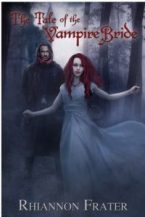
  • Tale of the Vampire Bride – Rhiannon Frater

    Tale of the Vampire Bride – Rhiannon Frater

    A few days ago I started to listen to the audiobook. This is the first time I have listened to or read one of the books by this author. Now lets see what I think of it, but thread carefully, as there may be a bit of a spoiler ahead.

    Lady Glynis and her family were invited by the Count Dracula himself to his castle in Transylvania. She was of the age ready to be married and her parents were desperate to find her a husband despite her many protests. So much so, that when Count Dracula extended his invitation to them and had made known of his interest to court Lady Glynis, both the parents were excited to meet him. Little did they know what were in store for them.

    I have to admit that the Bram Stoker vibe really kept me on the edge of my seat, and it was engaging from the beginning till end. It indeed kept me coming back and wanting to know what is going to happen to Lady Glynis.

    I read that it was supposed to be a Gothic horror but being a historical romance fan I appreciate that it has a touch of romance in it as well, with not only one but two love interests for Lady Glynis – Vlad Dracula and Father Ignatius.

    I like that it doesn’t stray away from folklore like many vampire novels do – the vampires in this book can’t walk in broad daylight, nor they sparkle, and they are afraid of crucifixes – The one of a few reasons I never read any of the Twilight series nor watched any of the movies.

    The author didn’t waste too much time going into details about the architecture and deco. Good Lord, how many a times I had simply skipped through those lines in some other books. But I am glad we are spared of that in this one. A bit of a detail is good, but not too much in my case.

    Now that what I like about the book is out of the way, I will share my opinion about what I dislike about it. I must say that I do not have many bad things to say about this book considering that I gave it 4 stars on Goodreads.

    But like people, books are not perfect and so here I state what I thought was some of the imperfections I felt.

    The heroine, Lady Glynis just ‘stomps her foot’ way too may times in this entire book that it got a bit irritating. I want to think that this heroine is a mature and strong woman with a will of her own. But honestly, every time she ‘stomped her foot’ to show her indignance I just felt like slapping her silly. All I could imagine is a spoilt brat.

    Something about the storyline didn’t make sense to me. Vlad Dracula was depicted as an ancient, formidable, strong vampire yet why did he need to find an English bride in order to move to England? He had an English solicitor who, I am sure could have easily paved the way for him, introduce him to those who can help him get into the aristocrat society of England. He was a Count after all.

    Now, a little bit about the narrating of the audiobook. It was narrated by Carol Hendrickson. Overall, her style was engaging and she did make the effort to try to change the accents and tones. But the accent was a bit too exaggerated sometimes. Why in the world she pronounced “Andrew” which is an English name, that in the book belonged to an English guy, as “Ándru’ – the ‘A’ as the ‘A’ in Father. I am not English, yet I don’t think an English person would pronounce that name that way. It was a wee bit disturbing to me. 🙂

    If you can overlook the flaws, I would say that you may enjoy this book as much as I did if not more. In fact, I enjoyed the audiobook enough to look for audiobook 2 of the trilogy. So another review will come up soon.

  • Atomic Habits — James Clear

    Atomic Habits — James Clear

    Book cover of Atomic Habits by James Clear.

    Categories: ,
    Author:
    James Clear presents a practical framework for building better habits through small, consistent changes. Rather than relying on motivation or ambitious goals alone, he focuses on systems, identity, cues and environment to make good habits easier to repeat and bad habits harder to maintain.

    I finished Atomic Habits with a very good impression of it. The basic argument is simple: big changes are often the result of small actions repeated consistently rather than one dramatic effort. James Clear keeps returning to the idea that habits compound over time and that it is more useful to build a system that makes the behaviour easier to repeat than to depend on motivation alone.

    One of the ideas I found especially useful is the connection between habits and identity. Instead of only setting a goal such as wanting to read more, exercise more or save more, you start thinking in terms of the kind of person you want to become and let repeated actions reinforce that identity. I also liked the emphasis on changing the environment around a habit. If the good choice is easier to see and easier to do, you do not have to rely so much on willpower every single time.

    Another point that stayed with me is the idea that getting rid of a bad habit is not simply a matter of deciding to stop. A bad habit usually fills some need or has become attached to a particular cue, so removing it without putting anything in its place can leave a gap. It makes much more sense to replace the bad habit with a better one rather than simply trying to leave an empty space behind.

    This is probably why the book works for me: it treats habit change as something practical rather than a test of character. Motivation comes and goes. A system, a routine and an environment can do some of the work for you on the days when motivation is nowhere to be found. That feels a lot more realistic than telling people to simply try harder.

    My main criticism is that the book is longer than it needs to be. The central message is useful, but once I understood the basic principles, I sometimes felt that another example was being used to reinforce a point I had already understood. Much of what I found valuable here could probably have been compressed into a shorter book without losing the message.

    That is really why I am giving it four stars rather than five. The ideas are practical, memorable and easy to apply, and I can see myself using several of them. I just wish the book had been tighter. Still, I would rather have a self-improvement book repeat a genuinely useful idea than spend hundreds of pages saying very little. Atomic Habits gave me a clearer way of thinking about how habits are formed and changed, and that makes it worth reading.

  • Scarlett — Alexandra Ripley

    Scarlett — Alexandra Ripley

    Book cover of Scarlett by Alexandra Ripley, showing a man and woman embracing against a red-orange background.
    After Rhett Butler walks out of her life, Scarlett O’Hara refuses to accept that their story is over. Determined to win him back, she follows a path that takes her far beyond Georgia and eventually to Ireland, where she must rebuild her life on very different terms. Alexandra Ripley’s authorized sequel to Gone with the Wind continues Scarlett’s story through love, loss, reinvention and her relentless pursuit of Rhett.

    Spoiler warning: This review discusses the ending of the book.

    I have actually read Scarlett twice. The first time was probably around 2009 or 2010, not long after I had finished Gone with the Wind. And I did not like it very much.

    I picked it up for the obvious reason: I desperately wanted a sequel to Gone with the Wind. I was never satisfied with Rhett walking away and Scarlett deciding that tomorrow was another day. I wanted the happy ending. I wanted to know that somehow Scarlett would get Rhett back and they would finally sort themselves out.

    Margaret Mitchell never wrote that sequel, but decades later Alexandra Ripley was chosen by Mitchell’s estate to write an authorized continuation. Unfortunately, when I first read it, Gone with the Wind was still too fresh in my mind. The difference between Margaret Mitchell’s writing and Alexandra Ripley’s was immediately noticeable to me. However officially authorized Scarlett might have been, it didn’t feel like the same story written by the same hand.

    Then the story eventually moves a substantial part of Scarlett’s life to Ireland. That felt particularly strange to me the first time around. I had spent Gone with the Wind so firmly rooted in Georgia, Tara and the American South that suddenly transporting Scarlett into an almost entirely different world made the sequel feel even further removed from the original. At the time, I probably would have given it about 2.5 stars.

    And yet I read it again in 2020 and gave it four. What changed? Mostly me, I think. 😄 By then, many years had passed since I had read Gone with the Wind. I no longer had Margaret Mitchell’s writing style sitting fresh in my head, so I wasn’t constantly comparing every page of Scarlett with the original. This time I could read it more as its own story. And perhaps that is the best way to read it.

    Calling Scarlett the sequel to Gone with the Wind gives it an enormous burden that I don’t think it can completely carry. Even though it is the authorized sequel, in places it still feels to me rather like very elaborate, officially sanctioned fan fiction. But once I stopped expecting another Margaret Mitchell novel, I enjoyed it much more.

    Most importantly, it gave me the thing I had wanted all those years ago. Scarlett and Rhett do eventually find their way back to one another. Is it the ending Margaret Mitchell would have written? We can never know. But it was the happy ending I had wanted after finishing Gone with the Wind, and on my second reading I was much more willing to simply enjoy getting it. Sometimes apparently a book deserves a second chance. At least this one did for me.