Shari Creates

Books, languages, things I make and notes from everyday life.

Category: Books

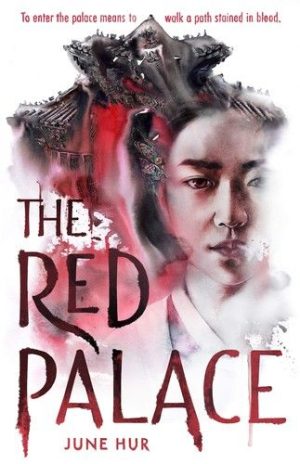
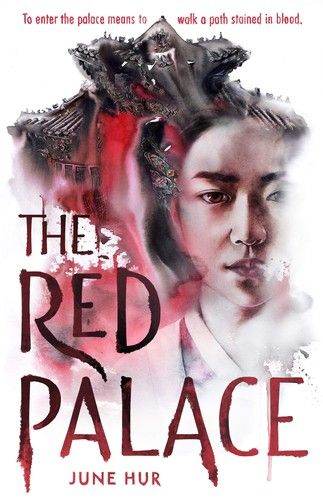
  • The Red Palace by June Hur – Murder, Palace Intrigue and a Romance I Actually Liked

    The Red Palace by June Hur – Murder, Palace Intrigue and a Romance I Actually Liked

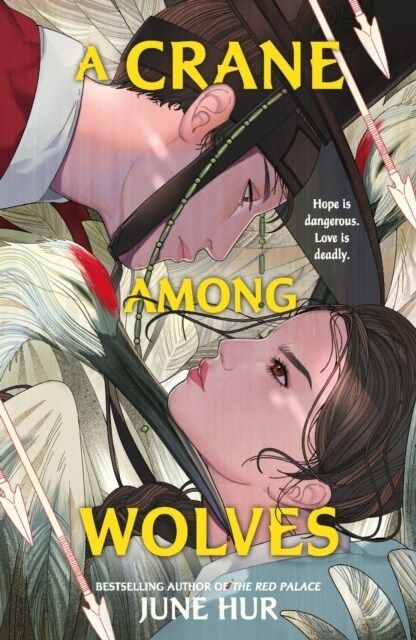
    After reading A Crane Among Wolves, I wanted more June Hur.

    One of the reasons I started reading her books in the first place was that I wanted historical fiction and romance outside the usual Regency and Victorian settings. I have read enough about drawing rooms, dukes and English society for a while. Give me somewhere else.

    Joseon Korea works particularly well for me because I have watched so many Korean historical dramas that I already have the whole visual world sitting inside my head.

    And The Red Palace gave me plenty to work with.

    Hyeon is a young palace nurse whose mentor becomes a suspect after four women are murdered in a single night. She begins investigating with Eojin, a young police inspector, and before long their investigation starts getting dangerously close to the royal family.

    The palace-nurse setting immediately gave me Dae Jang Geum vibes.

    The stories aren’t the same, obviously, but there was something very familiar about following a woman working within the palace, surrounded by court officials, strict hierarchies, medicine, rules and powerful people who could ruin your life without much effort.

    I could see everything.

    The palace corridors. The courtyards. The clothes. The officials. The nurses moving around the palace.

    At times it felt less like reading a book and more like watching another Joseon-era drama in my head.

    And then there was Eojin.

    I really liked Eojin.

    He and Hyeon work together on the investigation, so they have perfectly legitimate reasons to keep meeting, but gradually their relationship becomes something more. I liked the quiet courtship of it – those little meetings and gestures where it becomes increasingly obvious that this isn’t purely about solving murders anymore.

    The romance doesn’t overwhelm the mystery either, which is probably why it worked so well for me. I got the investigation and palace intrigue I wanted, but I also got enough romantic development to become invested in Hyeon and Eojin as a couple.

    And importantly, it actually goes somewhere.

    They choose each other, and the ending gave me the romantic payoff I wanted.

    Thank you. 😂

    I think that may be why The Red Palace left me more satisfied than A Crane Among Wolves. I enjoyed that book too, but this one felt more complete to me.

    The murder mystery kept things moving, the Joseon palace setting was exactly my kind of thing, Hyeon was easy to root for, and Eojin was the sort of romantic hero I actually enjoy.

    Historical murder mystery.

    Joseon palace intrigue.

    A competent inspector.

    Slow-burn courtship.

    And an ending that didn’t leave me asking, “That’s it?”

    Apparently that is how you get five stars from me.

    5/5
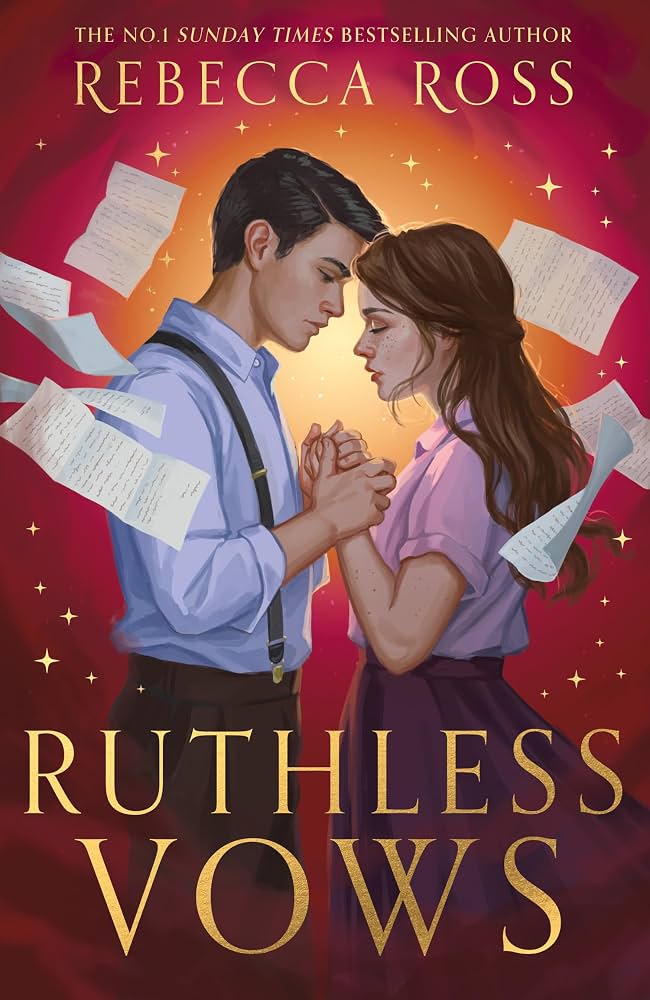
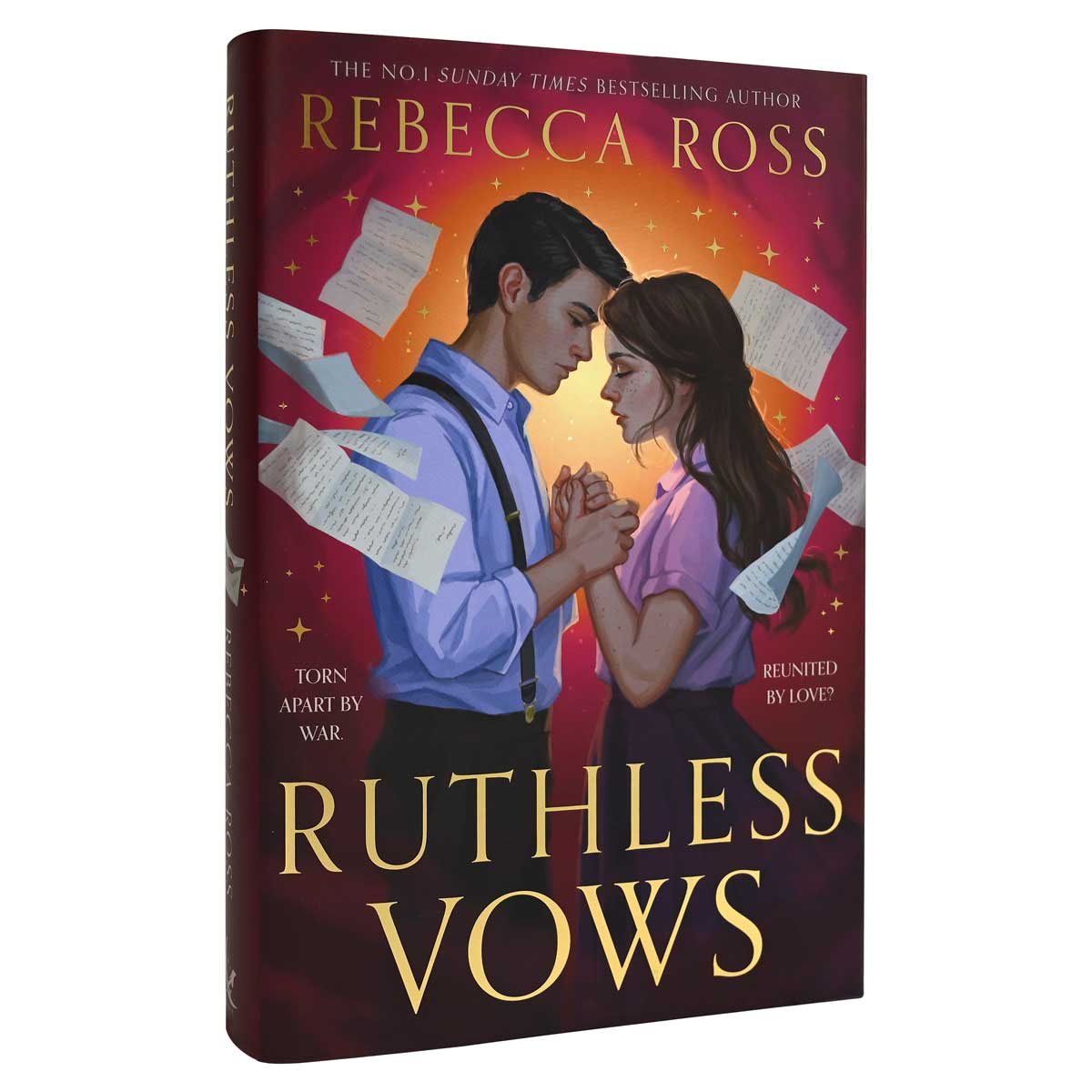
  • Ruthless Vows by Rebecca Ross — A Happy Ending, But Not Without a Cost

    Ruthless Vows by Rebecca Ross — A Happy Ending, But Not Without a Cost

    Spoiler warning: This review discusses major plot points, character deaths and the ending.

    I went into Ruthless Vows almost immediately after Divine Rivals, so by this point I had accepted that yes, this was a world where ancient gods were at war and everybody else had been unfortunate enough to get caught in the middle of it.

    And strangely, once I stopped resisting that part of the story, I enjoyed it much more.

    The gods themselves still weren’t really what I was there for. I was there for Iris and Roman.

    Especially after the way Divine Rivals ended.

    They had finally found each other, fallen in love and even married — only for the war to separate them almost immediately. So Ruthless Vows begins with exactly the sort of situation designed to make me miserable: Iris doesn’t know what has happened to Roman, Roman is alive but no longer quite himself, and the two of them have to somehow find their way back to each other.

    Naturally, I was invested.

    What I liked about this book was that Rebecca Ross didn’t save every bit of happiness for the last five pages.

    Iris and Roman had already chosen each other. They were already married. Their relationship wasn’t being dangled in front of me as some reward I might get if I survived another four hundred pages.

    Instead, the question became whether they would actually get the chance to have the life they had chosen.

    That worked much better for me.

    And when they finally found their way back to each other, it had that bittersweet feeling I tend to like in stories about war. You want the people you care about to survive. You want them to get home. You want the happy ending.

    But if everyone walks away perfectly fine, then what was the point of putting them through a war in the first place?

    Rebecca Ross didn’t do that.

    Iris had already lost her mother in the first book. In this one, she loses Forest.

    And Sarah.

    That hurt.

    Especially because Sarah and Forest had found something with each other before they died. There was something particularly cruel about that — two people finding a little bit of happiness in the middle of all this destruction, only for the war to take them anyway.

    But I also think the story needed losses like that.

    I love happy endings. I really do.

    I am not asking authors to destroy everybody I care about just to prove that their story is serious.

    But I also don’t want a war story where every important character miraculously survives because the author doesn’t want to upset anyone.

    Then it stops feeling like war.

    Someone doesn’t come home.

    Someone who was loved is missing from the ending.

    Someone else has to keep living with that.

    That sadness sitting beside Iris and Roman’s happiness is probably one of the reasons the ending worked so well for me.

    They get each other back.

    They survive.

    They have a future.

    But it costs them something.

    By the end, I had also become much more comfortable with the universe itself. The mixture of old-fashioned technology, newspapers, typewriters and magic that I liked in Divine Rivals was still there, and now that I had accepted the whole gods-at-war business, I could simply enjoy the story instead of wondering why I wasn’t more interested in the mythology.

    Maybe I just needed one entire book to get used to it. 😂

    Whatever happened, Ruthless Vows worked for me in a way Divine Rivals didn’t quite manage.

    The romance had more weight because Iris and Roman had something real to lose.

    The war finally felt personal rather than just mythological.

    And the ending gave me what I wanted without making everything conveniently perfect.

    Happy.

    Sad.

    A little unfair.

    But hopeful.

    That’s probably exactly how a story like this should end.

    5/5

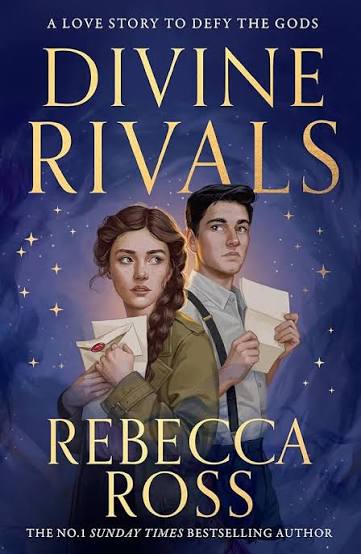
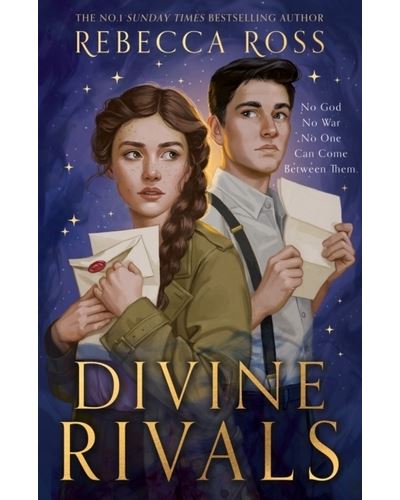
  • Divine Rivals by Rebecca Ross — It Had Everything I Usually Like

    Divine Rivals by Rebecca Ross — It Had Everything I Usually Like

    Spoiler warning: This review discusses major plot points and the ending.

    I picked up Divine Rivals for several very predictable reasons.

    First: enemies to lovers.

    Second: letters. Not just ordinary letters — anonymous ones, where Iris doesn’t realise the person answering her is someone she already knows. Give me even a hint of that You’ve Got Mail situation and I’m interested.

    Then there was the cover. Yes, I am one of those people who occasionally judges a book by its cover. I know. I know. I just can’t help it, and this one had exactly the pull that makes me pick a book up before I know anything about the story.

    So going in, this really should have been my kind of book.

    Iris Winnow and Roman Kitt are rival journalists competing for the same position. They don’t particularly like each other — while, at the same time, Iris has been writing letters that somehow find their way to a mysterious correspondent. She doesn’t know who’s answering her. Roman does.

    Naturally, I loved that setup. There’s something about two people getting to know each other through writing, while one of them doesn’t realise who’s on the other end, that works ridiculously well on me. Apparently Daddy-Long-Legs and You’ve Got Mail have permanently wired my brain this way.

    What worked less well was the enemies-to-lovers part. Mostly because there wasn’t enough enemy. 😂 I expected more friction — more of that I cannot stand this person, so why am I thinking about them all the time? stage. Instead, Iris and Roman felt more like competitive colleagues, and the hostility disappeared fairly quickly. Not necessarily bad — but when “enemies to lovers” is one of the reasons I picked up the book, I wanted it to make me wait a little longer before getting to the lovers.

    The world, though, I really liked. Rebecca Ross mixes old-fashioned technology and magic — newspapers, typewriters, trains, letters travelling magically between people — in a way that reminded me a little of Howl’s Moving Castle. Not because the stories are similar, but because of that same feeling: machinery and magic existing comfortably side by side, and nobody finding it strange.

    What interested me much less was the mythology behind the war — gods waking up, gods and demigods fighting, humans dragged into it. For whatever reason, none of that grabbed me. I cared about Iris and Roman, the letters, the newspaper rivalry, the atmosphere — not which god was fighting whom.

    And yet the war got to me anyway. Not because I suddenly cared about the gods, but because it became personal. Iris and Roman finally get together — they even get married — and almost immediately the war tears them apart again. There’s something particularly dreadful about stories set during war: even when nothing terrible is happening at that exact moment, you know it can. Someone leaves. Someone waits. Someone is trying to get back to somebody they love, and hanging over all of it is the possibility that they simply won’t. So when Iris was dragged away from Roman and forced to leave him behind, it genuinely tugged at me. I stopped thinking about whether I cared about the mythology and just wanted them to find each other again.

    Divine Rivals didn’t give me the enemies-to-lovers story I expected, and I still wasn’t interested in the gods. But I loved the anonymous letters, I liked Iris and Roman, I liked the slightly steampunk, slightly magical world — and by the end, I cared enough about the two of them for their separation to actually hurt.

    The book deserves a 4/5.

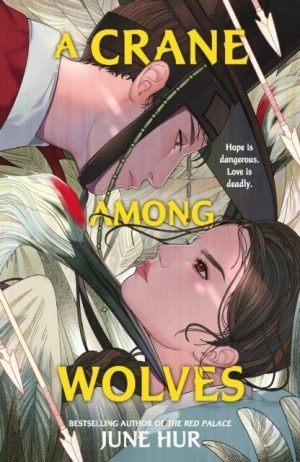
  • A Crane Among Wolves by June Hur – Like Watching a Joseon Drama in My Head

    A Crane Among Wolves by June Hur – Like Watching a Joseon Drama in My Head

    I picked up A Crane Among Wolves because I had reached the point where I wanted a historical romance that wasn’t set in Regency or Victorian England.

    I like those settings well enough, but there are only so many drawing rooms, dukes and marriage markets one can take before wanting to go somewhere else.

    I wanted something rooted in Asian history, written by an Asian author, and Korea was an easy choice because by then I had watched far too many Joseon-era Korean dramas.

    That turned out to be one of the best parts of reading this book.

    I didn’t have to work very hard to imagine the world at all.

    The palace, the clothing, the social hierarchy, the officials, the tension around the royal family – my brain already had an entire K-drama production department available. I could practically see the hanbok, hear the dramatic music and picture somebody staring meaningfully across a palace courtyard.

    Reading it sometimes felt less like reading a novel and more like watching a historical Korean drama playing inside my head.

    And considering the story involves a tyrannical king, political intrigue, danger, romance and an attempt to change who sits on the throne, it wasn’t exactly lacking in K-drama material.

    I also liked that the romance wasn’t separated from the historical setting. Iseul and Daehyun’s relationship develops while much bigger and considerably more dangerous things are happening around them, so the book never became simply a romance dressed up in historical clothing.

    I gave A Crane Among Wolves four stars, and I think what kept it from five was the pacing.

    There were parts where the story started to drag a little for me. Not enough to make me lose interest, but enough that I could feel the momentum dip before things picked up again.

    That said, I still enjoyed the book overall, especially the setting and the way it played so vividly in my head like a Joseon-era Korean drama.

    The ending was satisfying enough that I don’t remember finishing it annoyed – which is probably why, looking back now, the pacing issue is the part that stands out more than anything else.

    It also sent me looking for more June Hur.

    And considering I later gave The Red Palace and Behind Five Willows five stars, that worked out rather well.

    4/5

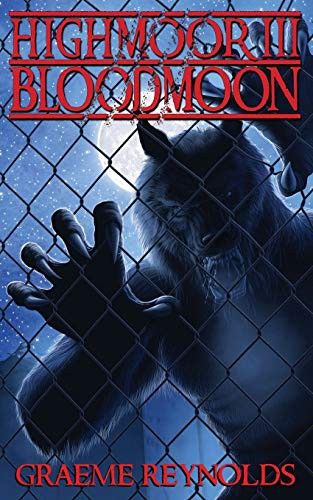
  • Blood Moon by Graeme Reynolds – No One Gets Out Clean

    Blood Moon by Graeme Reynolds – No One Gets Out Clean

    By the time I reached Blood Moon, I had pretty much moved into High Moor.

    I finished Moonstruck on the 12th of August and Blood Moon on the 13th. Considering this audiobook is not exactly short, I think it’s fair to say I was invested.

    The third book takes everything that had been building in the first two and removes what little restraint was left. The existence of werewolves is becoming increasingly difficult to contain, humans are preparing to deal with the threat in the way humans generally deal with things they are frightened of – with weapons – and the werewolves are hardly presenting a united front themselves.

    So, naturally, everything goes extremely well.

    It doesn’t.

    What started in High Moor as a relatively contained horror story about a small town and a terrible secret has become something much larger by this point. There are factions, old grudges, competing loyalties and the very real possibility of a conflict that neither side can control.

    And there is a lot of blood.

    A LOT.

    This is where I think the trilogy fully commits to what it has always been. Graeme Reynolds never suddenly decides that his werewolves need to become softer or more appealing because we’ve spent three books with them. They remain dangerous creatures capable of doing horrific things, including to people they care about.

    I appreciated that.

    There is also something satisfying about reaching the third book of a horror series and feeling that the stakes genuinely have increased. Blood Moon doesn’t feel like Reynolds simply found another excuse to send a few werewolves running around the countryside. The consequences from the previous books have accumulated, and now everyone has to live – or perhaps more accurately, try to survive – with them.

    Chris Barnes narrates again, and by this stage I couldn’t imagine the series without him. His Scottish accent had already become part of the atmosphere for me in the first two books. Three audiobooks later, his voice simply was High Moor.

    And considering I apparently listened to this one almost immediately after finishing Moonstruck, there really wasn’t much opportunity for that atmosphere to wear off.

    Was it perfect? No. I still landed at four stars. The story gets quite big compared with where the trilogy began, and there were parts that worked better for me than others.

    But it gave me what I wanted from the conclusion.

    Violent werewolves. Actual consequences. Characters I had become invested in being placed in increasingly horrible situations. And an ending that felt like the culmination of the story rather than an excuse to keep the series going forever.

    Three books.

    Three four-star ratings.

    And not one supernatural boyfriend in sight.

    I’d call that a successful werewolf trilogy.

    4/5

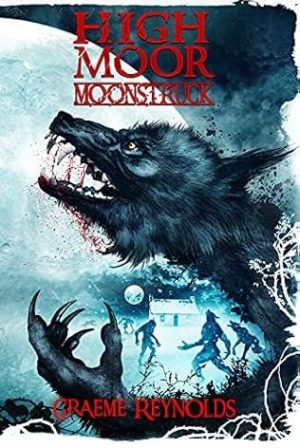
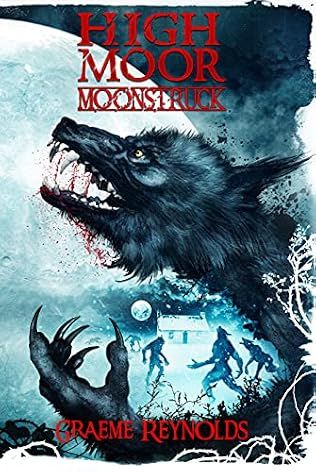
  • Moonstruck by Graeme Reynolds – High Moor Gets Even Nastier

    Moonstruck by Graeme Reynolds – High Moor Gets Even Nastier

    I didn’t leave much breathing room between High Moor and Moonstruck. Five days after finishing the first book, I had already finished the second.

    That probably tells you most of what you need to know.

    Moonstruck picks up almost immediately after the events of High Moor. John Simpson is in police custody, the town is trying to make sense of what has happened, and the authorities are faced with the rather inconvenient possibility that the man claiming to be a werewolf might actually be telling the truth.

    I liked that Reynolds didn’t use the sequel as an excuse to reset everything. The consequences of the first book are still very much there, but the world around High Moor starts to become bigger. It isn’t simply a case of another full moon and another monster turning up. We begin to discover that there are other people who know werewolves exist – and they have their own reasons for making sure the rest of the world doesn’t find out.

    That gave the story a different feel while keeping everything I enjoyed about the first one.

    And yes, the werewolves are still horrible.

    If anything, Reynolds seems even less interested this time around in protecting his characters. The violence is brutal and occasionally excessive, but this is exactly the sort of werewolf fiction I was looking for when I started the series. Becoming a werewolf isn’t sexy or desirable. Nobody is standing around admiring anyone’s supernatural abs. These creatures rip people apart.

    Thank you.

    I listened to the audiobook again, with Chris Barnes returning as narrator. By this point his Scottish accent had become part of the High Moor experience for me. There is something about the combination of that voice, the British setting and the sheer nastiness of the story that works extremely well in audio. It gave me the same sense of immersion that I enjoyed in the first book.

    What I appreciated most about Moonstruck, though, was that it actually felt like a continuation rather than simply “High Moor again.” The mythology expands, the situation becomes more complicated, and the story starts suggesting that what happened in this little town is part of something much larger.

    I still gave it four stars rather than five. There were moments where the story dragged a little and I don’t think every part worked equally well. But when it moved, it moved – and I was invested enough that I finished the whole thing in a day.

    Then, naturally, I started Blood Moon.

    If High Moor convinced me this was the kind of werewolf series I’d been looking for, Moonstruck convinced me to finish it.

    4/5

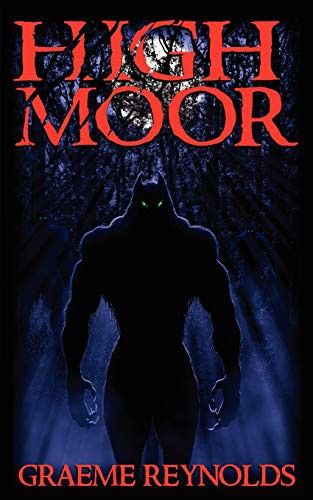
  • High Moor by Graeme Reynolds – Werewolves That Are Actually Scary

    High Moor by Graeme Reynolds – Werewolves That Are Actually Scary

    I have a fairly simple requirement when I pick up a werewolf book: I want the werewolves to actually be monsters.

    Not brooding supernatural boyfriends. Not an excuse for a romance involving mates, destiny and somebody growling possessively every three pages. I want claws, teeth, bad decisions and people having a genuinely terrible time when the moon comes out.

    High Moor delivered that.

    This is proper werewolf horror. It is violent, sometimes gruesome, and doesn’t try to make its creatures attractive. There is something much more unsettling about a werewolf story when becoming one feels like a curse rather than an upgrade.

    What I particularly liked was the atmosphere. There is a roughness to the story that suited it. It isn’t elegant gothic horror with beautiful monsters wandering around dramatically in the moonlight. These things are dangerous, and when the violence starts, Reynolds doesn’t make it pretty.

    I listened to the audiobook, narrated by Chris Barnes, and his Scottish accent added enormously to the experience for me. It gave the narration the kind of rough, distinctly British character that the story needed and provided the immersion I was looking for. This was one of those cases where the narrator didn’t simply read the book – his voice became part of how I remember it.

    I tore through it remarkably quickly. There were a few places where I thought the story could have been tighter, which is probably what kept it at four stars rather than five for me, but I was never bored.

    And perhaps the clearest indication that it worked: almost immediately afterwards I started Moonstruck, the second book.

    For anyone looking for a werewolf novel that belongs firmly on the horror shelf rather than the paranormal-romance shelf, High Moor is very much worth a look.

    4/5

  • Tell yourself a better lie

    Tell yourself a better lie

    Tell yourself a better lie cover
    Tell Yourself a Better Lie is a book that teaches you how to change the bad and limiting stories you tell yourself, and make them good and empowering instead. The book is based on ten real stories of people who did RTT sessions with Marisa, and how they changed their lives by changing their stories.

    I discovered Marisa Peer from a mindvalley video on youtube, where she explained how to heal your body and mind. I was intrigued by her approach and decided to check out her book if she had any and found  “Tell Yourself a Better Lie”. I searched for her work on Everand and was grateful to have found the audiobook. The audiobook was narrated by Carlyss Peer, who is Marisa’s daughter and a trained RTT therapist herself. I enjoyed listening to her voice, as she has a beautiful, crisp, and clear British accent. I find it rather soothing.

    Tell Yourself a Better Lie is a book that teaches you how to change the bad and limiting stories you tell yourself, and make them good and empowering instead. The book is based on ten real stories of people who did RTT sessions with Marisa, and how they changed their lives by changing their stories. The book also has audio guides for each story, which you can listen to online.

    The book has three parts: The first part tells you what RTT is and how it works better than other kinds of therapy. The second part shows you the ten stories, each one about a different problem, like depression, eating disorders, weight loss, fears, and addictions. The third part gives you the main lessons and tips from the book, and some exercises you can do to use RTT in your own life.

    The book was really interesting as she used lots of examples through real stories of patients who had successfully overcame their traumas. Though the stories and people were different but somehow it felt a bit repetitive. However, Marisa seems to be very sympathetic, kind and supportive, and she also shares her thoughts and experience. I feel that the book is not only informative, but also inspiring and motivating. It shows you how you can change your life by changing the way you tell the story to yourself (hence telling yourself a better lie), and how RTT can help you do that quickly and effectively.

    The book is good for anyone who wants to feel better about themselves, more confident, happier, and healthier. It is also useful for therapists, coaches, and anyone who wants to learn more about RTT and its benefits. I would give this book 4 out of 5 stars, and I would suggest it to anyone who wants to tell themselves a better lie.

  • Is it worth it? Everand,Scribd & Slide share – Unveiling the Ultimate audiobooks,ebooks, documents and presentation haven.

    Since June, I’ve been on a digital journey with Everand, Scribd, and Slideshare. These platforms have become my go-to for everything from reading to sharing docs and jazzing up presentations. Let me share why this trio is my internet happy place.

    Everand is my not-so-secret weapon for diving into ebooks and audiobooks without burning a hole in my pocket. From classics to the latest releases, my Everand subscription, at just $9.99 a month, gives me access to a world of stories without breaking the bank

    Scribd, the sibling of Everand, is like the chill spot for documents. It’s not just official papers; it’s where the community shares all kinds of reads. Scribd keeps it down-to-earth, making the document-sharing scene feel like a laid-back hangout.

    Slideshare, the funky cousin in this trio, is all about presentations and visuals. Whether you’re a student, a pro, or just into pretty slides, Slideshare is the visual party that’s part of the gang. And hey, it’s all bundled up under the same subscription.

    Let’s talk subscription smarts. Everand, Scribd, and Slideshare are all under one subscription, and at $9.99 a month, it’s like having a backstage pass to the whole show. Now, here’s the cool part—I’ve decided to switch to a yearly plan at $84.99 next billing cycle. Why? On top of having unlimited ebooks and audiobooks, that’s a saving of $34.89 a year. Simple as that.

    Oh, before you go, here’s a little gift for you! Dive into Everand, Scribd, and Slideshare with a 60-day free trial. Just click here to unlock the doors to this digital wonderland

    Everand, Scribd, and Slideshare aren’t just websites; they’re like my digital hangouts, each bringing its own vibe. Whether I’m lost in a book, sharing docs with pals, or jazzing up my presentations, this trio’s got my back. Here’s to more digital adventures and discovering the wonders of this content-packed crew! 🚀✨

  • Simple Hungarian – Fifty Topic For Beginners.

    Simple Hungarian – Fifty Topic For Beginners.

    SimpleHungarian

    Categories: ,
    From Goodreads: The title of the series is Simple Hungarian, for the stories are told in simple, everyday colloquial style.

    I have to admit that I got this book a while back and started reading it long ago only to put it aside for a long time. I began to read the book again since I started to brush up on my Hungarian. I just need something else to read other than the text books that I am using.

    If you are learning Hungarian like myself you would know that there aren’t many study resources out there for this language compared to other languages; say Japanese or Spanish. So when I saw this book I was glad.

    Well, despite what the title says, “Simple Hungarian”. There is nothing simple about Hungarian. 😀 But just like everything the more you expose yourself to it the easier it gets. I find that the book is good for learning new words and also helps you remember the basic concepts and words usage as they are repeated a lot. It kind of ease you into the language.

    The book is divided into 2 parts – Simple present and simple past. Each part comes with 50 short articles or topics. The topics are about common things that you would use in your daily life with topics like – family, friends, siblings, work, hobbies etc. The topics were actually repeated in both parts but  as I mentioned earlier, one is presented in simple present and the other in simple past. And at the end of each topic there are questions based on it. Also the translations of both the articles and questions are provided as well. So you can use the questions to try to repeat what you’ve read by memory.

    This book is not something you can use as a textbook for sure but definitely something you should consider getting as a supplement for language learning.

    “Jó tanulást!”